

 EN
 English
 Español
 عربى
 русский
 中文简体

Kaixin, a high-tech enterprise specialized in the R&D, production and sales of polymer pipeline valves.
PVC Control Valves: Choosing With Confidence in Corrosive Service
A practical guide to valve styles, body materials, sizing and standards — written from the shop floor rather than the brochure.
You can learn a great deal about a plant by looking at its valves five years after commissioning. In a well-planned corrosive-fluid system the plastic valves still turn with two fingers, the handles are intact, and the joints around them are dry. In a poorly planned one, everything is stiff, stained, or already sitting on a maintenance backlog.
PVC control valves — together with their close relatives in CPVC, PVDF, PPH and FRPP — are the parts that decide which of those two pictures a plant ends up with. They are thermoplastic valves used to isolate, throttle and protect the flow of acids, alkalis, plating solutions and wastewater. We have been manufacturing them in Ningbo since 1999, and the notes below are the ones we find ourselves repeating most often to engineers, contractors and distributors.
What a PVC Control Valve Is Actually Asked to Do
In a thermoplastic pipeline, a valve rarely has just one job. The same body has to seal reliably, resist the medium on both faces, and remain operable after months of standing still. Most duties fall into three groups.
Isolation. Fully open or fully closed, nothing in between. This is the classic quarter-turn duty, and it is the reason ball and butterfly valves dominate so much of the market.
Regulation. Throttling, dosing, balancing. Here the shape of the flow path matters more than the speed of the handle, which is why diaphragm and globe designs have held their ground for decades.
Protection. Check valves and bottom valves that stop backflow, shield pumps from reverse rotation, and keep a suction line from draining itself overnight.
A useful definition. In plant language, “control valve” often means an automated valve with an actuator. In plastic piping it also covers any valve used to regulate flow by hand. The distinction that matters is function, not the presence of a motor.
The Valve Families That Cover Most Duties
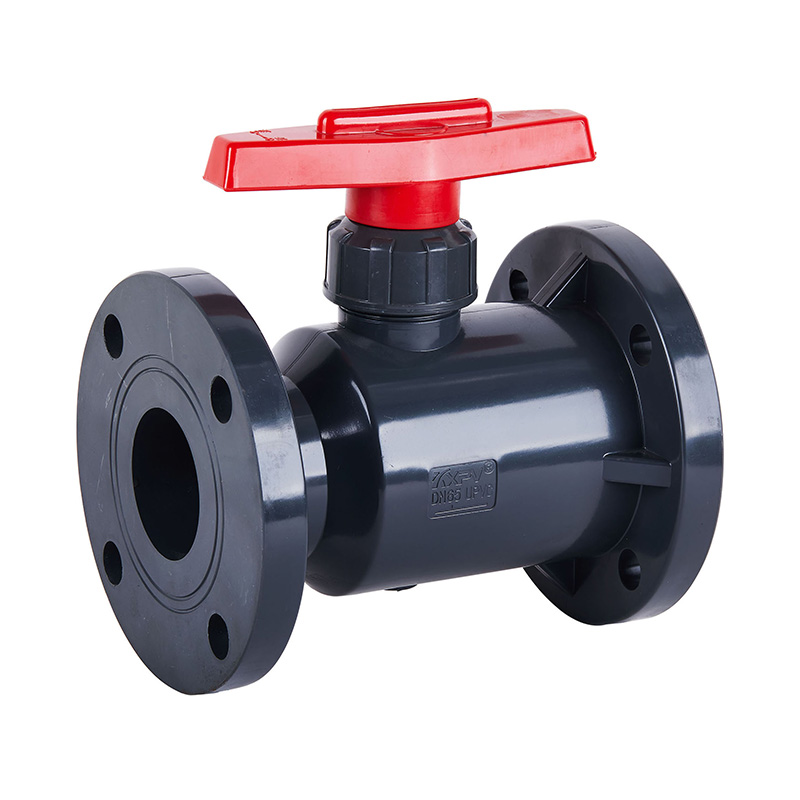
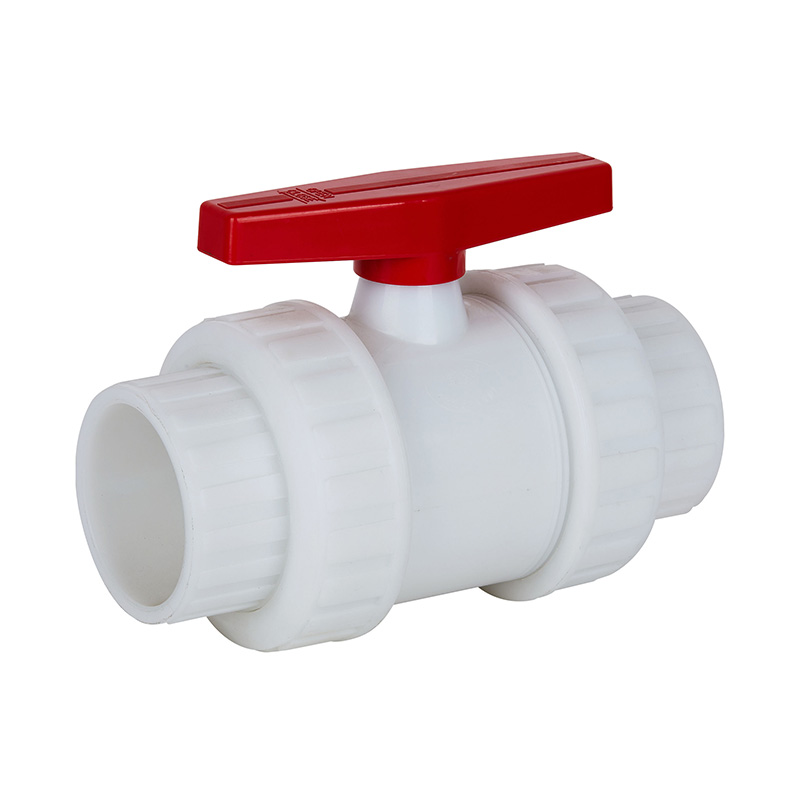
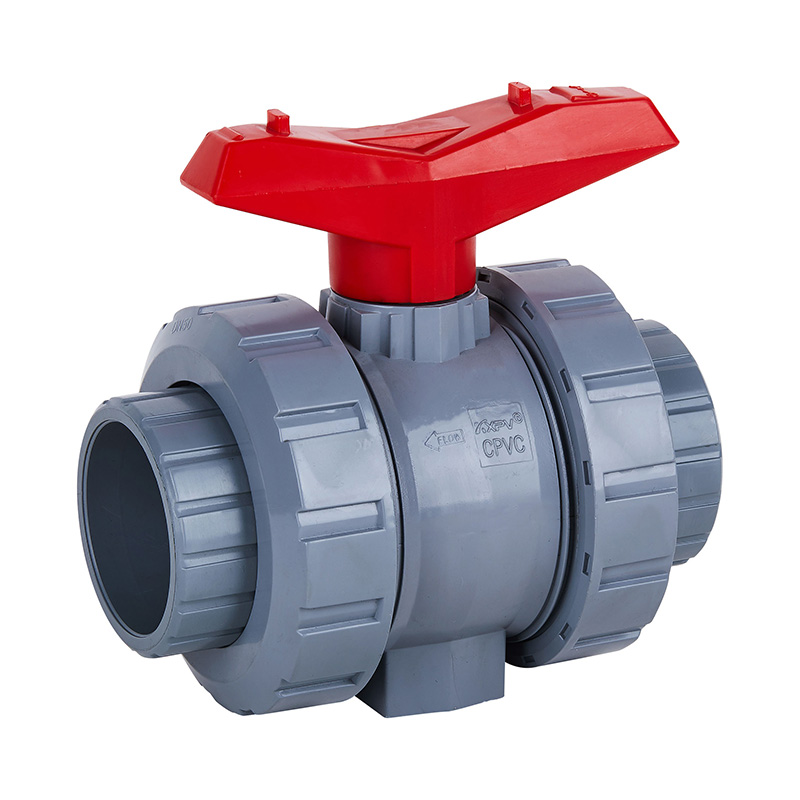
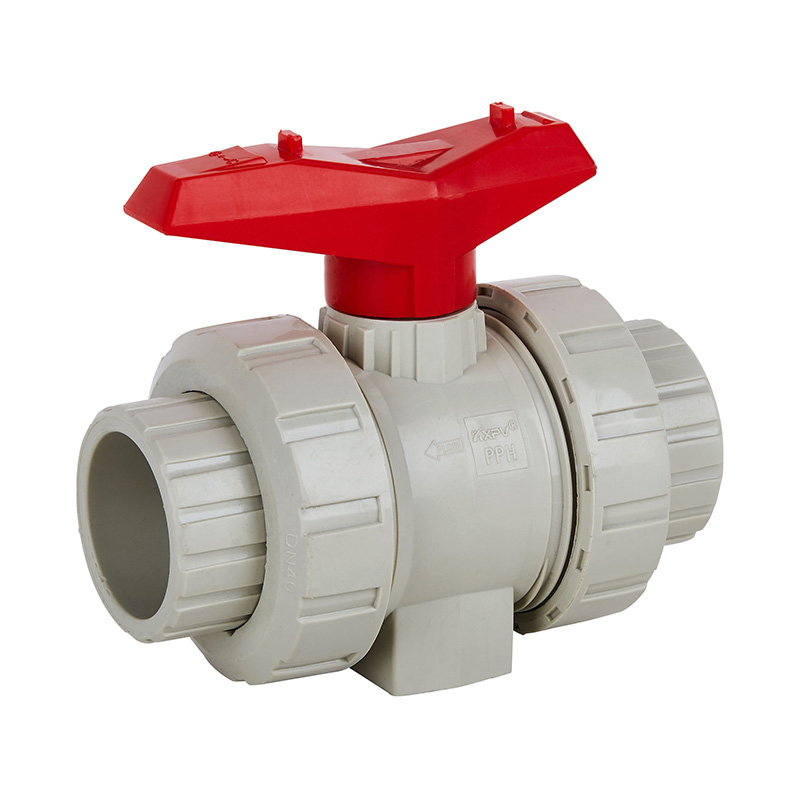
Our thermoplastic valve series is organized by body style rather than by industry, which is how most engineers actually shop. Ball valves handle clean on-off service; butterfly valves suit large lines and lower pressure drop; diaphragm valves tolerate slurries and aggressive media because the working parts stay out of the flow; globe valves allow finer throttling; check and bottom valves look after direction and priming.
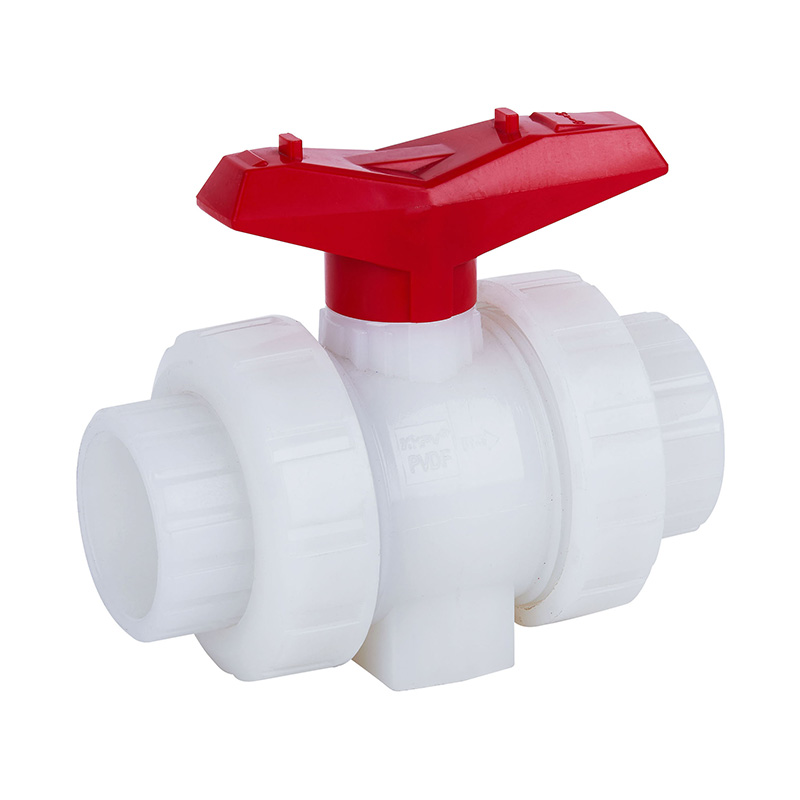
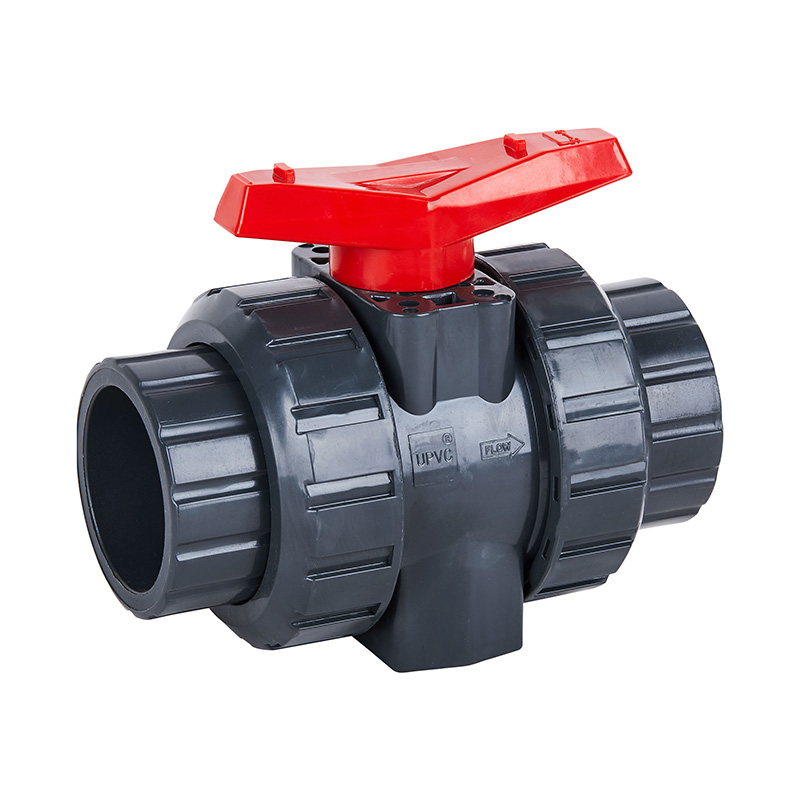 PVC-U Q61F-10U Socket Union Ball ValveManual double-union PVC-U ball valve for clean on-off duty, with PTFE seat and DN15–100 socket connection options.View Product →
| Valve style | Usual duty | Common size range | What to watch |
|---|---|---|---|
| Ball | On/off isolation, quick quarter-turn | DN15–DN100 | Seat material and media temperature |
| Butterfly | Large-line isolation and coarse control | DN50–DN1000 | Disc clearance and pipe support |
| Diaphragm | Slurries, aggressive media, throttling | DN15–DN300 | Diaphragm life and stroke frequency |
| Globe | Fine regulation, smaller flows | DN15–DN150 | Pressure drop across the seat |
| Check | Backflow prevention, pump protection | DN15–DN300 | Orientation and closing speed |
| Bottom | Pump suction, foot-valve duty | DN15–DN300 | Debris collecting in the strainer |
Two practical habits are worth building early. First, decide whether the valve is a stop valve or a regulating valve before you look at price lists — a ball valve pressed into throttling duty will erode its seat long before it wears out from cycling. Second, keep the number of body styles on a single skid as small as the process allows, because spares, training and torque settings all multiply with variety.
Material Choice Comes Before Style Choice
Choosing a valve body material is usually a simpler decision than choosing a valve type, but it is far less forgiving when it goes wrong. The five thermoplastics below cover almost everything we build.
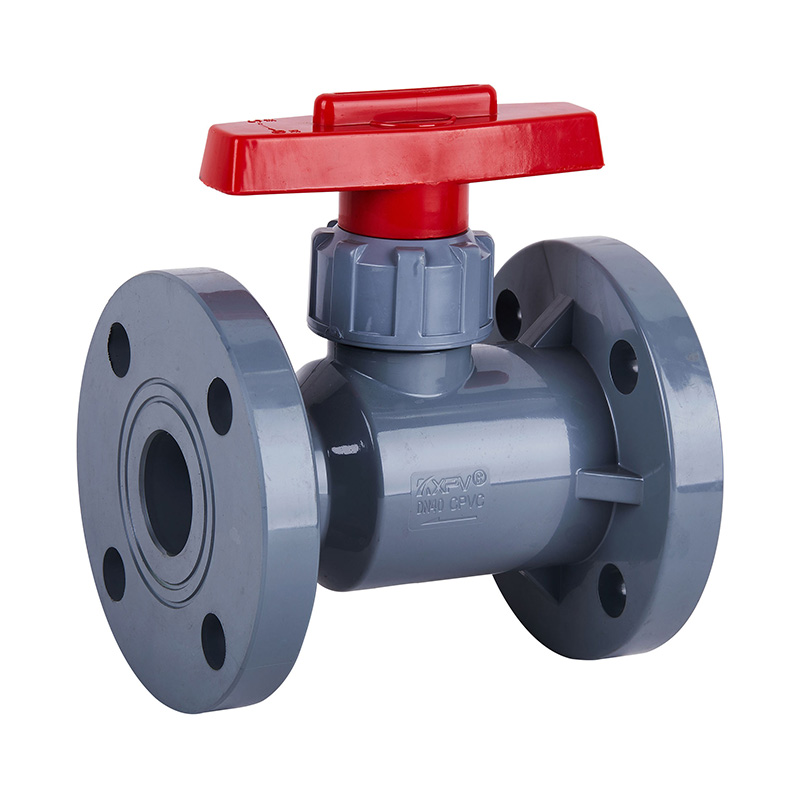
- PVC-U (UPVC). The workhorse of the group. Broad resistance to acids, alkalis and salt solutions, excellent dimensional stability, and the most economical option for ambient-temperature lines. Above roughly 60 °C it starts to soften and lose strength.
- PVC-C (CPVC). The same family, chlorinated for higher heat performance. Commonly used up to around 95 °C, and a sensible choice for hot acid and chlorinated service where PVC-U would be marginal.
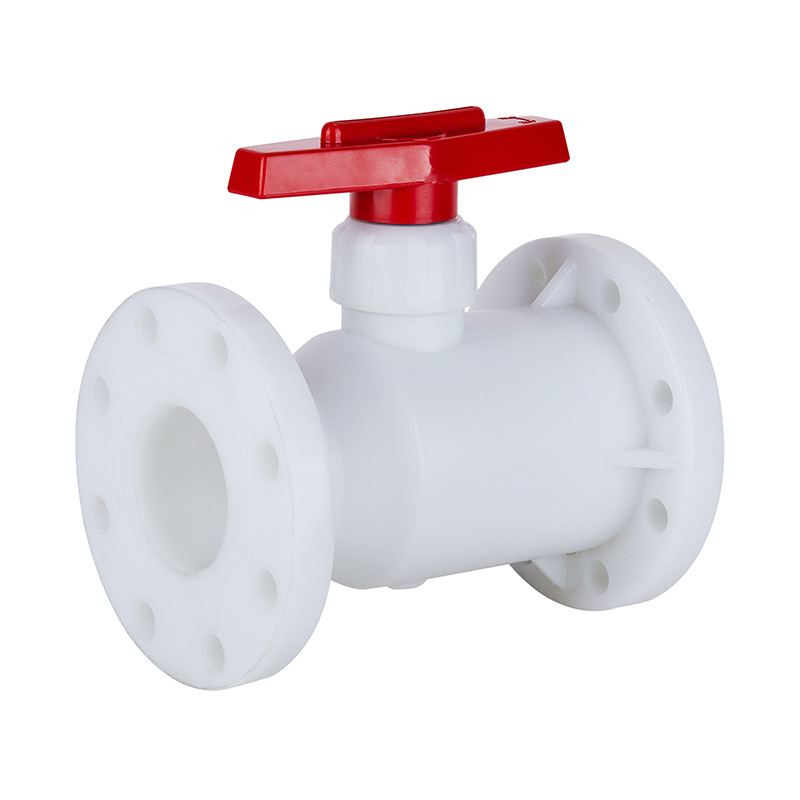
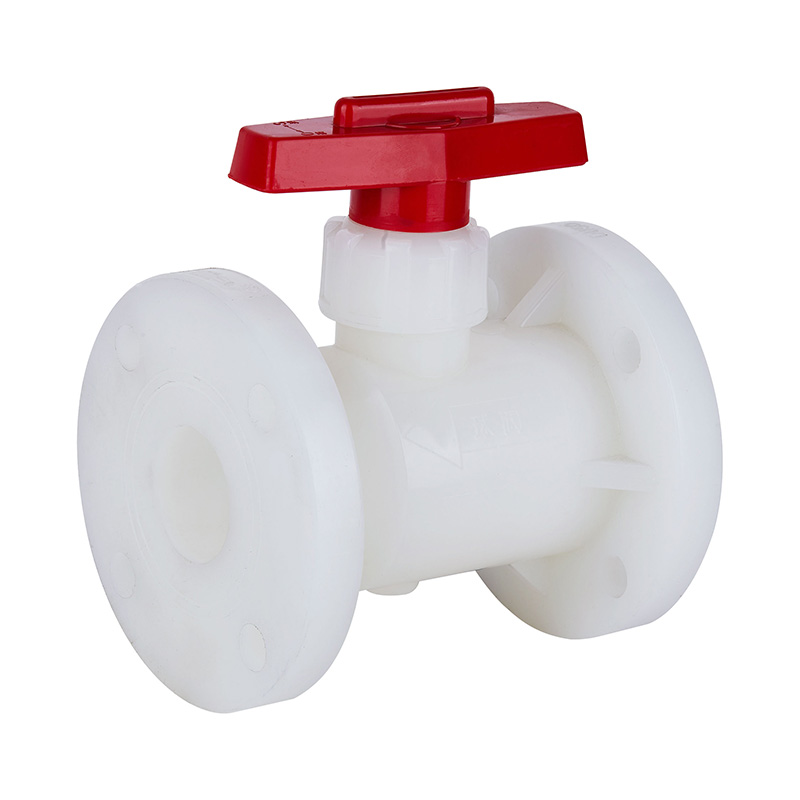
- PVDF. The high-performer. Strong resistance to aggressive halogens, solvents and oxidising media, with useful temperature headroom well beyond the vinyls. It costs more, and it earns that cost in difficult service.
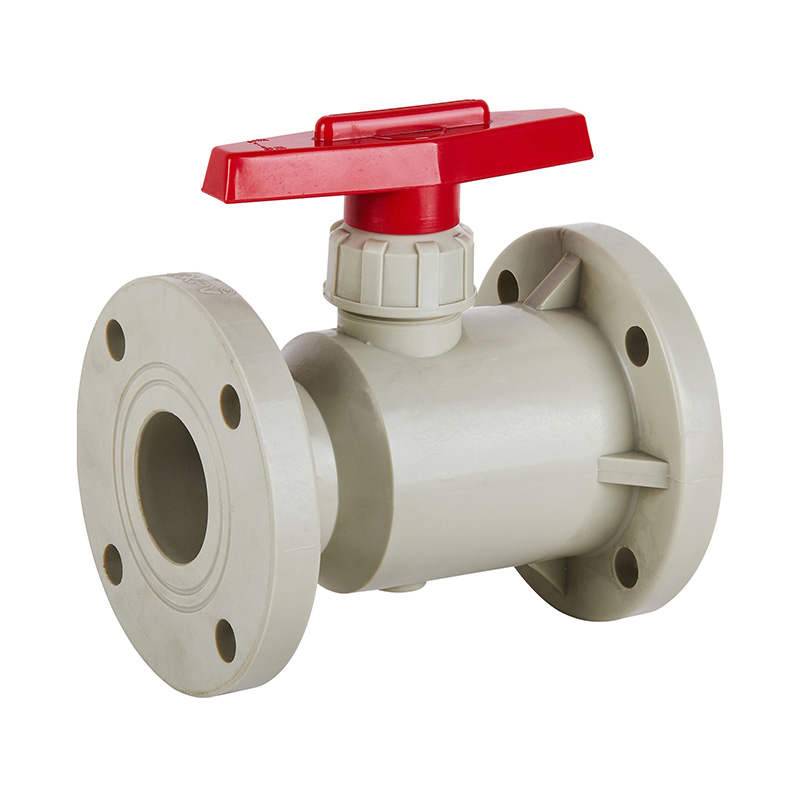
- PPH. Light, weldable and chemically broad, particularly with hot acids and alkalis. Its lower stiffness means support and spacing deserve attention on long runs.
- FRPP. Glass-fibre reinforced polypropylene, chosen when the same chemistry as PPH is combined with a need for rigidity, especially in larger-diameter bodies and pipework.
A valve only has to be right twice: once at commissioning, and again at every shutdown for the next fifteen years.
Good practice. Match the valve body to the pipe material. A CPVC valve in a PVC-U line is a thermal mismatch waiting for a hot day, and the joint will usually fail before the valve does.
Sizing, Standards and Actuation
Most of our valve styles are built from DN15 upward, with the bulk of the range sitting between DN15 and DN300. Butterfly valves extend considerably further, up to DN1000 in wormgear versions, while pipe and fittings reach DN800. In practice, the upper end of that range is less about catalogue ambition and more about line velocities, support spacing and the torque needed to operate a large disc by hand.
Standards matter as much as dimensions. Our production is organised around GB, ANSI/ASTM and JIS conventions, because a valve that bolts perfectly into a domestically fabricated skid may not match a line designed to ANSI face-to-face dimensions. Confirm the standard, the facing type and the flange drilling pattern before the order leaves the discussion stage — it is a five-minute conversation that prevents a very long week.
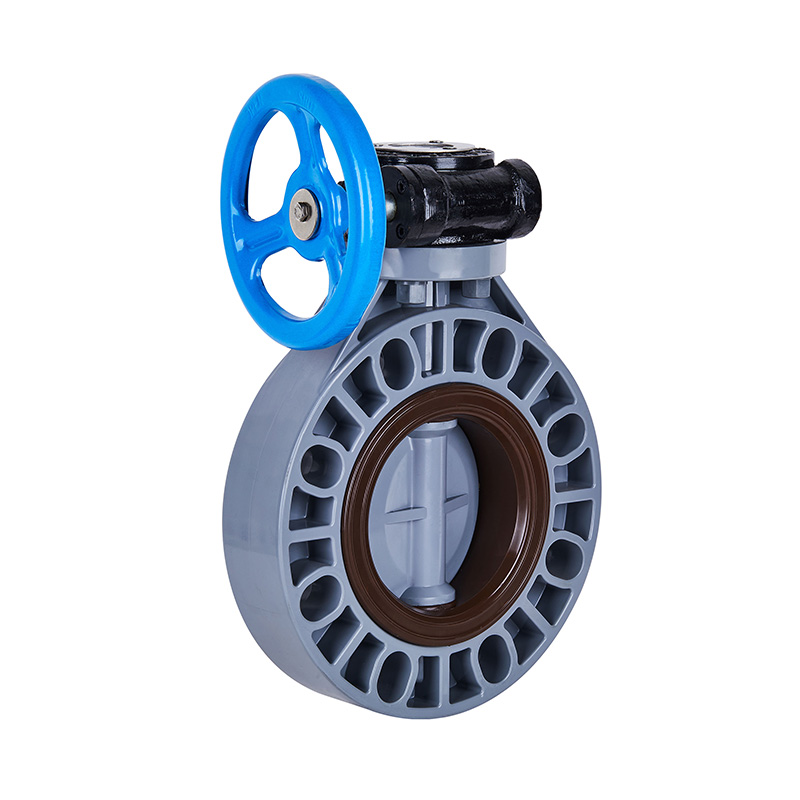 PVC-C D371X-10V Worm-Gear Butterfly ValveFlange-connected PVC-C butterfly valve with worm-gear operation, DN32–1000 and GB/T27725 standard for acid-service industrial piping.View Product →
Actuation is the last decision and often the most over-specified. A manual handle is perfectly adequate for a valve cycled once a shift. Wormgear operation makes large butterfly valves usable by one person. Electric and pneumatic actuators earn their place where the valve sits in a control loop, in a hazardous location, or somewhere no one wants to walk to at two in the morning.
Where These Valves Earn Their Keep
Chemical plants use them for acid and caustic transfer, dosing skids and tank farm manifolds, where the combination of corrosion resistance and a leak-free seat matters more than anything else on the specification sheet. Electroplating lines rely on them to regulate plating bath circulation, often alongside corrosion-resistant centrifugal pumps and self-priming pumps working on the same tank.
Environmental systems are the third large family: scrubber circulation, wastewater neutralisation, and chemical dosing in water treatment. These installations tend to combine large butterfly valves on main headers with small diaphragm valves on the dosing branches, which is why a single project can call for four different body materials without anyone thinking it unusual.
Installation and Maintenance Habits That Pay Off
- Support the pipe on both sides of the valve. Thermoplastic bodies are strong in compression and much less so in bending.
- Leave room for thermal movement. A rigidly clamped valve in a line that grows twenty millimetres will leak at the joint, not at the seat.
- Do not use the valve as a lever to pull flanges together. If the gap needs closing, the pipe needs adjusting.
- Cycle every valve at least once a quarter, even the ones nobody touches. A valve that has not moved in two years has effectively been welded shut.
- Keep diaphragms and seats as stocked spares. They are inexpensive, and the alternative is a shutdown waiting on a courier.
If the medium is abrasive or the duty is unusual, it is worth reading up on material selection for chemical plastic valves before committing to a body and seat combination.
Watch out for. Over-tightening flange bolts on plastic bodies, water hammer from fast-closing automated valves, and mixing standards within one manifold. Each of these causes failures that are later blamed on the material.
Choosing a Manufacturing Partner
For project buyers, the practical question is rarely “who makes the cheapest valve” but “who can supply the whole corrosion-resistant circuit and still answer the phone during commissioning”. That means pipes, fittings, valves, pumps and the small accessories — gaskets, adhesives, welding rod — arriving as one coordinated package rather than five shipments from five suppliers.
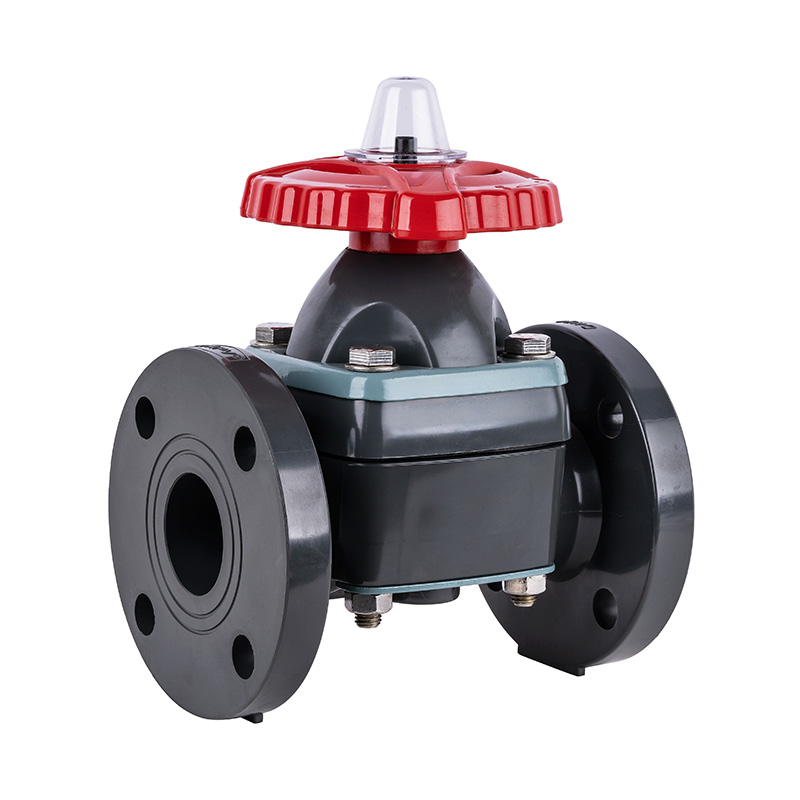
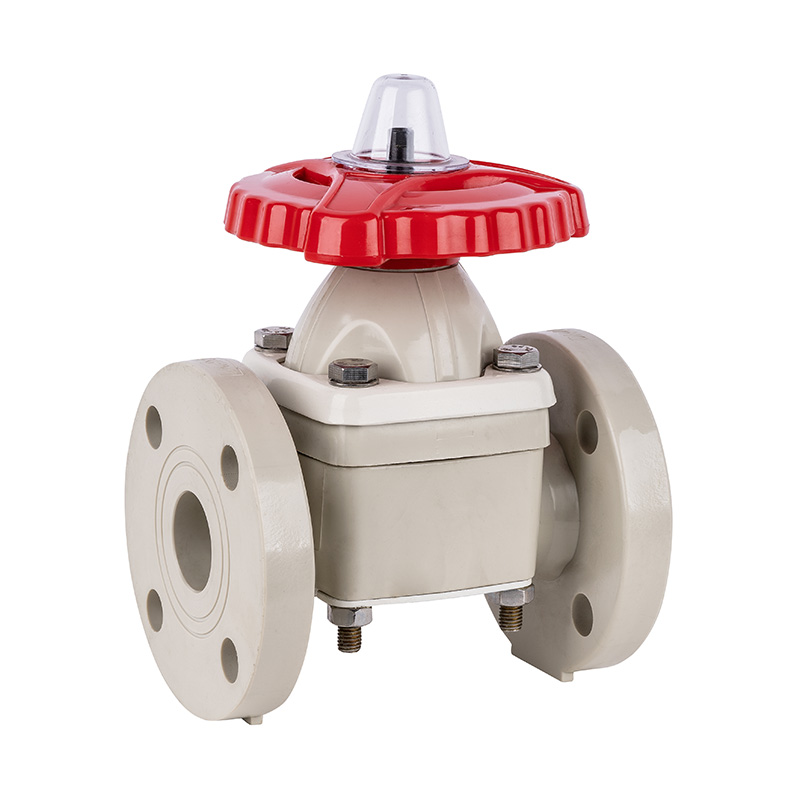
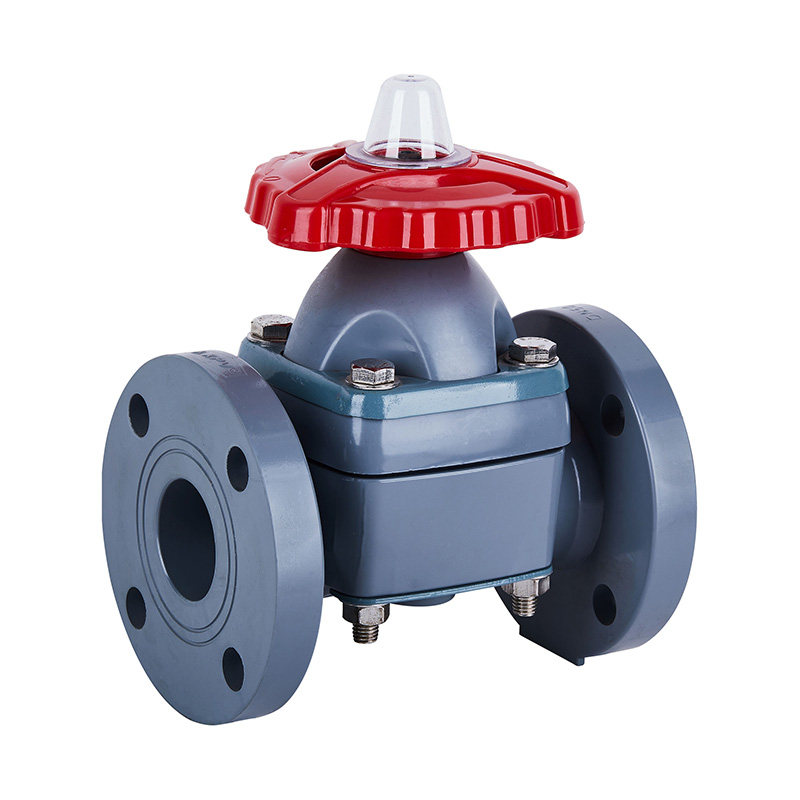
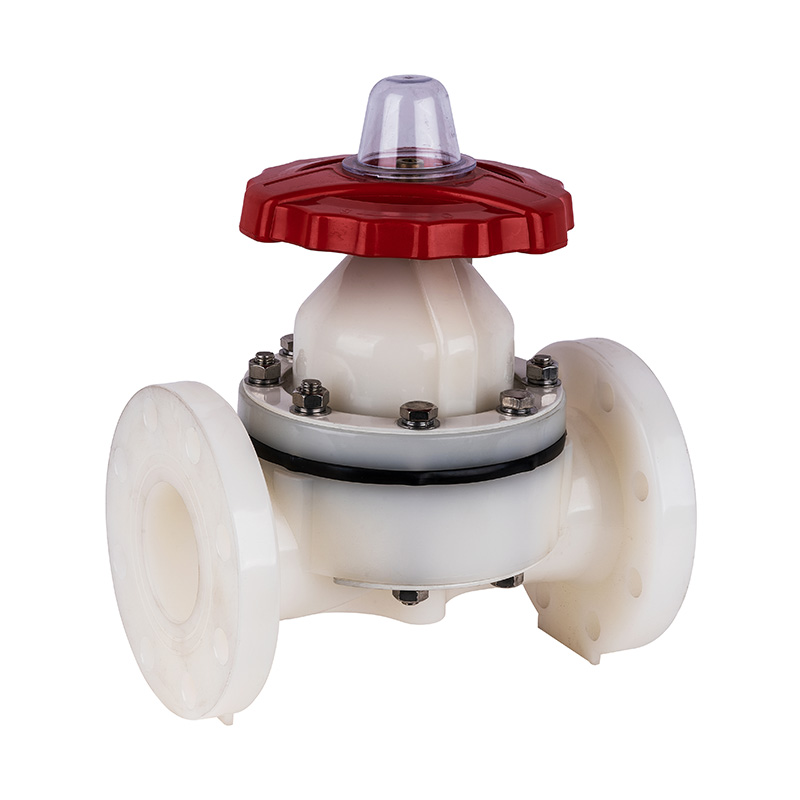
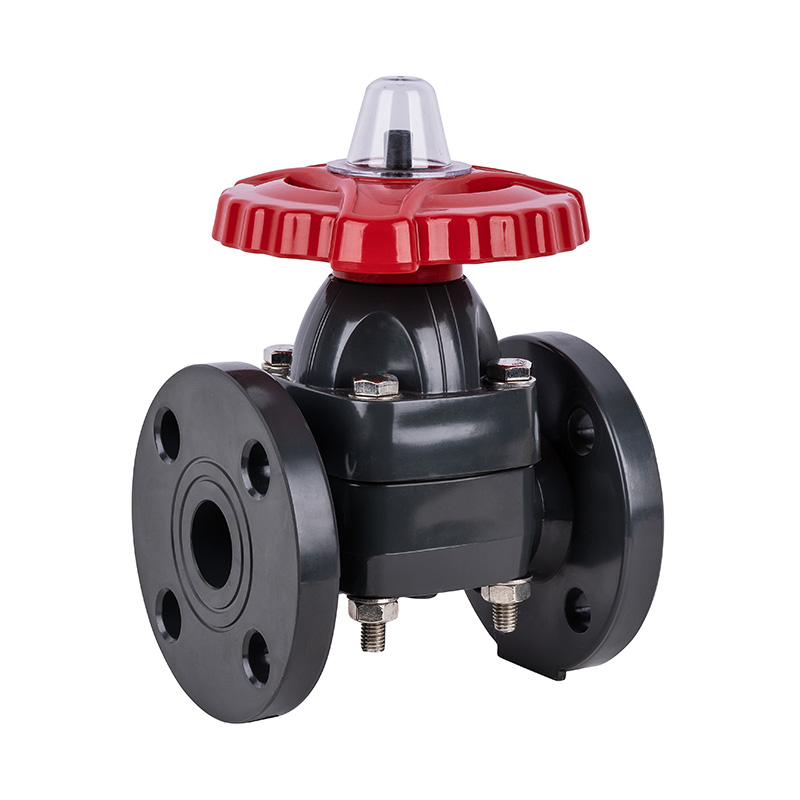
 PVC-U G41F-10U Flanged Diaphragm ValveManual flanged PVC-U diaphragm valve for chemical and acid media, offered in DN15–300 with corrosion-resistant F46 or PFA diaphragm.View Product →
Our own position is straightforward: a manufacturing base in Ningbo since 1999, a municipal research centre for polymer piping and valve technology, and a product range that runs from DN15 fittings to DN1000 butterfly valves. Custom sizes, special standards and non-standard materials are handled through the same engineering group that supports standard production, and our overseas distributors are backed with documentation in English, Spanish, Arabic and Russian.
In Short
Choose the body material from the chemistry and the temperature, choose the valve style from the duty, and choose the size and standard from the drawing rather than from habit. Then install it with support underneath, room to expand, and a spare diaphragm on the shelf. Do those four things and the valves will still turn smoothly in year five — which is, in the end, the only performance review that counts.
 Headquarters: No. 539 Bohai Road, Beilun District, Ningbo City, Zhejiang Province, P.R. China

 +86-18067123177
