

 EN
 English
 Español
 عربى
 русский
 中文简体

Kaixin, a high-tech enterprise specialized in the R&D, production and sales of polymer pipeline valves.
A 2-inch line carrying warm hydrochloric acid has just started weeping around the valve stem. The tank farm is nearly full, and every hour of downtime shows up in lost production. If that line is fitted with a true union ball valve, the response is quick: loosen two union nuts, slide the valve body out, and drop in a spare. No cutting, no solvent welding, no draining the line. That single capability is why the 2-inch true union ball valve has become a default choice in corrosive fluid service.
What a true union ball valve actually changes
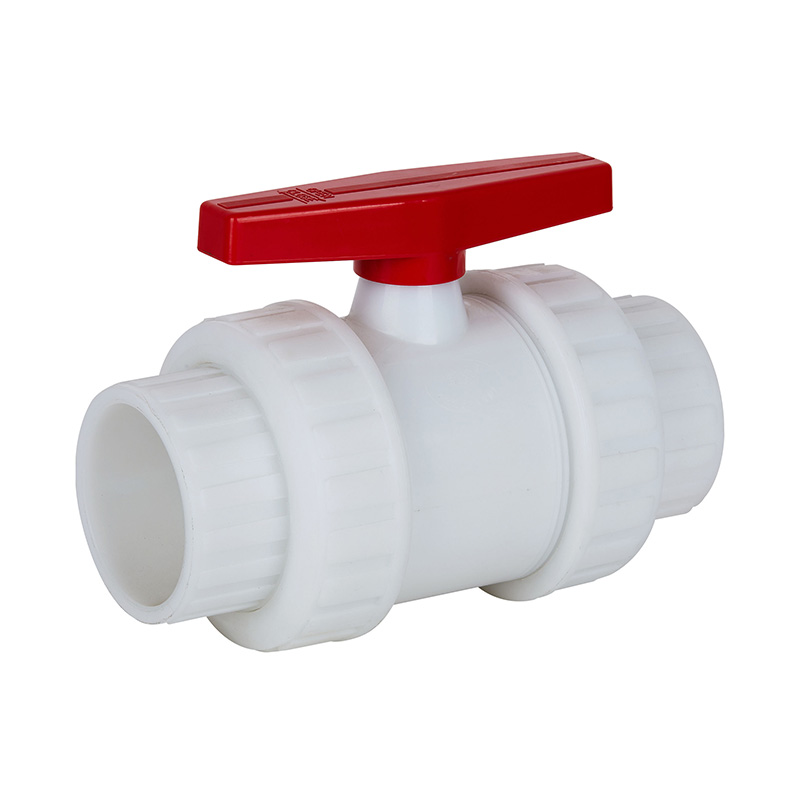
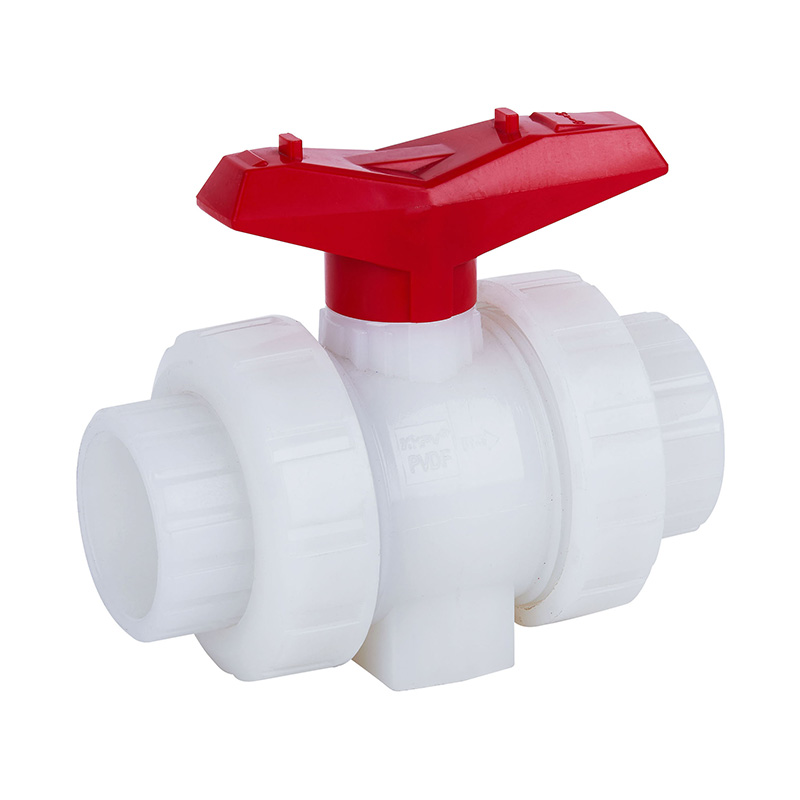
A conventional 2-inch plastic ball valve is a one-piece body with solvent-welded, threaded, or flanged ends. Once it is in the line, removing it means cutting the pipe or unbolting a flange. A true union ball valve is built in three parts: a central valve body and two end connectors, each held by its own union nut. The two end connectors stay permanently attached to the piping; the union nuts do the work.
Loosen one union nut and the valve body can be rotated for better handle access. Loosen both and the complete body lifts out while both pipe ends stay exactly where they are. That is the defining advantage, and it changes how maintenance is planned:
- A worn ball, stem seal, or body crack can be repaired at the bench while the line remains assembled.
- A spare body can be fitted in minutes, turning a two-hour repair into a fifteen-minute job.
- Both end connectors act as independent isolation points, so the valve can also be used to block a branch line.
- If access is tight, the body can be oriented after installation to put the handle in a usable position.
Where a 2-inch true union earns its keep
Two-inch / DN50 lines are the workhorses of chemical transfer, dosing, filtration, and plating circuits. At a typical flow velocity of 1.5 to 2.5 m/s, a DN50 pipe carries roughly 10 to 18 m³/h — enough for a medium plating line, a chemical dosing skid, or a wastewater neutralization loop.
These are exactly the circuits that run for years between overhauls, and the fluids they carry are usually not kind to seals and ball surfaces. In electroplating, hot acidic baths attack cheaper valve materials. In chemical processing, the valve may sit in one position for weeks and then need to cycle under full line pressure. In wastewater and scrubber duty, abrasive particles and scale can score the ball seat. The true union design matters because it makes the inevitable repair local rather than system-wide.
For high-purity chemical and pharmaceutical services where temperatures may reach 120–140°C, the valve body material has to move above standard PVC.
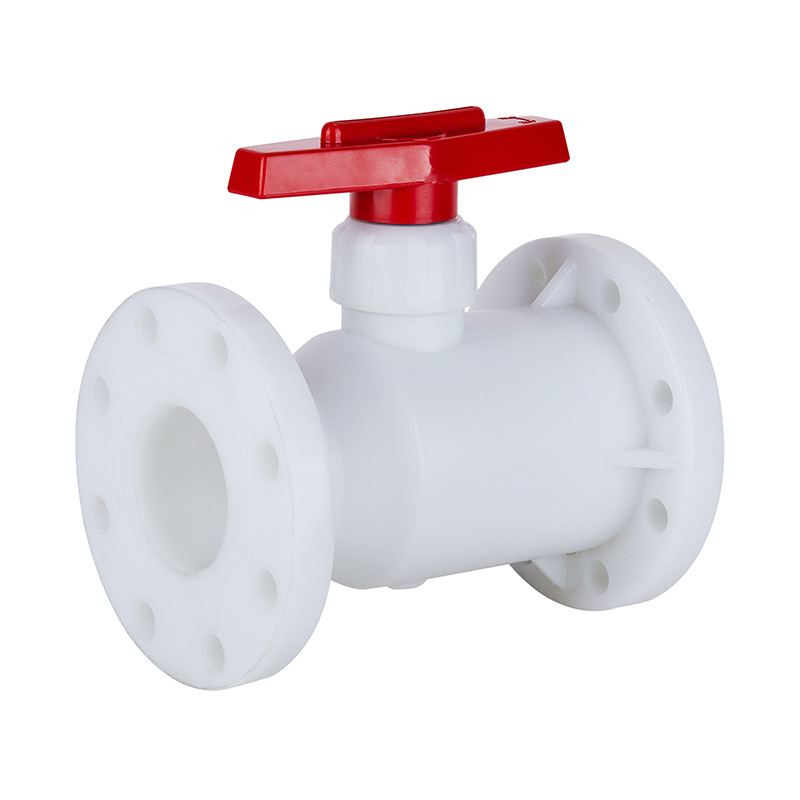
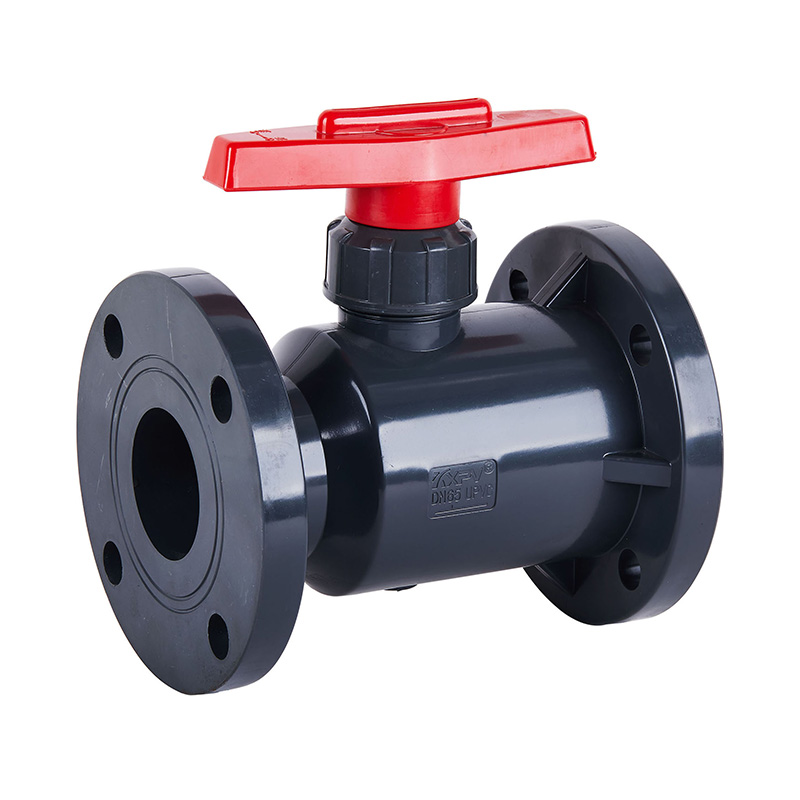
 PVDF法兰双由任球阀:耐高温耐腐蚀之选针对高温高纯化学介质,PVDF材质耐受达150°C,双O型圈防漏且全通径设计,适合极端工况,值得优先考虑。View Product →
Material options set the operating envelope
The body material defines the temperature ceiling, the chemical resistance, and roughly half the cost of the valve. The common choices for a 2-inch true union ball valve are UPVC, CPVC, PPH, PVDF, and FRPP.
| Material | Max. continuous temp. | Chemical resistance focus | Typical service |
|---|---|---|---|
| UPVC | ≈ 60°C | Acids and alkalis at moderate temperatures | Water, wastewater, plating rinse lines |
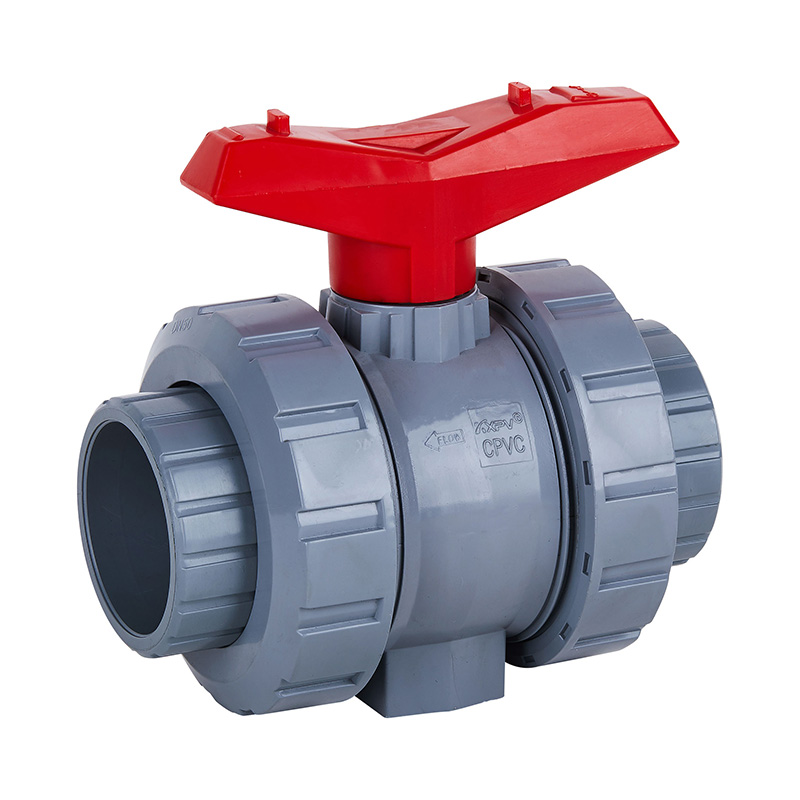
| CPVC | ≈ 95°C | Hot acidic and chlorinated media | Hot chemical transfer, electroplating |
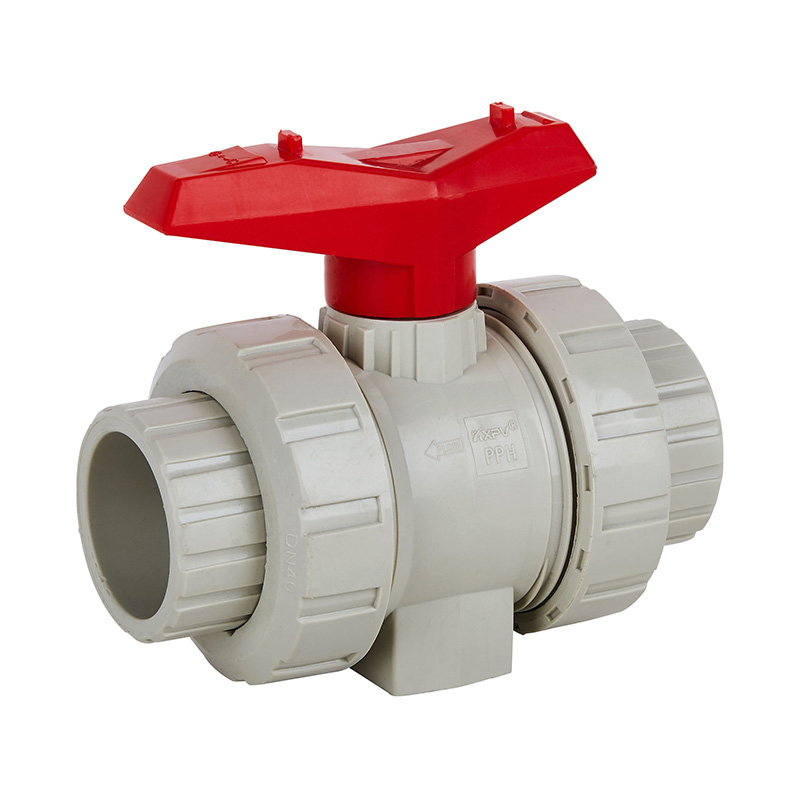
| PPH | ≈ 90°C | Broad acid and base resistance, good weldability | Chemical dosing, fume scrubbers |
| PVDF | ≈ 140°C | High-purity media, strongly aggressive chemicals | Pharmaceuticals, fine chemicals |
| FRPP | ≈ 100°C | Glass-reinforced, higher stiffness | Larger lines, structural runs |
For water, mild acids, or plating rinse at ambient temperature, UPVC is usually the most economical option.
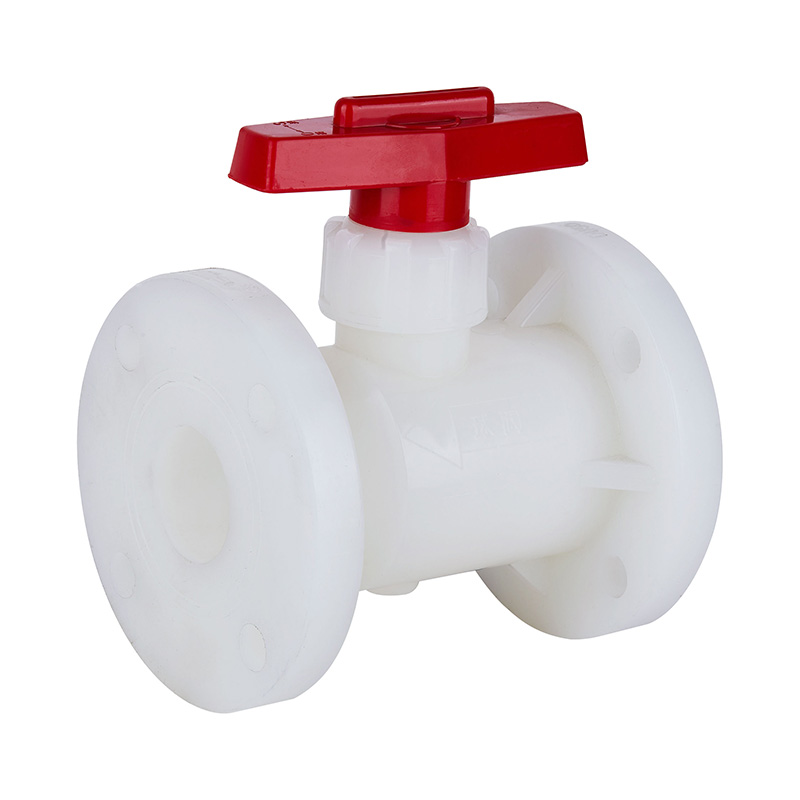
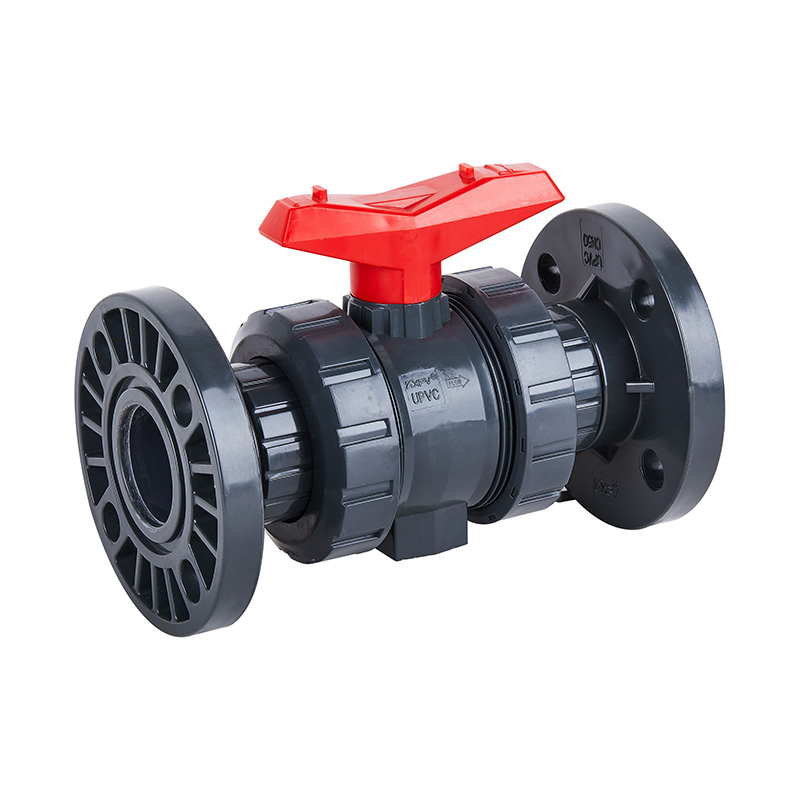 UPVC法兰双由任球阀:经济实惠的常温方案对水、弱酸或电镀漂洗等常温介质,UPVC材质成本最低,耐蚀性能可靠,是满足基本工况的性价比之选。View Product →
If the line runs hot or carries oxidising chemicals, CPVC moves up the list; if purity is the priority, PVDF is the material of choice. The trade-off is straightforward: each step up in temperature resistance also steps up the price, so the cheapest valve that covers the fluid and the operating temperature is usually the right one.
Warning: A body rated for 140°C is only as good as its seals. Verify that the EPDM, FPM, or PTFE sealing elements share the same temperature ceiling before pushing the valve to its limit.
Rather than guessing, start with the fluid composition at operating temperature. The site's material selection guidance for chemical plastic valves walks through the compatibility questions in practical order.
What to verify before you order
The term "true union" covers a wide range of configurations, and a 2-inch valve that suits one plant may cause problems in another. These are the points that matter.
End connections
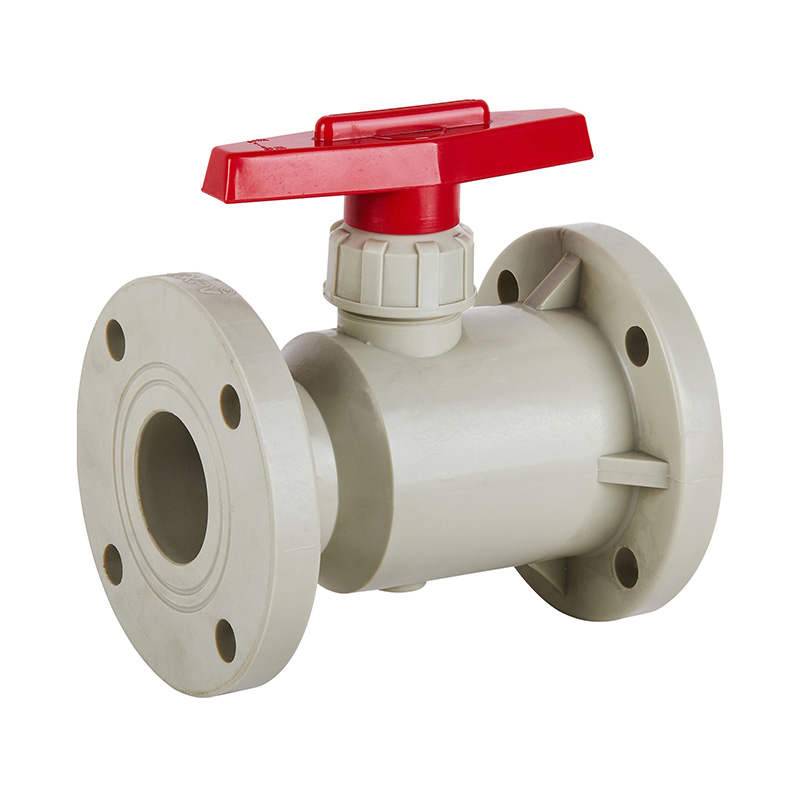
Socket ends are solvent-welded to the pipe and are the most compact. Threaded ends allow quick assembly but need careful sealing. Flanged ends are easiest to remove and are common on larger industrial systems, and they follow one of the standard bolt patterns: GB, ANSI/ASME, or JIS. A 2-inch flanged true union ball valve is the most common configuration in chemical plants precisely because both sides can be isolated and unbolted without special tools.
Seal material
The seals, not the body, usually fail first. EPDM is the standard choice for acids, alkalis, and water; FPM (fluororubber) handles oils and more aggressive organics; PTFE is specified for severe chemical duty. Confirm the seal specification against the actual fluid at operating temperature.
Info: At elevated temperature, a valve rated PN10 or PN16 at 20°C is only safe at a reduced pressure. Always request the derating curve for the specific body material; a 2-inch CPVC valve at 90°C may carry less than half its cold rating.
Danger: Overtightening a plastic union nut is the most common cause of early failure. Use a strap wrench, tighten both nuts alternately, and stop once the nut seats firmly — plastic does not need metal-grade torque.
Ball and seat design
Check whether the valve has a full bore or reduced bore. Full bore keeps pressure drop low and is preferable for lines with suspended solids. For hot or corrosive media, a double union body with ball seats made of the same resin family as the body avoids galvanic and thermal-expansion mismatches.
Where hot aggressive media are part of the process, a CPVC double union valve provides a good balance between cost and temperature range.
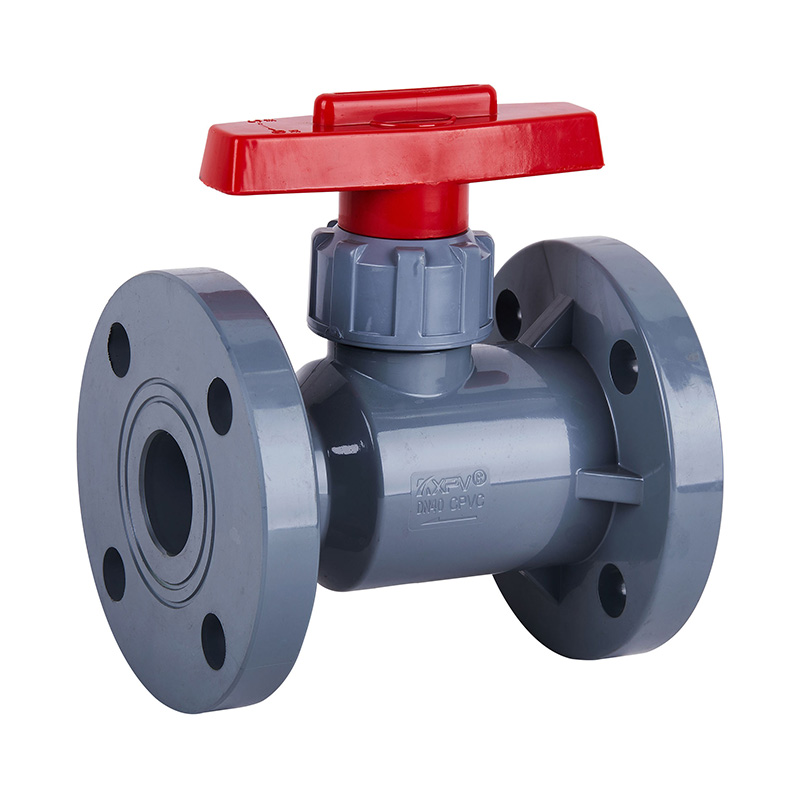
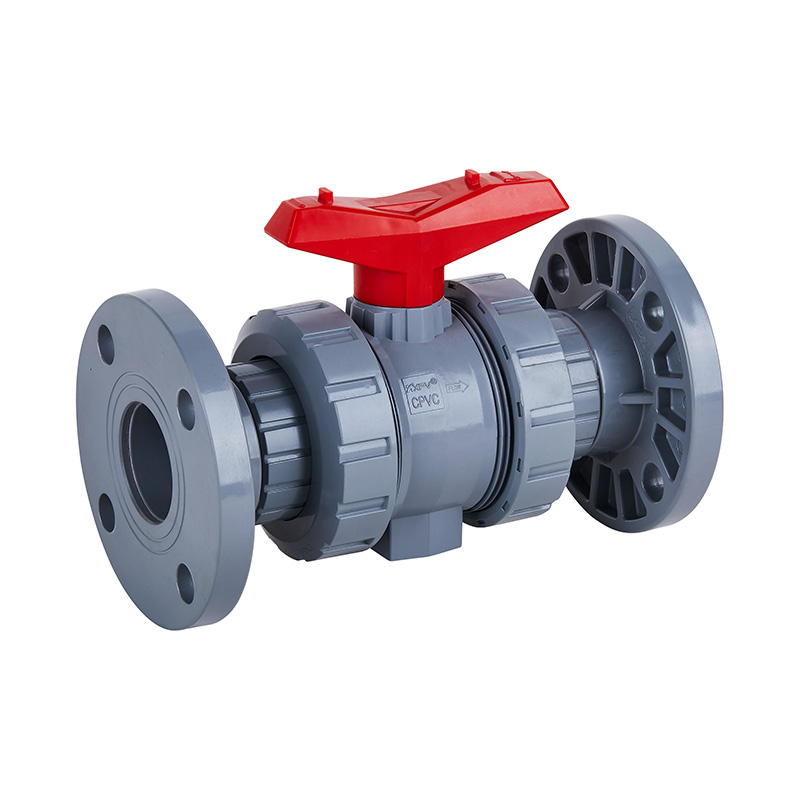 CPVC法兰双由任球阀:兼顾成本与温度的平衡PVC-C材质适用-20°C至95°C,耐热性和耐蚀性优于UPVC,适用于热腐蚀介质,在成本与性能间取得良好平衡。View Product →
Installation and maintenance notes
Most true union problems show up within the first few weeks or not at all. Correct installation is mostly about supporting the pipe and respecting the union nuts.
- Support the pipe on both sides of the valve, especially if the line carries heavy fluids or sees vibration from a nearby pump.
- Tighten the union nuts by hand, then add a gentle further turn with a strap wrench; alternate between the two nuts.
- Do not use the valve body as a pipe anchor, and do not let the connected pipe hang from the unions.
- If the valve stays open for weeks, cycle it occasionally so the ball does not stick to the seat.
- When the body is removed for bench repair, cap the open end connectors or cover them to keep debris out of the line.
In decades of plastic pipeline work, most true union failures trace back to two causes: a union nut torqued like a steel flange, or a seal chosen without checking the fluid composition at the operating temperature.
Success: Keep one spare body in stores per critical size. Because the end connectors stay on the pipe, swapping a complete body takes minutes and brings a line back up without any pipe work.
The 2-inch true union ball valve is a maintenance decision as much as a flow-control decision. It costs more than a one-piece valve, but on a corrosive line where downtime is expensive, the ability to pull the body without cutting pipe pays for the difference quickly. Choose the body material from the fluid's temperature and chemistry, verify the seals and the pressure derating, support the pipe properly, and the same valve will still be doing its job long after a conventional valve would have been cut out and replaced.

 Headquarters: No. 539 Bohai Road, Beilun District, Ningbo City, Zhejiang Province, P.R. China

 +86-18067123177
