

 EN
 English
 Español
 عربى
 русский
 中文简体

Kaixin, a high-tech enterprise specialized in the R&D, production and sales of polymer pipeline valves.
Walk into a basement in January, or a plating shop running three shifts, and the fitting that decides whether anyone gets hurt is usually the smallest piece of hardware in the room. A mixing valve on a hot water heater has one job — blend hot and cold water into a predictable outlet temperature — yet it quietly changes how the whole system should be designed, set and maintained.
We have spent more than two decades manufacturing plastic valves, pipe and pumps for hot and corrosive fluids. The questions we hear about tempering water sound almost identical whether they come from a homeowner with a fifty-gallon tank or an engineer laying out a rinse line, so it seemed worth writing down what actually matters.
What a Mixing Valve on a Hot Water Heater Is Actually Doing
A mixing valve is a proportioning device, nothing more romantic than that. Hot water from the tank enters one port, cold water enters another, and a temperature-sensitive element — usually a wax cartridge or a thermostatic assembly — slides a piston that changes the ratio between the two streams. When you turn the knob, you are not changing how hot the tank gets. You are changing how much cold water is allowed to join the flow before it reaches the tap.
That distinction solves a lot of confusion. The thermostat on the heater sets the storage temperature. The valve sets the delivery temperature. Mix the two up and you spend an afternoon adjusting the wrong component while the actual fault sits undisturbed a metre away.
Most "faulty" mixing valves we are asked about turn out to be valves that were never commissioned in the first place — the tank set to one temperature, the valve to another, and nobody checked the outlet with a thermometer under real flow.
Commissioning is unglamorous and takes about ten minutes. It is also the difference between a system that holds its temperature for years and one that gets blamed every time somebody takes a shower.
Why It Pays to Store Water Hotter Than You Deliver It
There is a reason the arrangement exists at all. Water held at roughly 60 °C (140 °F) or above keeps a storage tank out of the range where bacteria multiply comfortably. Water delivered at that same temperature will scald a child in seconds. The mixing valve resolves the conflict by letting the tank stay hot while the outlet stays safe.
What that buys you
- More usable hot water from the same tank, because each litre drawn is diluted with cold at the outlet instead of being stored lukewarm.
- A single tempering point for the whole building rather than faucet-by-faucet guesswork.
- A straightforward answer at inspection time, since thermostatic valves are commonly required wherever the public, the elderly or children can reach a hot outlet.
- Freedom to run the heater high enough for dishwashers, laundry equipment and sanitising cycles that genuinely want hotter water.
The trade-off is equally simple: a hotter tank loses more heat to standby, and the valve becomes a component that has to be maintained rather than forgotten.
Three Arrangements You Will Meet in the Field
Most installations fall into one of three patterns. Recognising which one you are looking at usually explains why the outlet behaves the way it does.
| Arrangement | What it controls | Typical fit | What to watch |
|---|---|---|---|
| Point-of-use thermostatic valve | Temperature at one fixture or one zone | Bathrooms, care facilities, schools | Needs isolation valves so the cartridge can be serviced |
| Heater-outlet thermostatic valve | Every tempered litre leaving the tank | Whole-house or whole-line protection with a recirculating loop | Cold supply interruptions show up immediately at the tap |
| Actuated blending assembly | Process temperature with a controller in the loop | Plating rinse lines, washdown stations, chemical dilution | Sensor placement matters more than the valve itself |
Notice that the third row shifts from plumbing into process engineering. The hardware changes, the principle does not: measure the outlet, compare it with the target, adjust the blend.
Setting and Adjusting the Valve Without Guesswork
Adjustment is a sequence, not a twist-and-pray exercise. The order below has served us well across domestic and light industrial installations.
- Bring the tank to its target storage temperature first and let it stabilise for roughly half an hour with no draw on the system.
- Open the nearest tempered outlet at a normal flow rate and let it run for a minute so the reading reflects mixed water, not what was sitting in the pipe.
- Measure with a calibrated probe held in the stream. An infrared gun pointed at a pipe reads surface temperature and will mislead you.
- Adjust in small increments, a quarter turn at a time, then wait a minute or two before measuring again — wax elements need time to settle.
- Set the delivered temperature to the local limit, commonly around 49 °C (120 °F) at the outlet for domestic use, and record the number.
- Repeat the check at the furthest fixture, especially on a recirculated loop where heat loss along the run matters.
A tip from experience: write the setpoint and the date on a label beside the valve. The next person to service the tank will thank you, and seasonal drift becomes obvious at a glance instead of being discovered in a shower.
When the Outlet Temperature Will Not Hold
Complaints usually arrive as one sentence and hide three possible causes. The symptom list below is a quick way to narrow the field before reaching for a spanner.
- Temperature swings whenever a toilet is flushed. Unbalanced supplies or a missing check valve; the cold side is being starved.
- Gradual loss of hot water over months. Scale or sediment on the thermostatic element. Clean the strainer, then evaluate the cartridge.
- Correct at high flow, cold at low flow. Debris sitting in the cold seat, passing water when it should be closed.
- No hot water at the outlet at all. Reversed ports, a blocked inlet strainer, or a valve installed against the flow arrow.
Worth saying plainly: never answer a temperature complaint by raising the tank setpoint. You move the scald risk downstream and leave the actual fault in place.
Protecting the loop
Most tempering problems in mixed-material buildings trace back to backflow. A spring-loaded check valve on the cold inlet stops hot water migrating backwards during a pressure drop, and a second one on the recirculation return keeps the loop honest. It is a small, cheap component that prevents an expensive conversation.
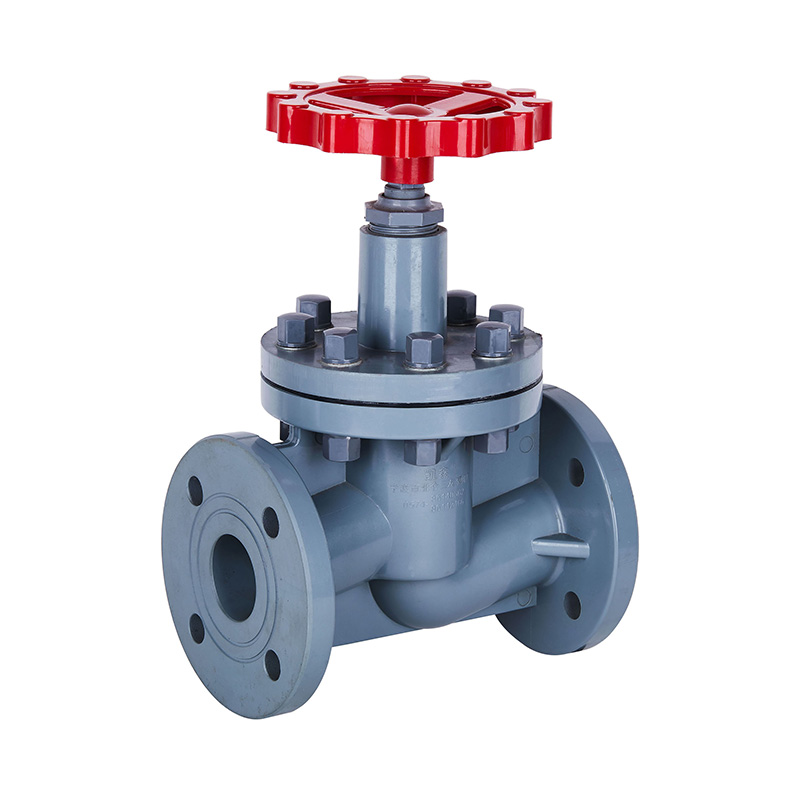
 PVC-C Swing Check Valve for Corrosive LinesPrevents backflow in chemical and industrial piping, with a PVC-C body and DN15–DN300 range for corrosive service.View Product →
Where Plastic Valves Earn Their Place
The picture changes scale but not principle once you leave the basement. Industrial hot-water and hot-chemical lines cannot use a brass body with a wax element and hope for a long life, because the medium attacks the metal long before the mechanism wears out. This is the world we work in daily, and it is why so much hot service piping in chemical, plating and environmental plants is now chlorinated polyvinyl chloride rather than steel.
CPVC is the workhorse for tempered and hot water distribution: it handles temperatures close to the boiling point at low pressure, resists a wide range of acids and bases, and does not scale the way metal does. Because the material is joined by solvent cement rather than threaded, there are fewer places for a leak to start — though that also means the joint quality depends entirely on the person holding the brush. Our own CPVC chemical piping is produced from DN15 upward for exactly this kind of duty.
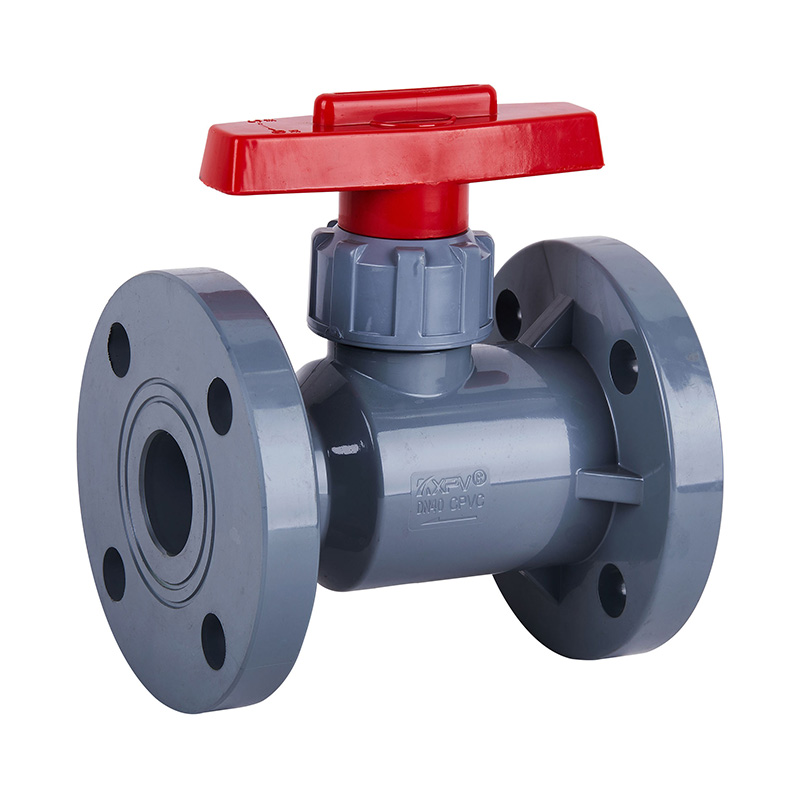
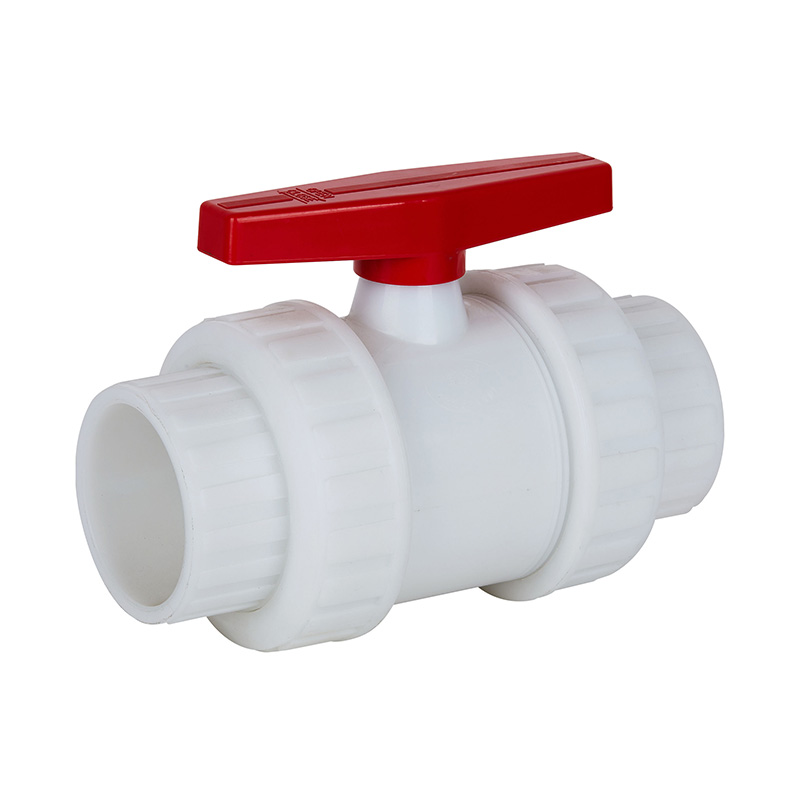
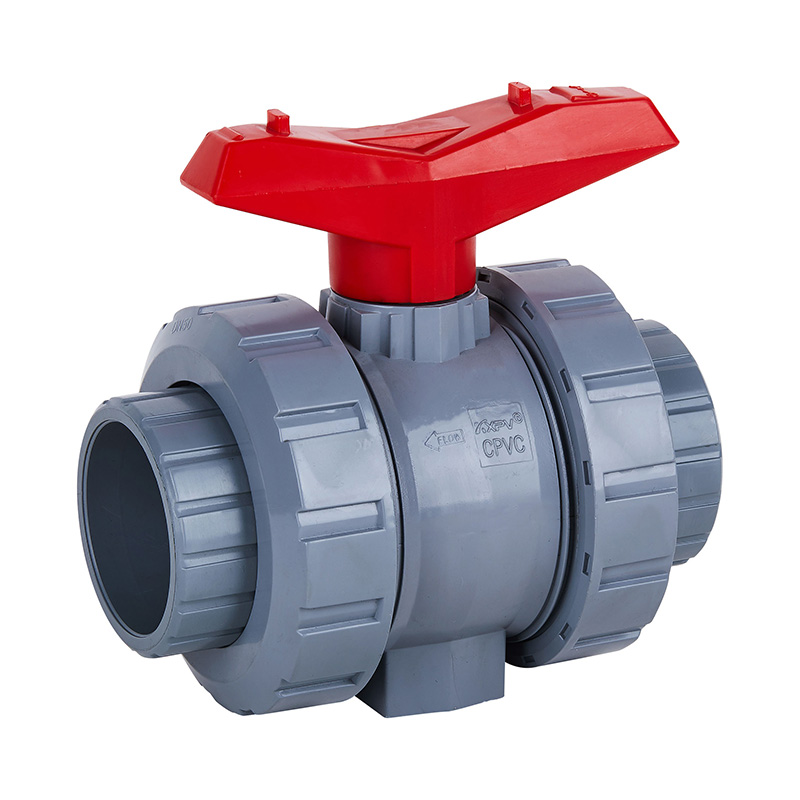
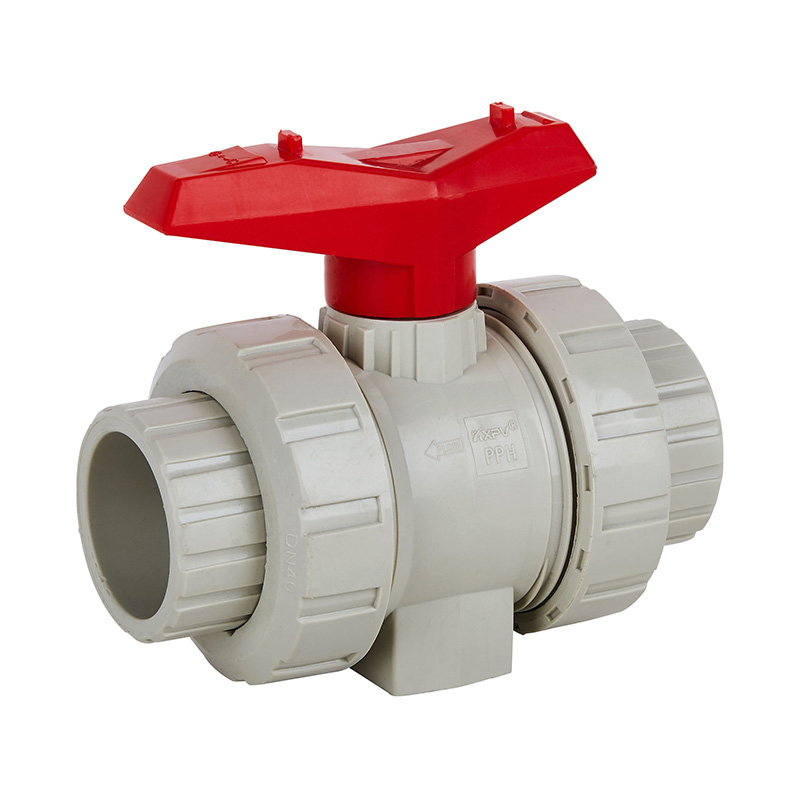
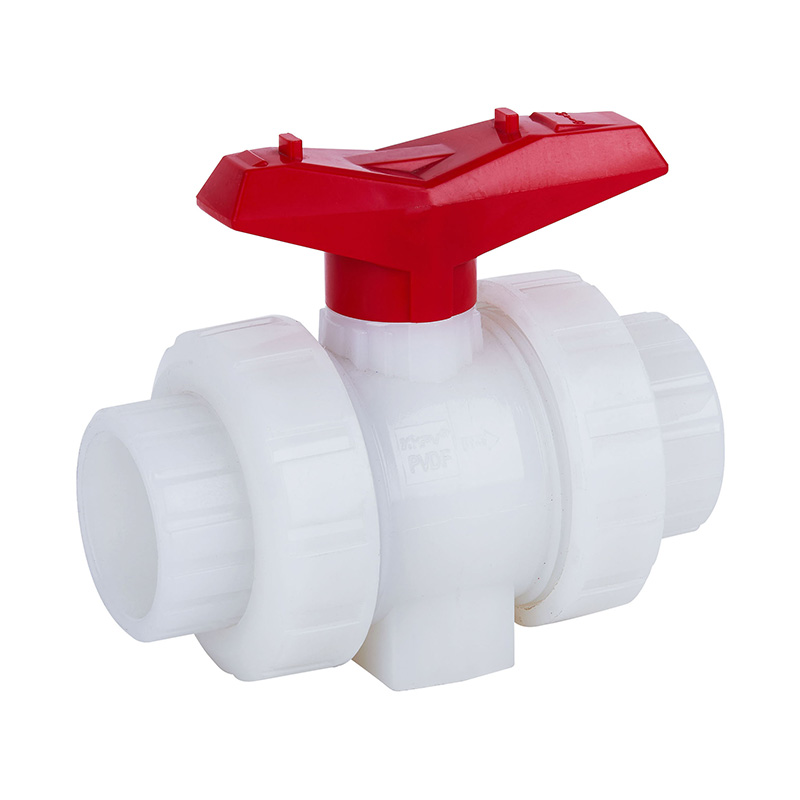
For isolation, a double-union ball valve is hard to beat: quarter-turn operation, a full bore that will not trap solids, and unions that let you replace the seats without cutting pipe. Full-port designs also keep pressure loss low on long tempered runs.
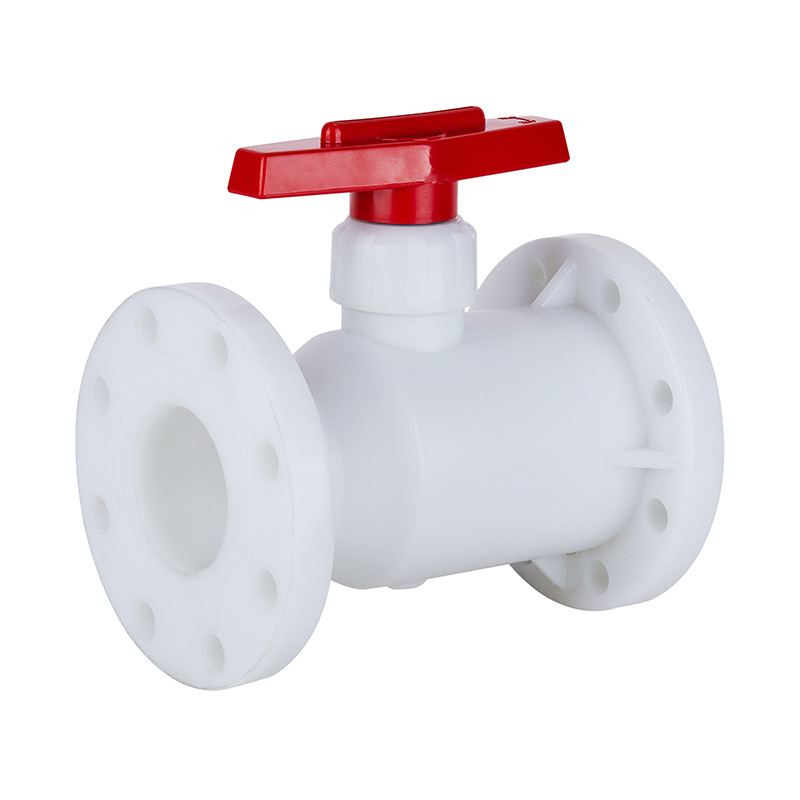
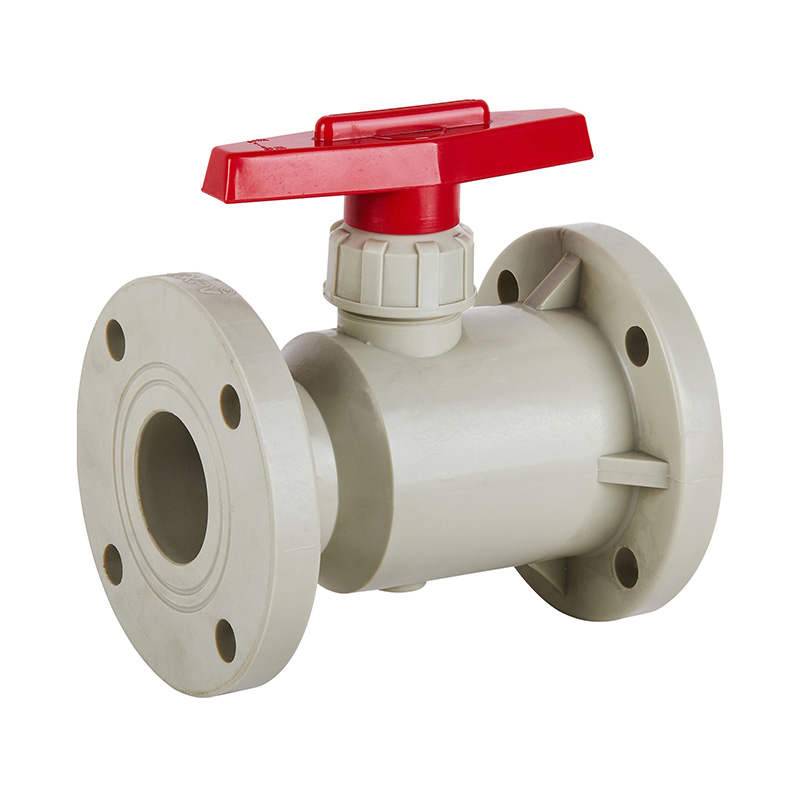
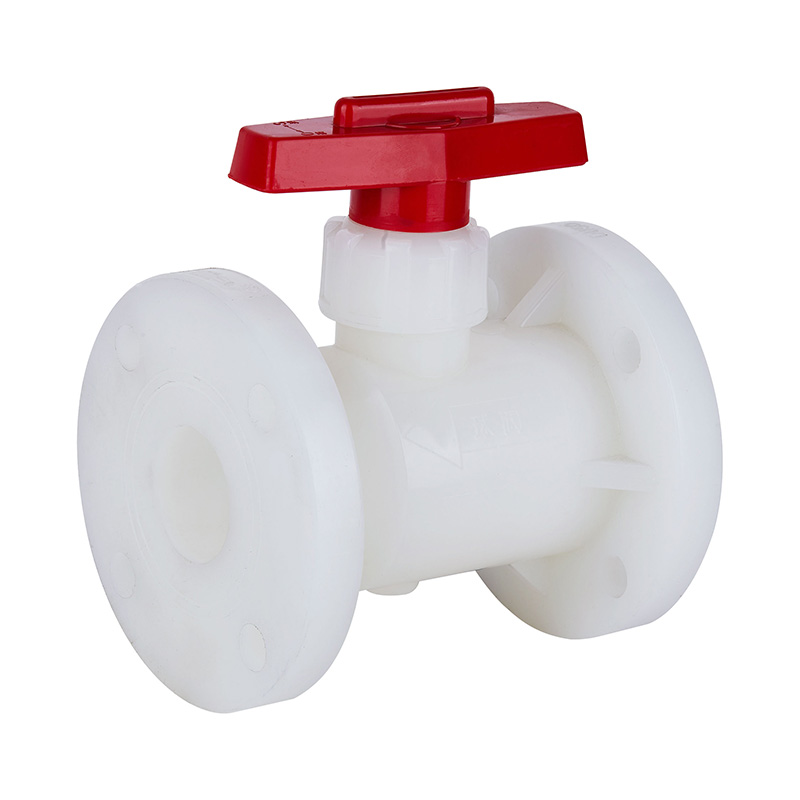
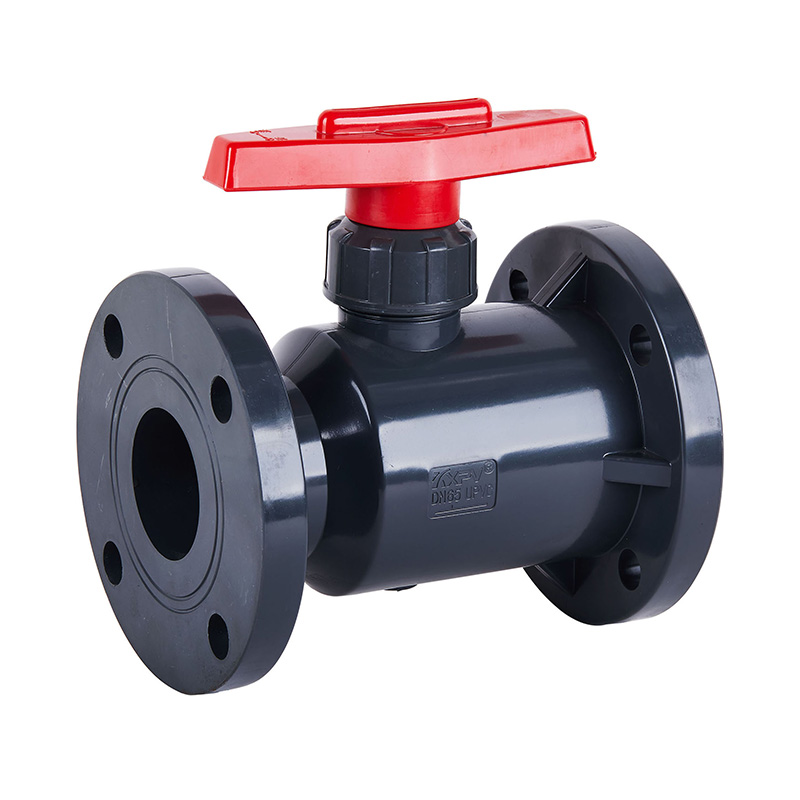
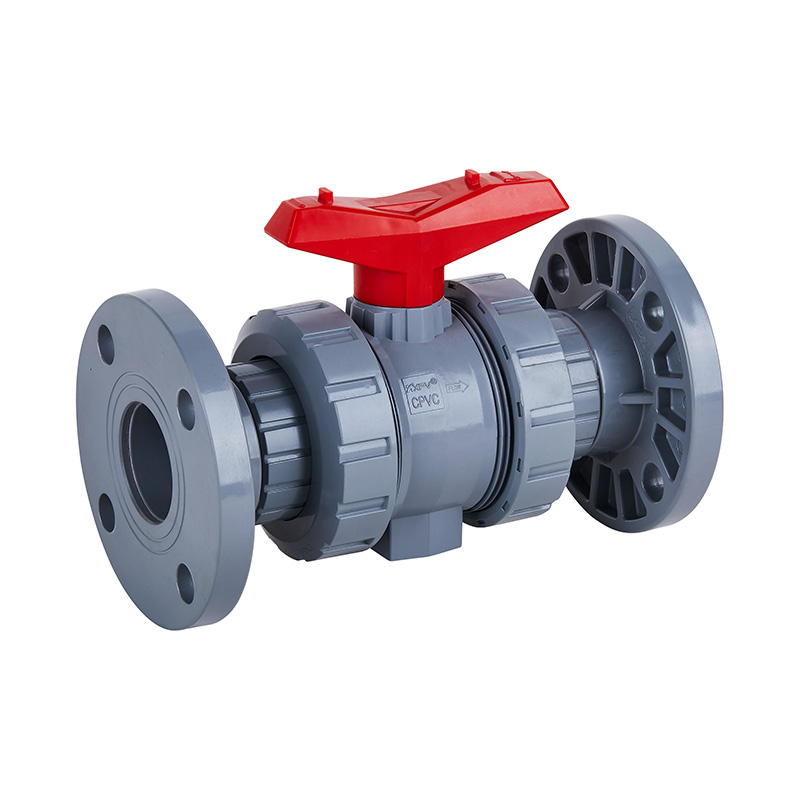 PVC-C Flanged Double Union Ball ValveProvides quarter-turn isolation with full-flow design and double O-ring sealing for chemical and water piping up to DN100.View Product →
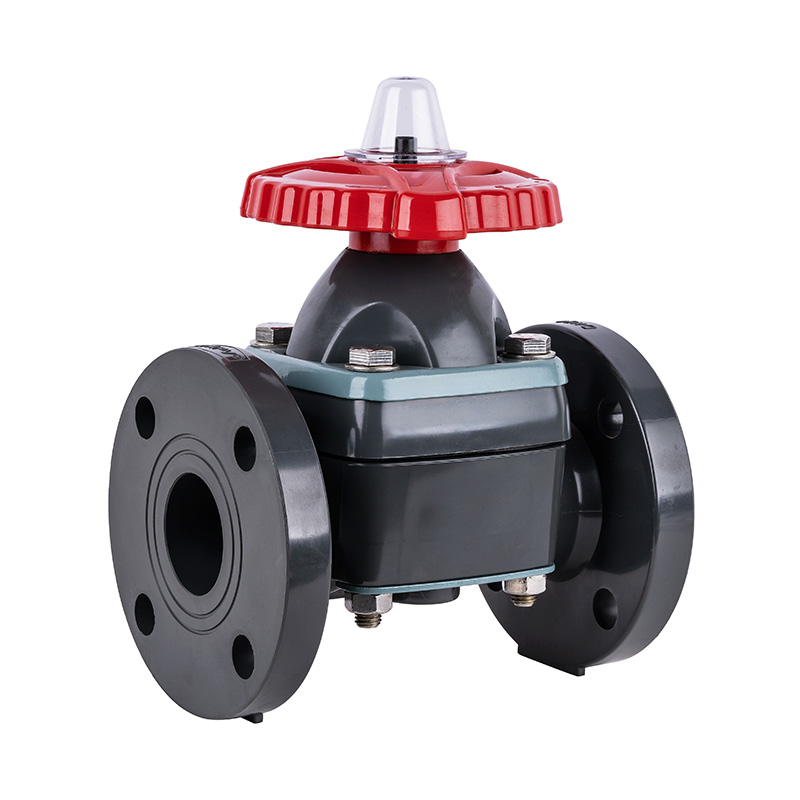
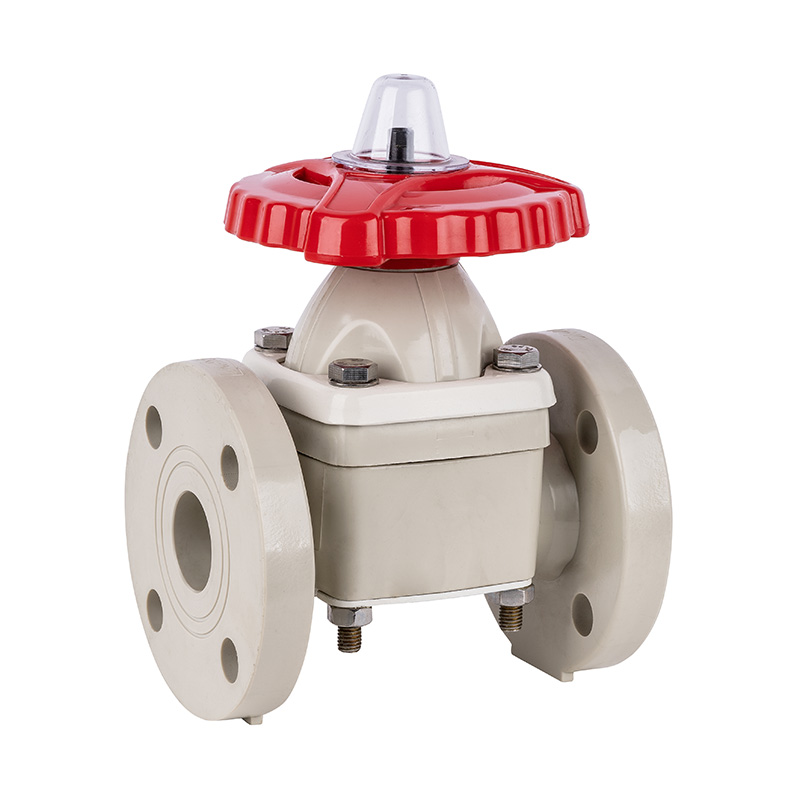
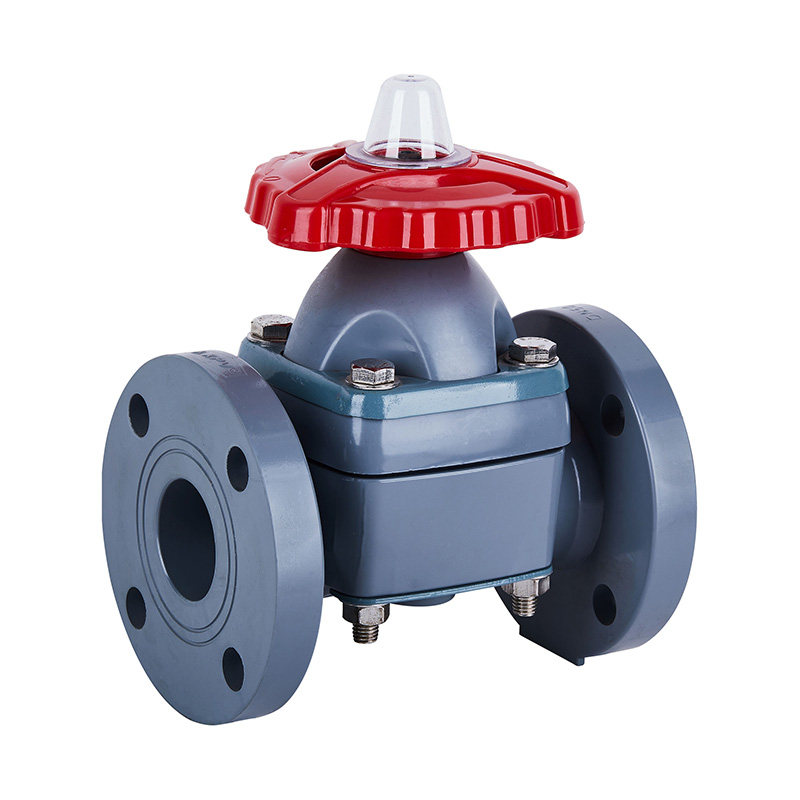
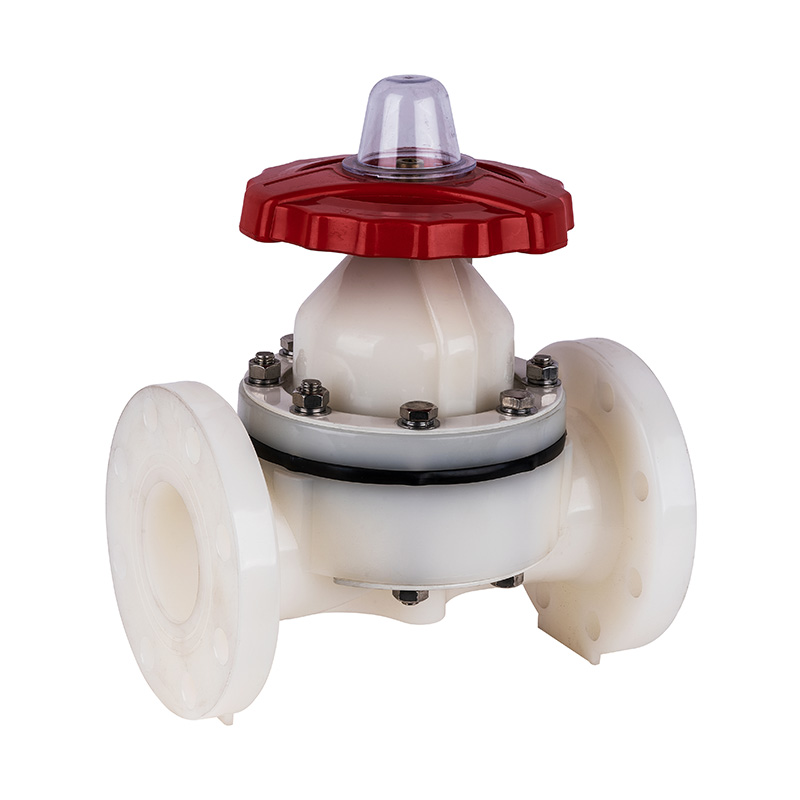
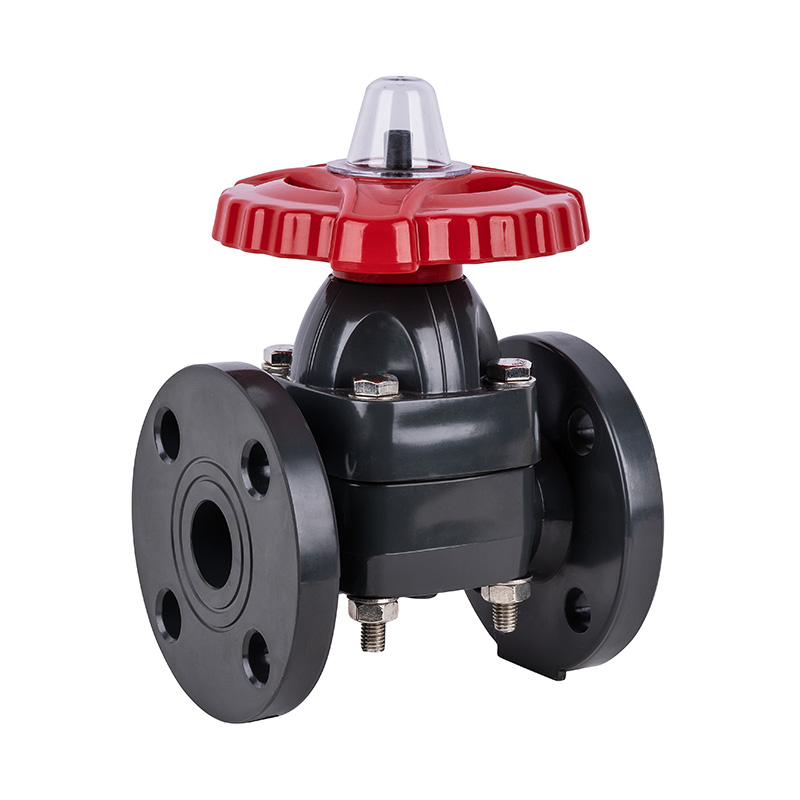
Where you need to throttle rather than simply open and shut, a diaphragm valve does the job without putting a metal seat in the stream. The diaphragm isolates the working parts from the fluid, which matters when the fluid is hot, dirty or both — a common situation on rinse lines and dosing skids where temperature control is handled upstream and fine flow adjustment happens at the valve.
 PVC-C Flanged Diaphragm Valve for Acid ServiceOffers manual throttling with isolated working parts and F46/PFA diaphragm sealing for corrosive acidic fluids in flanged piping.View Product →
Matching Material to Temperature
Material selection is where most hot-water projects are won or lost. The table below gives a rough orientation, not a specification.
| Material | Typical hot-water ceiling | Where it fits | Notes |
|---|---|---|---|
| CPVC | Around 93 °C, pressure dependent | Tempered water distribution, chemical lines | Solvent-cemented joints; check de-rating |
| PPH | Around 100 °C | Hot chemical and rinse lines | Butt-weld or socket fusion |
| PVDF | Around 140 °C | Aggressive chemicals, high-purity duty | Highest temperature headroom, highest cost |
| UPVC | Around 60 °C | Cold chemical service | Not suitable for tempering loops |
| FRPP | Around 100 °C | Hot corrosive drainage and slurry | Good abrasion resistance |
One more thing worth planning for: hot lines expand. Every start-up and shut-down cycle works the seals a little, so understanding how thermal cycling affects CPVC valve sealing is as important as picking the right polymer in the first place.
A Maintenance Rhythm That Prevents Surprises
Nothing on this page is complicated; the failures we see come from neglect rather than misunderstanding. A short routine, done twice a year, covers almost everything.
- Measure the outlet temperature at the farthest fixture and compare it with the commissioned value.
- Clean the inlet strainer on the valve; a partially blocked strainer is the quiet cause of most drift.
- Exercise every isolation valve through a full open-close cycle so it does not seize when you need it.
- Check the check valves for scale build-up, particularly on hard-water supplies.
- Look for weeping joints and crusty residue along hot lines, which signal early movement or stress.
Ten minutes of measuring beats an afternoon of diagnosing.
The Short Version
A mixing valve on a hot water heater is a proportioning device that lets the tank run hot while the outlet stays safe. Set the storage temperature first, then adjust the valve under real flow with a proper thermometer, and record what you set. Most temperature complaints come from an unbalanced supply, a blocked strainer or a scaled cartridge — not from a failed valve.
On the industrial side the logic holds, but the materials change: CPVC, PPH and PVDF bodies, double-union ball valves for isolation, diaphragm valves for throttling, swing check valves to keep the loop honest. Choose by temperature and chemistry, confirm the de-rating curve, and leave expansion room in the design.
If you are working through a hot or corrosive line and cannot decide where the valve belongs in the arrangement, describe the medium and the temperature to us. That conversation is usually shorter than the ordering process, and it saves a surprising amount of rework.

 Headquarters: No. 539 Bohai Road, Beilun District, Ningbo City, Zhejiang Province, P.R. China

 +86-18067123177
