

 EN
EN English
 Español
 عربى
عربى русский
 中文简体
中文简体
Kaixin, a high-tech enterprise specialized in the R&D, production and sales of polymer pipeline valves.
Scenario: a shutoff valve on your CPVC supply line is leaking, and the replacement valve in your toolbox has a compression inlet. You have seen compression fittings used on copper and PEX, but can you use a compression fitting on CPVC? The short answer is yes, but not every compression fitting is safe on plastic pipe. CPVC is more forgiving than it looks, but it will crack if the fitting is wrong, overtightened, or installed without proper support.
How Compression Fittings Work
A compression fitting is a three-piece mechanical joint: a fitting body, a compression nut, and a ferrule (sometimes called a sleeve or ring). When you tighten the nut, the ferrule is compressed between the nut and the body, which forces it to bite into the outside of the pipe. The resulting seal is watertight and does not rely on glue, solder, or heat. On metal pipe, a brass ferrule does this reliably. On CPVC, the same principle applies, but the pipe must be rigid enough to accept the ferrule without collapsing. Because CPVC is a thermoplastic, it is stiffer than PEX but still softer than metal. That is why the design of the ferrule and the amount of torque you apply matter so much.
Why CPVC Needs Special Attention
CPVC has good tensile strength and chemical resistance, but it is not designed to be crushed. A standard brass compression ferrule can deform the pipe wall during assembly if you use a wrench too aggressively. Over time, thermal expansion and contraction can also loosen a compression fitting that was not correctly tightened in the first place. If the pipe is unsupported, the weight of the valve and pipe can pull the joint apart.
The safe approach is to use compression fittings that are specifically rated for CPVC. Many plastic-bodied compression stops and angle valves use a plastic ferrule or a split-ring insert that grips the pipe without cutting into it. Brass fittings are not automatically out of the question, but they must be matched with a ferrule designed for plastic pipe. When in doubt, check the manufacturer’s installation instruction or look for a listing that explicitly says it is for CPVC.
When a Compression Fitting Makes Sense on CPVC
Compression fittings are not the first choice for a new CPVC water distribution system. A solvent-welded joint is cheaper, permanent, and rarely leaks. But there are several situations where a compression connection is the practical option:
- You need to install a shutoff valve in an existing line without draining and clearing the entire system.
- The pipe is located in a tight cabinet or close to a wall, leaving no room to apply primer and cement properly.
- You want a connection that can be disassembled later without cutting the pipe.
- You are transitioning from CPVC to a threaded metal fixture, such as a faucet supply or a pressure gauge.
In these cases, a quality compression fitting designed for CPVC will perform well for years. The key is to use it as a maintenance-friendly connection, not as a permanent hidden joint behind drywall.
How to Install a Compression Fitting on CPVC
Installation is straightforward, but the margin for error is small. Follow these steps to avoid cracking the pipe:
- Cut the pipe square with a tubing cutter or a fine-tooth hacksaw. A square cut helps the ferrule seat evenly.
- Remove all burrs from the inside and outside of the cut end. A deburring tool or utility knife works well.
- Slide the compression nut onto the pipe first, with the threads facing the fitting body. Then slide on the ferrule.
- Push the pipe into the fitting body until it bottoms out. If the fitting uses an insert stiffener, install that before pushing the pipe into place.
- Hand-tighten the nut until it is snug. Then use a wrench to turn it one-half to one full turn more. Do not overtighten.
- Hold the fitting body with a second wrench while tightening the nut so the pipe does not twist.
- Support the pipe within 12 inches of the fitting with a hanger or clip. This prevents stress on the joint.
Never use plumber’s tape or joint compound on the compression threads. The seal is created by the ferrule, not by the threads.
Compression vs. Solvent Weld vs. Push-Fit
| Method | Tools Needed | Seal Strength | Rework Ability | Best Use |
|---|---|---|---|---|
| Compression | Wrench, cutter, deburring tool | Good | Easy | Valves, repairs, transitions |
| Solvent weld | Primer, cement, cutter | Excellent | Permanent | Most buried or exposed CPVC lines |
| Push-fit | None | Good to excellent | Easy | Quick repairs, tight spaces |
The table shows why compression is a specialty tool, not a default. It does not match the long-term reliability of a solvent-welded joint, but it offers a clean, reversible connection when you need it.
Choose the Right CPVC Fitting
For permanent installations, a solvent-welded CPVC fitting is the most reliable option. A standard CPVC coupling creates a strong bond between two pipe ends, and it is the go-to choice for extending or repairing a line. If you need to disconnect the line in the future, a CPVC union gives you that ability without cutting.
At Kaixin Pipeline Technologies, we manufacture CPVC pipe and fittings in a wide range of sizes (DN15 to DN600) and standards, including GB, ANSI/ASTM, and JIS. For example, our CPVC coupling is made for solvent-welded joints in hot and cold water plumbing, chemical transfer, and industrial piping. When you need a joint that can be disassembled for cleaning or service, the CPVC union provides a simple, dependable solution. You can browse the complete range of CPVC fittings to find the exact size and configuration for your project.
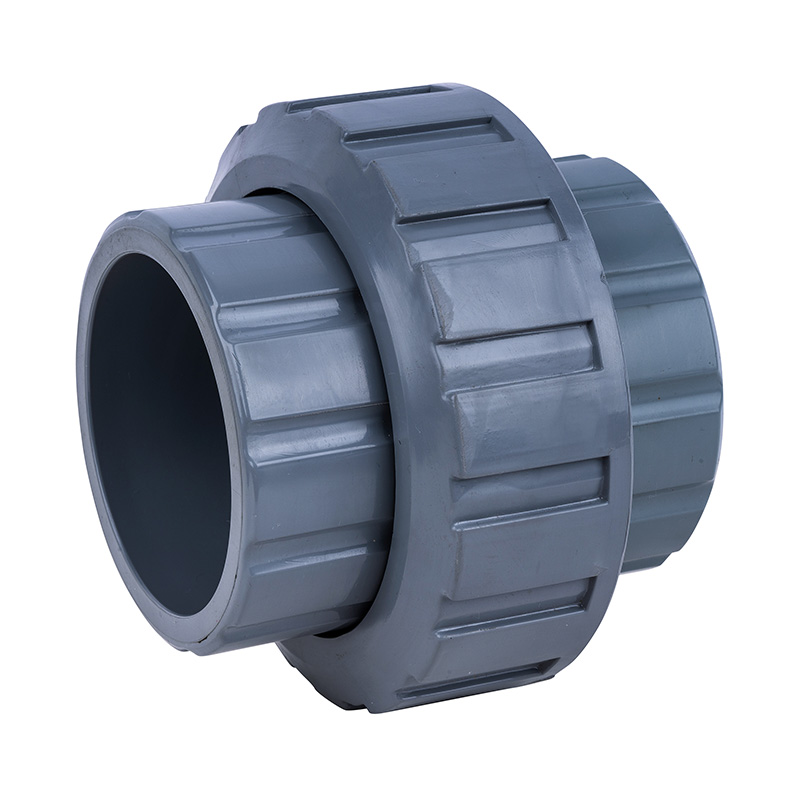 Wholesale PVC-C Union Fitting DN15-100 GB Standard Suppliers, Factory - Kaixin PKaixin Pipeline Technologies Co., Ltd is China wholesale industrial/household PVC-C Union Fitting DN15-100 GB Standard suppliers and fact...View Product →
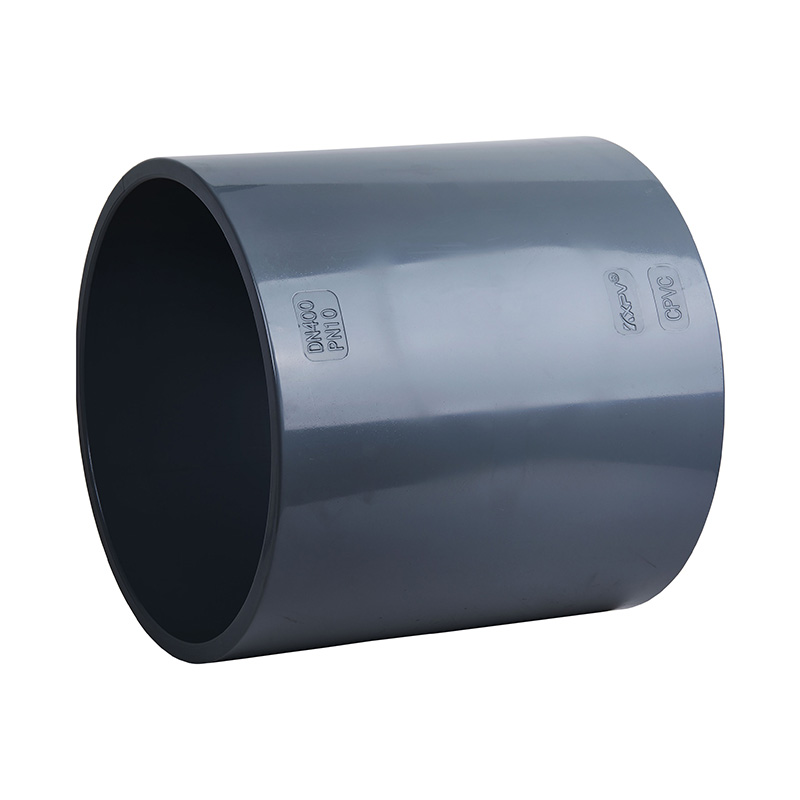 Wholesale PVC-C Pipe Coupling DN15-600 GB Standard Suppliers, Factory - Kaixin PKaixin Pipeline Technologies Co., Ltd is China wholesale industrial/household PVC-C Pipe Coupling DN15-600 GB Standard suppliers and fact...View Product →
The Bottom Line
So, can you use a compression fitting on CPVC? Yes, when the fitting is designed for plastic pipe and the installation is done with care. Use a compression connection for shutoff valves, short repairs, or transition points where a solvent-welded joint is not practical. For new or permanent piping, choose a solvent-welded CPVC fitting and let the cement form the bond. Compression fittings are a useful tool, not a replacement for a properly glued joint.

 Headquarters: No. 539 Bohai Road, Beilun District, Ningbo City, Zhejiang Province, P.R. China
 +86-18067123177