

 EN
 English
 Español
 عربى
 русский
 中文简体

Kaixin, a high-tech enterprise specialized in the R&D, production and sales of polymer pipeline valves.
Valve notes / industrial piping
The Double Union Ball Valve: A Small Detail That Saves Whole Shutdowns
A quarter-turn ball valve is simple. The double union version is thoughtful. It gives maintenance crews a way into the line without cutting pipe, welding, or turning a small repair into a full-day event—provided the body material, seats, and installation details are chosen for the fluid in question.
Why this valve earns its place
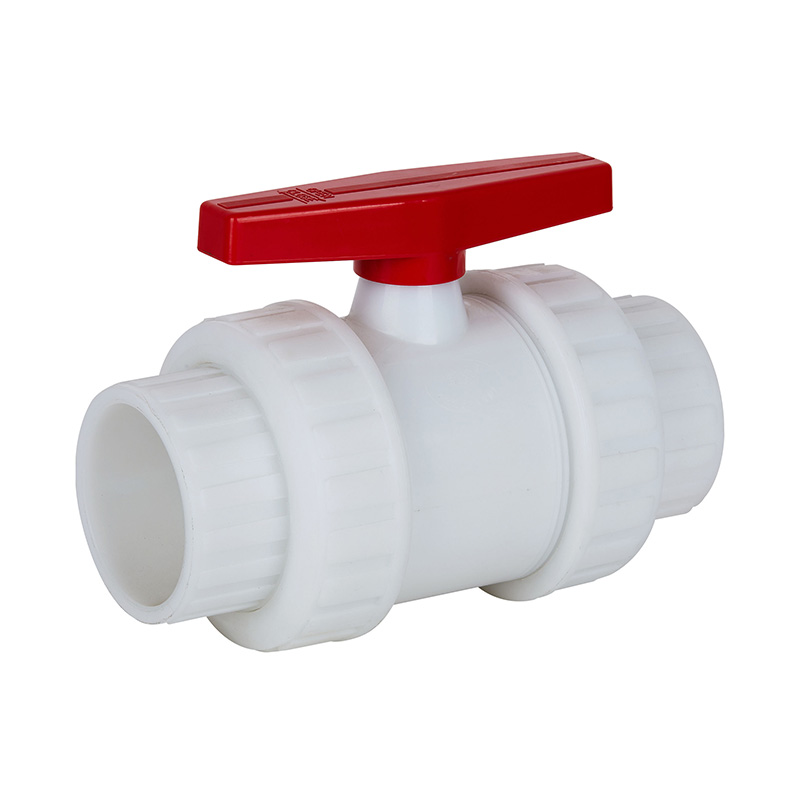
In chemical, plating, and wastewater areas, the most expensive part of a valve problem is rarely the valve itself. It is the isolation, the drain-down, the cut, the re-joint, and the wait for production to come back. A double union ball valve responds to that reality. Two union nuts flank the valve body, so the centre section can be unscrewed and lifted out while the pipe ends stay where they are.
That does not make it a universal answer. It makes it a practical one wherever a line needs frequent inspection, occasional cleaning, or a planned spare-parts strategy. For corrosive duty, that small maintenance advantage compounds over years.
How a double union ball valve works
At its core, the valve is familiar: a spherical ball with a bore through it, held between two seats, turned by a stem and handle. A quarter turn takes the bore from open to closed. The difference is at the ends.
- Union connections: Each end has a union nut and a mating tail. Loosening the nuts separates the valve body from the piping without cutting or welding.
- Ball and seats: The ball controls flow; the seats form the seal. In plastic valves, seat material and surface finish matter as much as the body polymer.
- Stem and handle: Manual handles are standard, but pneumatic and electric actuation can make a double union body part of an automated isolation point.
- Body material: CPVC, UPVC, PVDF, PPH, and FRPP each behave differently across temperature, concentration, and pressure cycles.
A union is not a shortcut. It is a promise that tomorrow’s repair will be easier than today’s installation.
The design is especially useful where a valve sits at a low point, near a tank outlet, or on a dosing skid—places where access is tight and a little clearance goes a long way.
Material first, then size
Plastic ball valves are often sold on size and price, but the material decision should come first. The wrong polymer will fail in a way that has nothing to do with the ball or the handle. It will swell, craze, soften, or lose impact strength because the fluid, temperature, or cleaning cycle was outside its comfort zone.
CPVC and UPVC are common starting points for many water and moderate chemical services. CPVC generally offers a higher temperature ceiling than UPVC, while UPVC is widely used in acidic and plating-related lines where its chemical resistance fits the duty. Both are cost-effective, but neither is a universal shield against solvents or strong oxidisers.
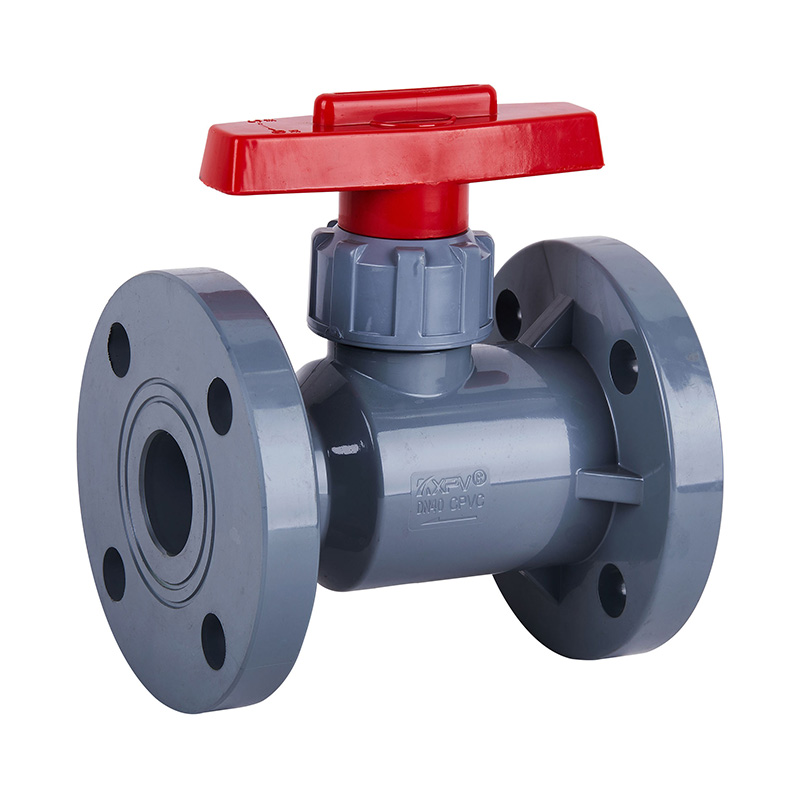
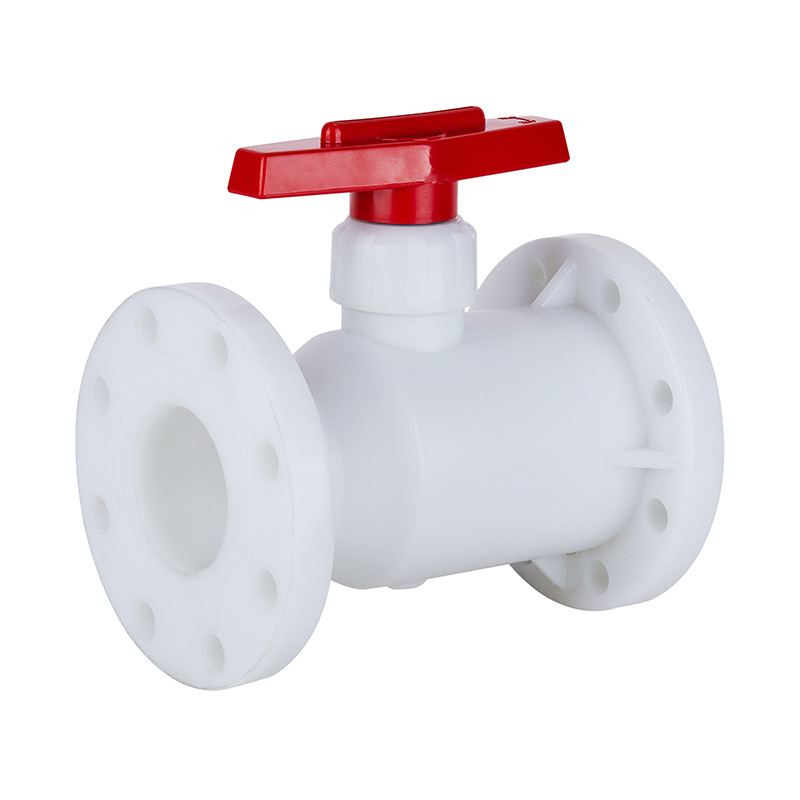
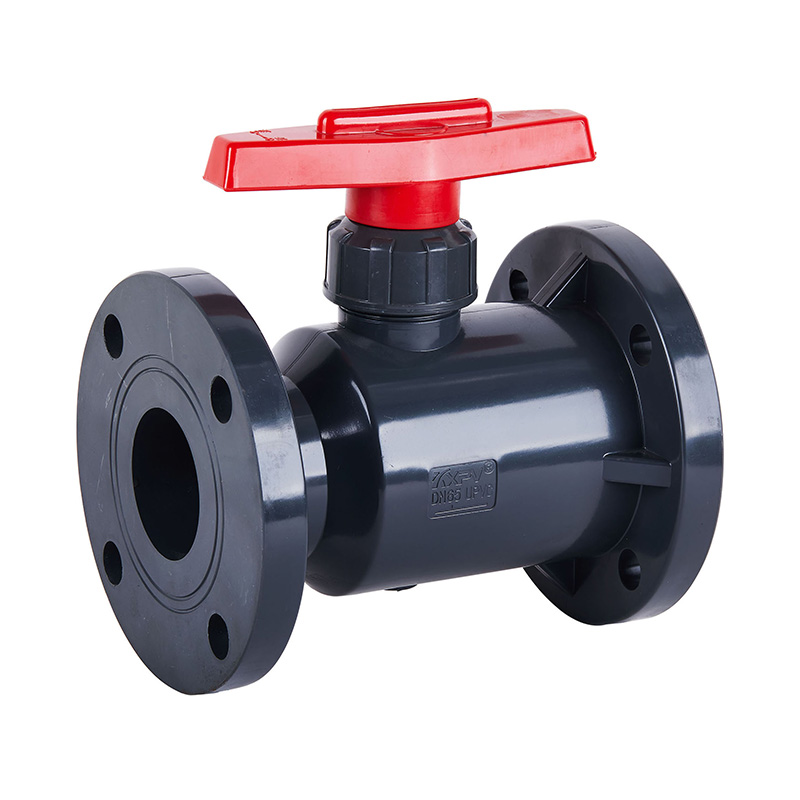
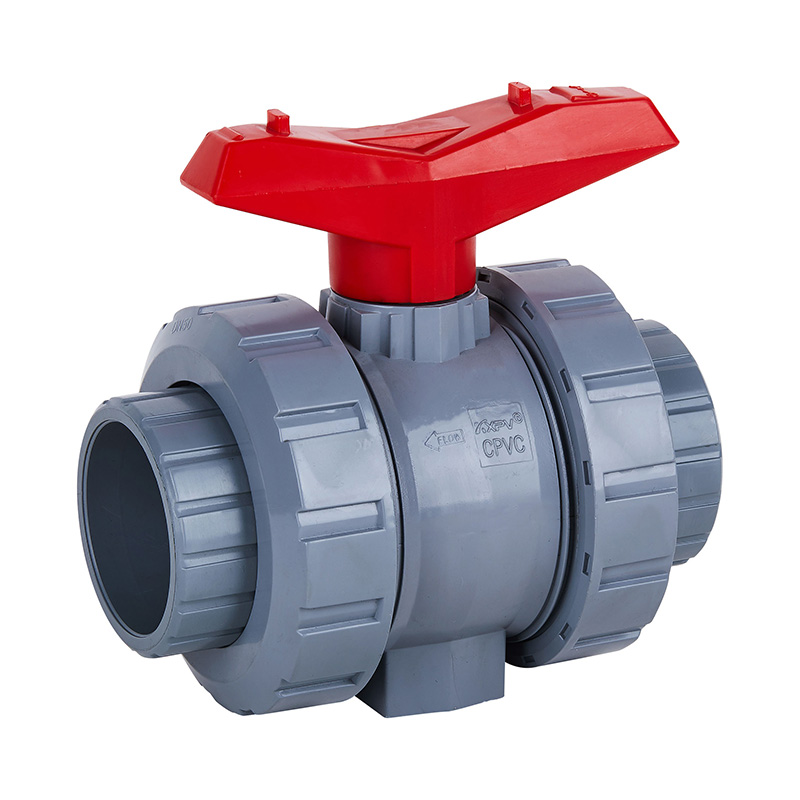
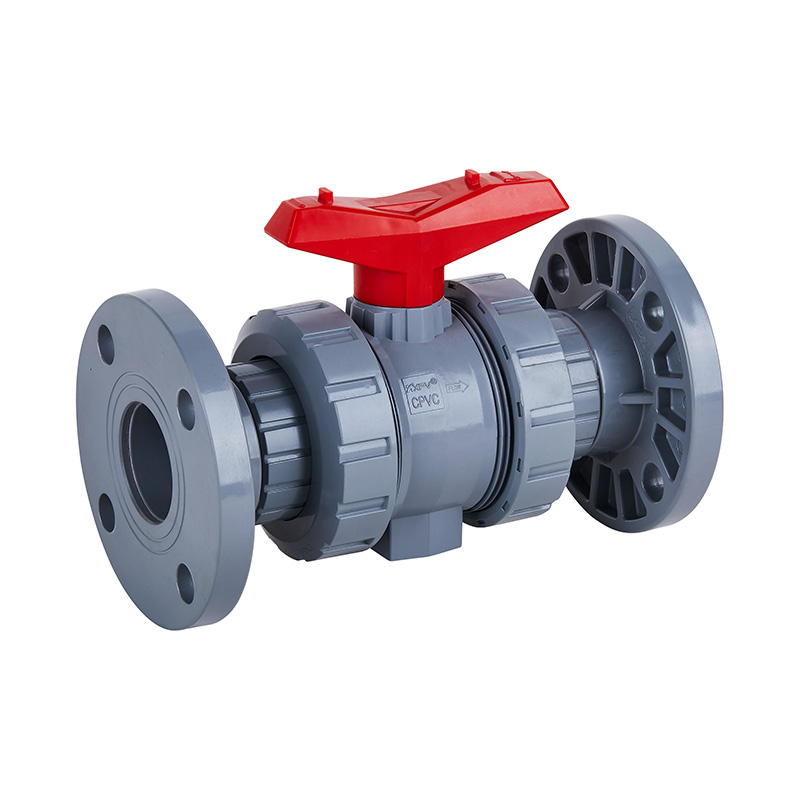 PVC-C Flanged Double Union Ball Valve DN15–DN100A 1.0 MPa PVC-C ball valve with PTFE seat and double O-rings, suited to moderate chemical and water lines where CPVC temperature and chemical resistance fit.View Product →
PPH is a strong candidate for chemical lines where resistance to acids and bases is needed and where welding or hot-melt jointing suits the pipe system. It is often seen in pickling, dosing, and wastewater duty. The valve body and union ends need to be matched to the pipe material and joining method, not chosen in isolation.
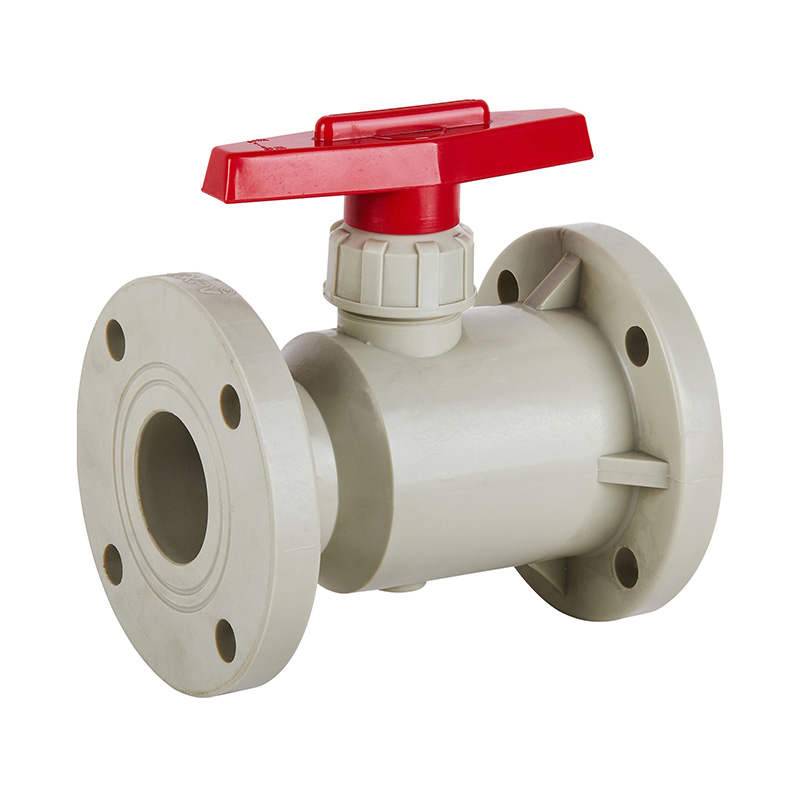
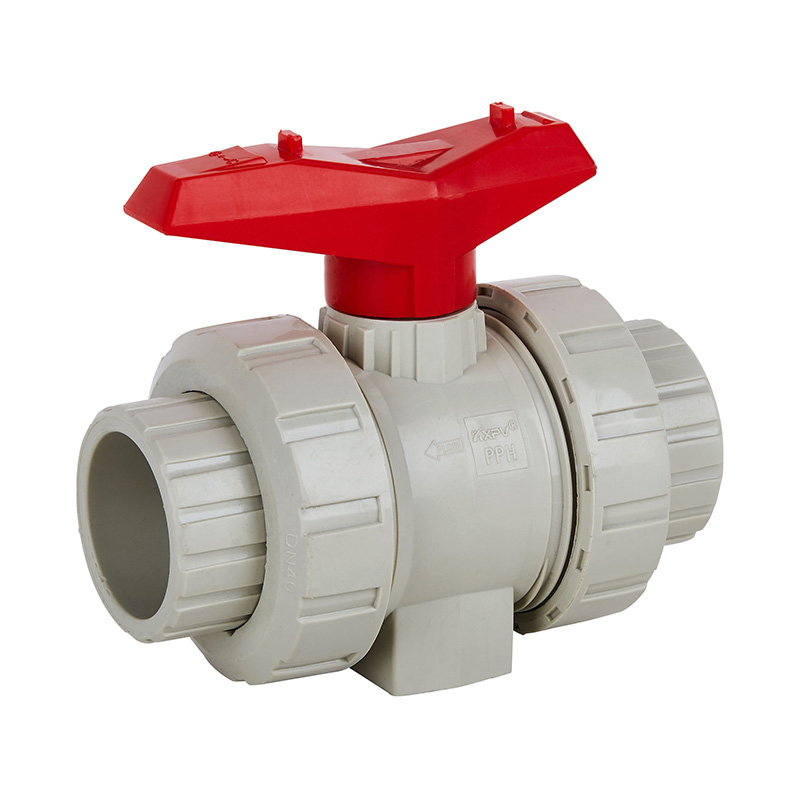
 PPH Flanged Double Union Ball Valve DN15–DN100A 1.0 MPa PPH valve rated to +110°C, with PTFE seat and double O-rings, worth reviewing for acid/base chemical lines using compatible joining.View Product →
PVDF moves the conversation toward higher temperature and more aggressive chemical service. It is often selected when CPVC or UPVC would be marginal, and when the cost can be justified by uptime. FRPP fills another useful space: reinforced polypropylene for services where mechanical strength and chemical resistance need to meet at a sensible cost.
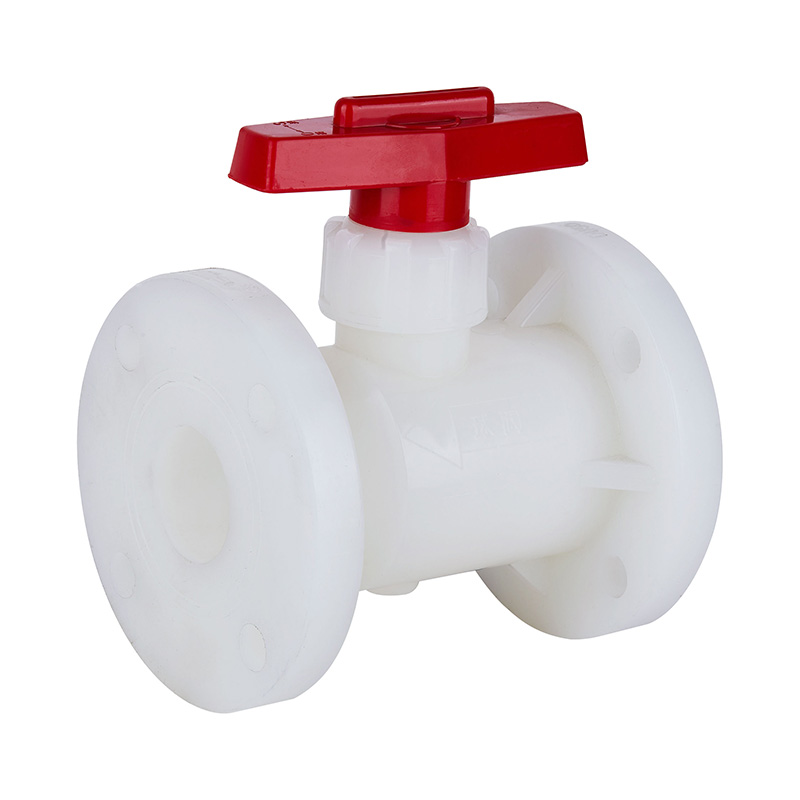
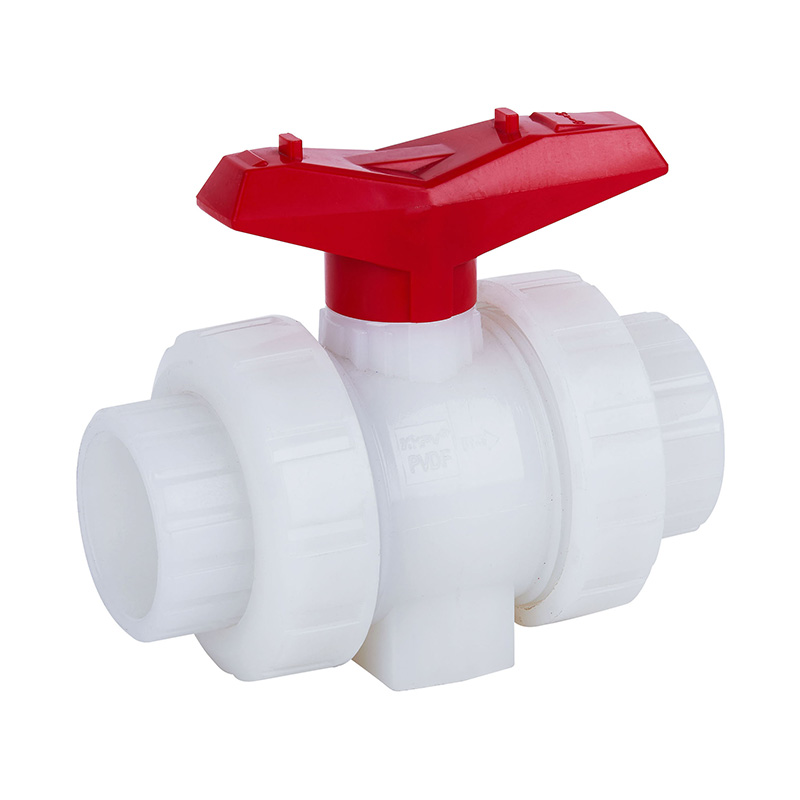
 PVDF Flanged Double Union Ball Valve DN15–DN100A 1.0 MPa PVDF ball valve rated 40°C to +150°C, with PTFE seat and double O-rings, suited to higher-temperature corrosive service.View Product →
Within our own plastic ball valve range, double union bodies commonly cover DN15 to DN100, while other valve styles and actuated designs extend further. The right size is not simply the pipe diameter; it is the pipe standard, the face-to-face space, the union thread, and the maintenance clearance around the body.
For a broader view of body styles and end connections, see our plastic ball valve range.
Sizing, pressure, and temperature are a conversation
A catalogue pressure rating is a starting point, not a guarantee. A valve that holds 10 bar at 20°C may have a very different ceiling at 60°C, or after a thousand thermal cycles. Chemical concentration matters too. A line that is benign at one dilution can attack seals or stress the body at another.
| Material | Often considered for | What to check |
|---|---|---|
| CPVC | Moderate chemical and hot-water lines | Temperature ceiling, solvent cement compatibility, UV exposure |
| UPVC | Acid, plating, and general corrosive drainage | Pressure derating at temperature, thread sealants, impact risk |
| PVDF | Aggressive chemicals and higher-temperature duty | Cost, joining method, seat compatibility, thermal expansion |
| PPH | Chemical dosing, pickling, wastewater | Welding quality, support spacing, pressure cycling |
| FRPP | Reinforced polypropylene piping and valve bodies | Joint integrity, mechanical loads, long-term UV exposure |
Info: Ask for the pressure–temperature derating curve, not just a single headline pressure figure. A double union ball valve is only as reliable as the weakest number in the chain.
Installation and maintenance without drama
The best double union design can be undone by poor installation. Plastic threads are easy to cross-thread; union nuts are easy to over-tighten; pipe runs are easy to leave misaligned. A little patience at commissioning saves a lot of grief at maintenance.
- Confirm that the pipe ends are square, aligned, and supported. Do not use the valve body to pull a misaligned line into place.
- Follow the pipe maker’s joining procedure for solvent cement, hot-melt, or butt-weld connections. Cure times are not optional suggestions.
- Hand-tighten union nuts first, then use the maker’s recommended final turn. More force is not more sealing.
- Leave access for the body to be removed. A double union valve that is boxed in by conduit or structural steel is only half a good idea.
- Cycle the handle before start-up and confirm that the bore turns freely. Do not force a handle that feels stiff.
Warning: Avoid metal pipe dope, aggressive thread-cutting compounds, and incompatible sealants on plastic threads. They can stress the material or leave a residue that attacks the valve later.
For maintenance, isolate the line, drain it, and loosen both union nuts. The body can then be inspected or replaced. Keep a spare seat set and one spare union nut on the shelf; these are small parts that can turn a planned service into a quick one. The same discipline applies across the chemical piping series: valve, pipe, fitting, and joining method should be designed as one system.
Success: Label each valve with its service, material, and last inspection date. A tiny label often prevents the wrong spare from being fitted under pressure.
Where it fits in real plants
In chemical processing, double union ball valves are useful on tank outlets, transfer lines, dosing skids, and sampling points where isolation needs to be quick. In electroplating, they suit rinse lines, plating-solution circulation, and filtration loops—areas where the fluid is unfriendly and maintenance windows are short. In environmental systems, they appear around scrubbers, wastewater transfer, and chemical-addition stations.
They are not the right tool for precise throttling. A ball valve is best used for on/off isolation; if flow needs to be trimmed, a globe or diaphragm valve is usually the better conversation. Nor should a double union body be used to compensate for a poorly supported pipe. The union is a maintenance feature, not a structural one.
Danger: Never assume compatibility from a material name alone. Confirm the fluid, concentration, temperature, and cleaning agent with the valve and pipe manufacturers before the line is commissioned.
A short selection checklist
When you compare double union ball valves, move in this order:
- Fluid and concentration: what is flowing, and what else might be present during cleaning or upset conditions?
- Temperature range: continuous, peak, and cycling. The peak is not always the problem; the cycles can be.
- Pressure and pipe standard: GB, ANSI/ASTM, JIS, or a project-specific specification. Match faces, threads, and union ends.
- Body and seat material: the body must suit the fluid; the seats must survive the same fluid and temperature.
- Actuation and access: manual, electric, or pneumatic—and can a maintenance technician actually reach the unions?
- Spares and documentation: seat sets, union nuts, pressure–temperature curves, and material certificates where required.
It also helps to think beyond the valve. A double union body is only one part of a corrosion-resistant system. The pipe, fittings, gaskets, and pump materials all influence how long that valve stays in service.
The quiet return on a better detail
The double union ball valve will never be the most eye-catching item on a piping drawing. Its value shows up later: in the maintenance technician who can remove a body without cutting a line, in the spare seat that fits because someone checked the material, and in the shutdown that ends on schedule because access was designed in.
Choose it for the right reason—not because it looks more convenient, but because the line genuinely benefits from quick, repeatable service. Start with the fluid, confirm the material and rating, install it without forcing it, and keep the small spares close. That is how a simple quarter-turn valve becomes a long-term asset.
 Headquarters: No. 539 Bohai Road, Beilun District, Ningbo City, Zhejiang Province, P.R. China

 +86-18067123177
