PVC-C Pipe Adhesive GB Standard

Grey
3-years warranty
Compliance with ASTM F-493 Standards
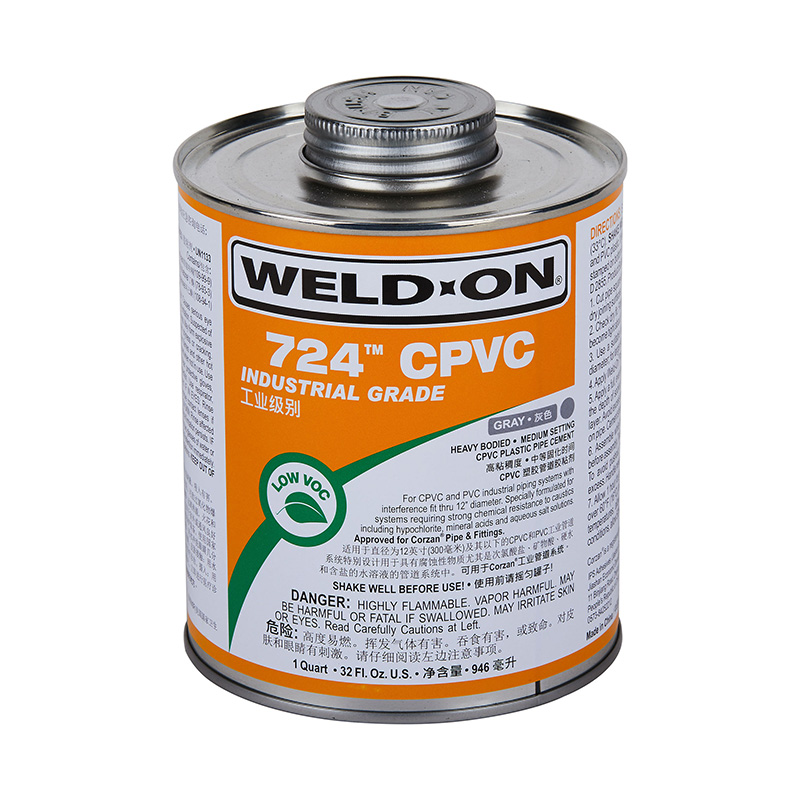
High viscosity, medium dry
Suitable for all sizes of PVC-C pipes and fittings up to 24" (630 mm) .
With an excellent ability to fill the gap between the pipe and the fittings and provides longer construction time at normal temperature.
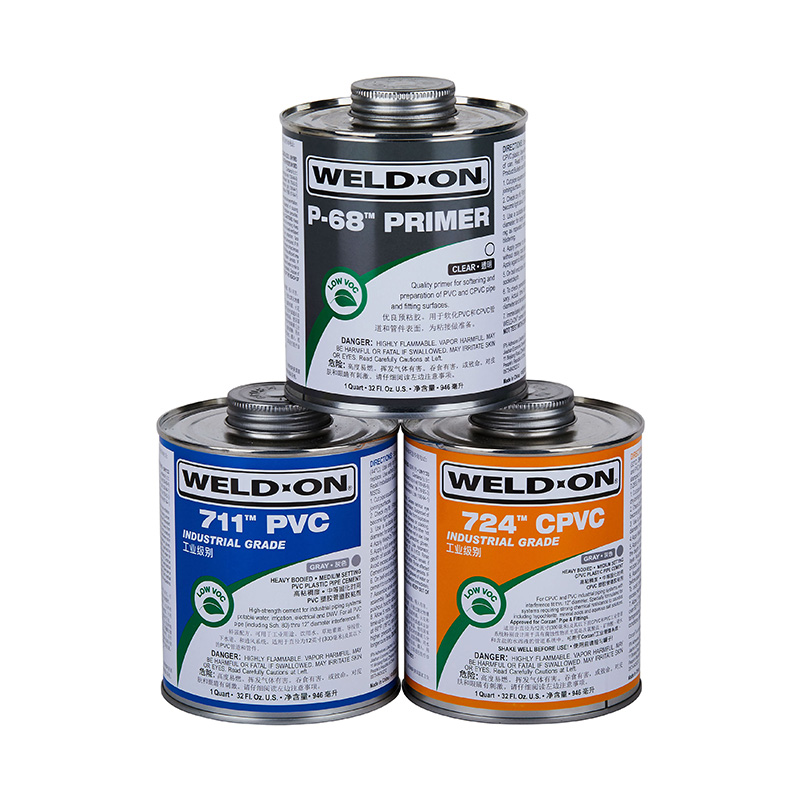
High Pressure Resistant PVC/PVC-C Pipeline Glue Industrial Adhesive pvc/PVC-C 724 Pipe Solvent Glue For Plastic Pipe
Place of Origin:Ningbo, Zhejiang
Classification:Other Adhesives
Main Raw Material:THF
Usage:Construction, Packing
Brand Name:KXPV
Product name:Pipe Solvent Glue
Application Fields:PVC-C
Size:724
Delivery time:7 Days
MOQ:1 Pieces
Capacity:946ml
Supply Ability:10000 Piece/Pieces per Month
App Temperature Bound List
Material        Medium temperature℃ Material Medium temperature℃
PVC-C -20℃~+95℃ PVC-U -5℃~+45℃
FRPP -20℃~+120℃ PPH -20℃~+110℃
PVDF 40℃~+150℃
Product Structural Features
Misuse of glue for first aid
Inhalation: If inhalation and collapsed ,please move the patients to fresh air, if patients with difficulty in breathing ,give oxygen and requested medical attention.
Eye or skin contact: use of adequate water rinse eyes for 15 minutes, if the aggravating circumstances, please seek medical treatment as soon as possible.
Eating: such eat mistaken, avoid spit and send to hospital for cure.
Storage conditions
Adhesive should be stored in 15°C -38°C in the day environment, avoid sunlight, and maintain a period of 2 years(use it as soon as possible afer opening).
The basic cementation principle for solvent adhesive
1.Apply preliminary glue to make the pipe and sufficiently soft and soaked with the glue.
2.Use sufficient glue so that the gaps between the pipes and joints are properly filled.
3.Bond the pipes and joints when the glue is wet.
4.Since the ends sustain around 70% of the strength, the pipes must be pushed to the end.
Bonding technology of pipelines
1.The ends of pipes must be cut neatly and must perpendicular to thecentral axis of the pipe.
2.Remove he flash in the out of the pipe and chamfer(10 to 15 degrees)
3.Wipe off he dirt, oil stans and moisture in and out of the pipes(since they adversely affect bonding strength)
4.Use measuring instruments to measure the depth of the reception of the joints and mark the measured data on the inserting part of the joints.
5.Start the bonding
1.Firstly, apply the preliminary glue on the joint. It is prohibited to allow the glue to floe into the joints.
2.Then apply the preliminary glue on the scope marked on the pipe.
3.Homogeneously apply glue on the inserting part of the pipe, the applied lenget being the marking scope.
4.Lmmediately afterwards, used the same brush to apply glue onto the receiver of joint.
5.When the glue is wet, immediately insert the joint and use enough force to push it to the end and twist it an twist it an angle of 15 to 45
degress.
6.Push the glued connection of the joints, make sure the joints will not be pushed out under static force.
7.Upon the piece of cloth to wipe off the redundant glue at the connecting part.
8.Use a piece of cloth to wipe off the redundant glue at the connectingpaat.
Five basic coperation methods
1.The surface for bonding must be properly softened and soaked
2.Sufficient glue is needed to fill the gaps between the pipes and joints.
3.The pipes and joints must be bonded when the glue is wet
4.The pipes and pipe pieces must be pushed to the end.
5.Sufficiet complete solidification time is required for dtying before pressure is applied.
Bonding under low temperature
1.Bonding shouldn't be done in the morning orevening.
2.Store the glue at a warm or normal temperature place to increase its flowability.
3.Wipe off the moisture on the pipes or joints to be bonded.
4.If possible, expose the pipes or joints in the sunlight for several hours.
5.Due to the cold temberature, the drying time is longer than it is under normal temperature. After complete solisification , place it idle for a certain period before applying the pressure
6.Under cold weather ,the pipelines should be bonded section by section to avoid the movement of joints as much as possile.
7.Before the installation, read the pipeBonding Technique carefully and conduct the installation as per the operatin procedure.
Bonding under high temperature
1.The glue and preliminary glue shall be stored in a cool room with good ventilation.
2.If possible, the pipes and joints shall be also stored in a cool room with good ventilation.
3.Try to conduct the bonding of pipe shall be done in the morning.
4.Use a wet cloth to wipe the area on the pipes to be bonded. The vaporization of water can reduce the temperature by some degrees how even, before the bonding, make sure the connecting suefaces are completely day.
5.When the bonding is done, make suef the glue is wet. If a pipe with large diameter is to be bnded, the work must be done under cooperation of many people.
6.Use glue with high viscosity for the bonding, because high viscosity glue dries up slowly and promises longer bonding time.
7.After the application of glue, the lid must be put on the container.
Precautions
1.Always bear in mind that preliminary glue is prohibited for bonding of ABS pipes.
2.Fire is prohibite at the bonding site.
3.Bonding must not be done under rainy or snowy weather.
4.Bonding must not be done when the temperature at site is lower than -20°C.
5.Try to conduct the bonding in an area with good ventilation.
6.Try to avoid contact with skin or eyes.
7.Into contact with the local children.
Summer construction considerations
1. Before use, store the adhesive and pre-adhesive indoors or in a cool place;
2. If possible, store the pipes and fittings indoors or in a cool place;
3. Wipe the joints of the pipe fittings with a damp cloth to cool down, but only after they are completely dry can the adhesive be applied;
4. Try to install in the morning or evening when the temperature is low;
5. When the adhesive is still wet, perform bonding. If bonding large-diameter pipes, multiple people must cooperate to complete it;
6. Choose adhesives with higher viscosity, because adhesives with higher viscosity have a slow drying time, which can give a longer working time;
7. The lid must be tightly closed. The volatilization of the solvent will thicken the adhesive and reduce its effectiveness. Do not add diluent to change the viscosity, otherwise it may cause major changes in performance.
Winter construction considerations
1. Store pipes and fittings in a warmer place as much as possible;
2. Tightly cover the adhesive and store it in a place of 5-33℃. Make sure that the glue can flow freely before use; when the glue becomes very viscous due to the weather, it can be moved to room temperature and placed for a period of time until it returns to normal Reuse the consistency;
3. At low temperatures, the hardness of the pipe surface will increase, and the softening and penetration of the adhesive is slower than at room temperature. Therefore, it is necessary to use a pre-adhesive to soften the pipe surface first, and it will take more time to cure and dry after bonding. Change;
4. Choose to use pre-adhesive P-70, which has better performance under low temperature conditions.
5. If the temperature is too low, you can move the pre-adhesive and adhesive to the room to slowly heat up. Do not use open flame heating to quickly heat up.
Message Feedback
About Us
Kaixin Pipeline Technologies Co., Ltd.
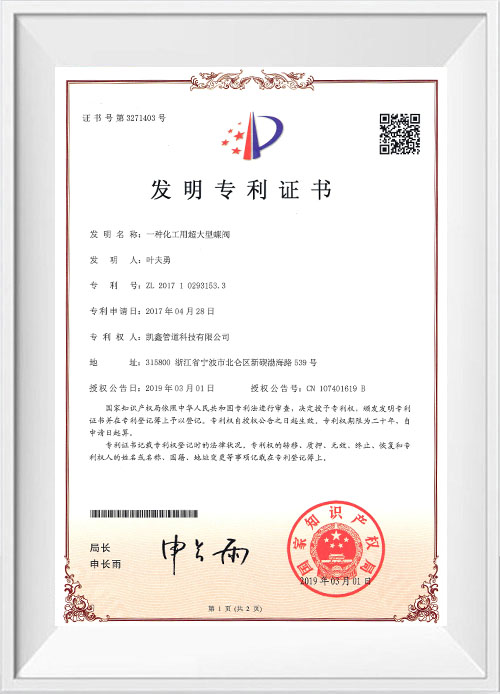
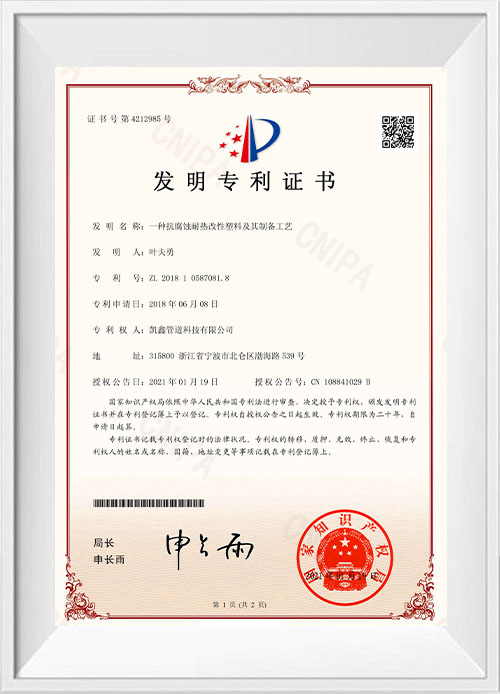
Founded in 1999, Kaixin Pipeline Technologies Co., Ltd. is a high-tech enterprise integrating R&D, manufacturing, sales, and service. As a famous China PVC-C Pipe Adhesive GB Standard Suppliers and PVC-C Pipe Adhesive GB Standard Factory, the company holds multiple prestigious certifications, including National High-Tech Enterprise, “Little Giant” Specialized and Sophisticated SME, National Single Product Champion (Cultivation), Provincial Technology-based SME, Ningbo Specialized and Sophisticated SME, Ningbo Single Product Champion (Cultivation), Ningbo Polymer Pipe & Valve Technology R&D Center, District-Level Green Factory, Ningbo Four-Star Management Innovation Enterprise, and Enterprise Data Management Capability Maturity Level 2.
We specialize in developing, producing, and supplying non-metallic corrosion-resistant products for chemical applications, including plastic valves, pipes, pipe fittings, and corrosion-resistant pumps. Our product portfolio spans materials such as PVC-C, PVC-U, PVDF, PPH, and FRPP, with a comprehensive range of types and specifications. Notably, our butterfly valves can reach DN1000 in diameter, while pipes and fittings extend up to DN800, addressing market gaps and maintaining our competitive edge in the industry.
Guided by the principle of “Technology-Driven, Keeping Pace with the Times,” Kaixin allocates nearly RMB 10 million annually to R&D. We ensure superior product quality through standardized automated manufacturing and strict sourcing of imported raw materials. Aligned with our international development strategy, we continuously monitor global market trends and leverage digital channels to bring high-quality “Made in China” products to customers worldwide.
Ningbo • Fenghua R&D & Production Base
With a total investment of RMB 200 million, Kaixin Ultra-Pure Pipe Technology (Ningbo) Co., Ltd. has established a new materials laboratory in collaboration with universities and research institutes, built a modern manufacturing base, and installed 8 fully automated production lines for modified plastics and 8 for polymer materials. The facility is dedicated to the R&D, production, and application of new modified plastics and polymer materials. Kaixin is also committed to attracting top talent across disciplines, continuously driving product innovation and brand development, with the goal of becoming a globally recognized leader in the R&D and manufacture of polymer valves, pipes, and fittings.
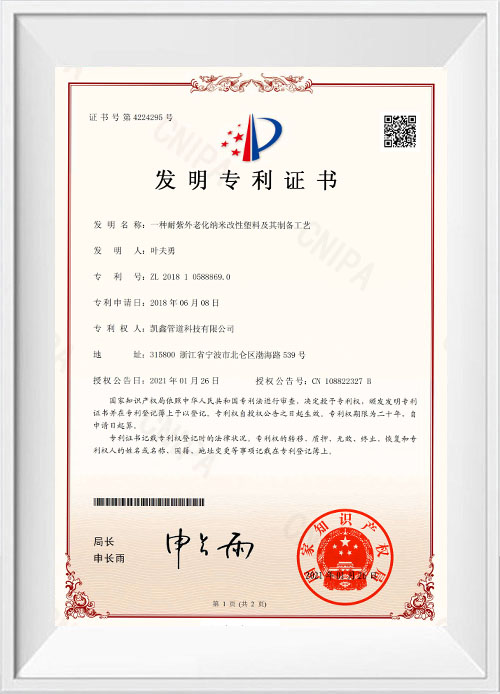
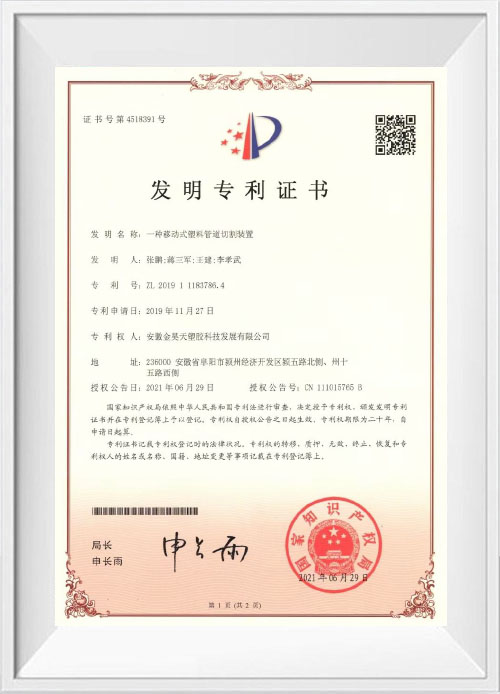
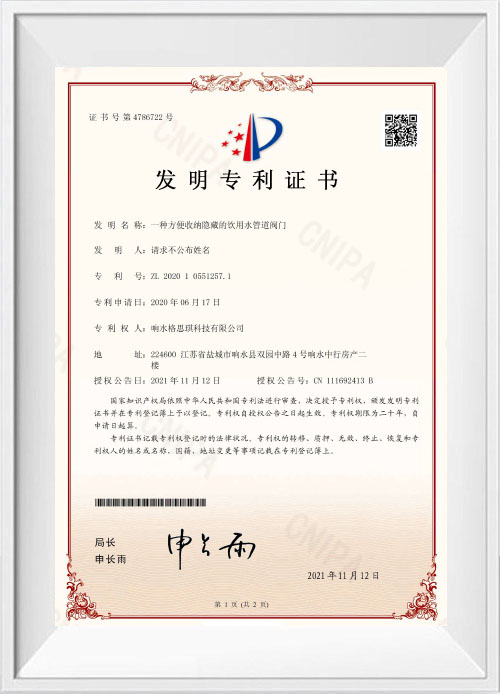
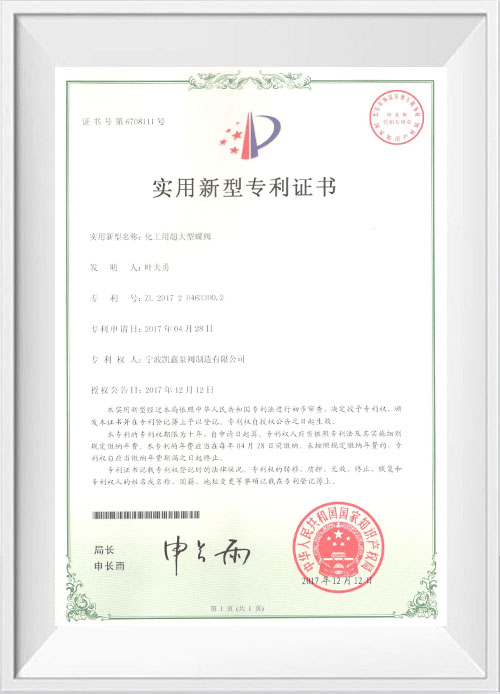
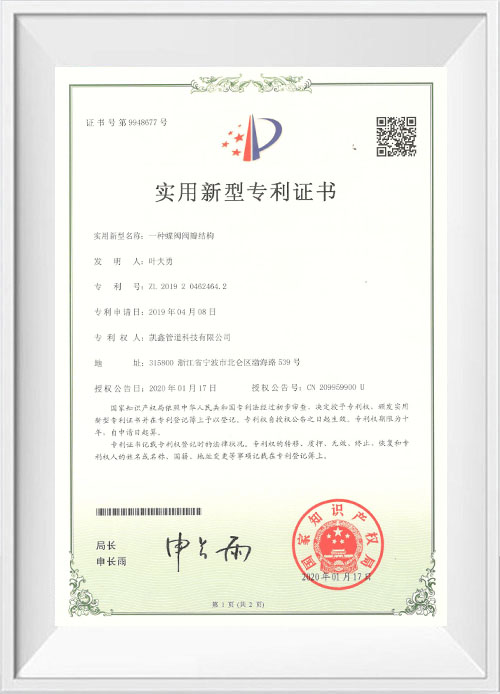
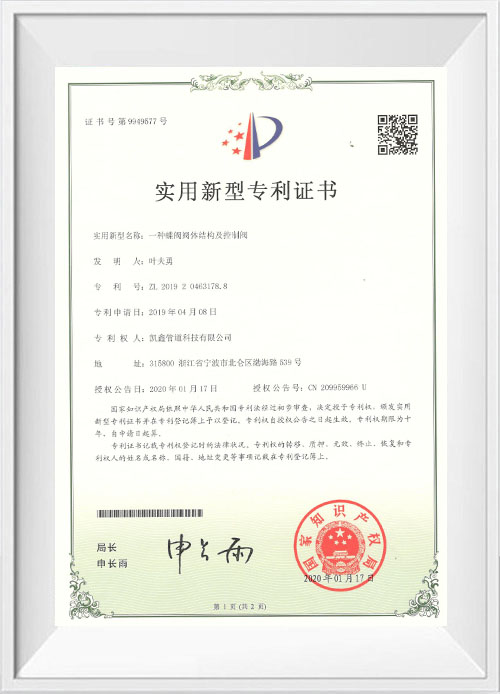
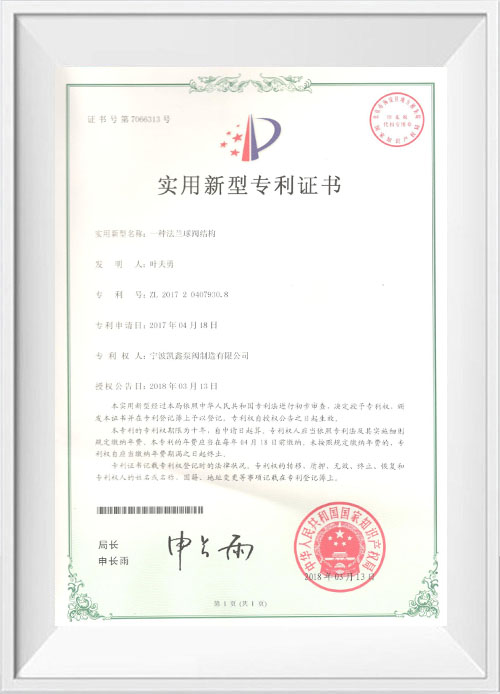
Certificate Of Honor
  • honor
  • honor
  • honor
  • honor
  • honor
  • honor
  • honor
  • honor
  • honor
News