

 EN
EN English
 Español
 عربى
عربى русский
 中文简体
中文简体
Kaixin, a high-tech enterprise specialized in the R&D, production and sales of polymer pipeline valves.
Industrial Flow Control
One Way Valve for PVC Pipe: Choosing a Check Valve That Actually Seals
Backflow in a plastic line rarely announces itself. It shows up as a pump casing cracked by reverse rotation, a dosing tank empty by morning, or contamination found only at final inspection. The valve that prevents it costs a fraction of the repair, provided it is specified correctly.
On PVC pipe, the term one way valve almost always means a check valve: a body with no handle and no actuator that lifts on forward flow and reseats on reverse flow. The decision that matters is not the pipe diameter. It is cracking pressure, mounting orientation, and body material.
Get those three aligned and a modest plastic valve will hold for years. Get any one of them wrong, and no line item on the purchase order will rescue the installation.
Plastic piping systems rely on three common designs, swing, ball, and vertical lift, plus a fourth variation, the bottom valve, which sits at a pump inlet and often incorporates a strainer. They behave differently under identical pressure, so selection has to begin with the process rather than the catalogue.
Why PVC Changes the Whole Calculation
A check valve behaves the same way on paper regardless of what it is bolted to. The pipe material, however, decides how much of that behaviour you actually recover in service.
PVC is far more temperature-sensitive than metal. A pipe rated at 10 bar at 20 degrees Celsius cannot carry that rating at 60 degrees Celsius, and neither can the valve screwed onto it. Compare the valve's published pressure and temperature curve against the real operating condition, not against the pipeline's cold rating.
Thermal movement matters too. PVC expands several times more than steel over the same temperature rise. On a long straight run, a rigidly anchored valve becomes the point where that movement turns into stress. Leaving a short distance of unsupported pipe on either side, or using a union connection, gives the movement somewhere else to go.
Threaded plastic ports are another quiet hazard. They crack when over-tightened, or when a metal male thread is driven into them. Use a plastic body with the correct sealant, and tighten to the manufacturer's torque rather than to feel.
Cracking Pressure: The Number Most Buyers Never Ask About
Cracking pressure is the upstream pressure the disc needs before it lifts off the seat. A swing check riding on gravity alone may crack at a few hundredths of a bar. A spring-loaded check might need 0.3 to 1 bar before it moves at all.
That gap decides whether the line works. If a pump develops only 0.15 bar of static head and the valve will not open until 0.4 bar, the disc never fully lifts. Flow is throttled, the disc chatters against its stop, and the seal wears out long before its expected life.
For gravity-fed and low-head drainage circuits, a lightly loaded swing or ball design is almost always correct. On a pump discharge where a positive seal is required the instant flow stops, a spring-assisted valve earns its higher cracking pressure.
Swing, Ball, or Vertical: Matching the Design to the Install
The mounting orientation shown on the isometric usually eliminates two of the available options before price is even discussed.
- Swing. Horizontal flow only. Pressure drop is the lowest of the three, and solids pass without jamming the disc. It needs room to swing, so a short-radius fitting directly upstream will interfere.
- Ball. Works in any orientation and stays compact, which suits small-bore dosing and sampling lines. Viscous media can slow the ball's return, so it is a poor fit for slurries.
- Vertical lift. Restricted to upward vertical flow. Closing is fast and sealing is reliable, at the cost of a higher pressure drop than a swing design.
- Bottom valve. Fitted at a pump inlet, usually with an integrated strainer. It keeps the suction line primed and stops the liquid column from draining back when the pump stops.
Swing designs handle the widest range of flows and tolerate particulate matter that would jam a tighter seat. They remain the default for horizontal chemical transfer lines.
Ball designs win when the line is small, the space is tight, or the pipe changes direction between the pump and the tank. The trade-off is a slower response in viscous media.
Installation Details That Decide Whether It Works
- Follow the flow arrow on the body. A reversed valve is the single most common cause of a faulty unit that was never actually faulty.
- Allow roughly five pipe diameters of straight run before the valve on a pump discharge, so the disc is not sitting in turbulent flow.
- Support the pipe on both sides of the valve. A plastic body should carry no more than its own weight.
- Keep solvent cement out of the seat. Cured adhesive on the sealing face will hold the disc open permanently.
- Do not use a gravity swing or bottom valve on a vertical run with downward flow, because the disc has nothing to close against.
- Plan access for the disc and seal. These are wearing parts, not lifetime components.
The underlying behaviour is worth understanding before the pipe is cut, and the mechanics of backflow prevention in a pipeline system are covered in more detail in our technical notes. On suction lines, a bottom valve with a strainer does double duty: it keeps the pump primed and stops debris from reaching the impeller.
Materials, Standards, and the Buying Specification
Body material is decided by the medium, not by the pipe it connects to. If the line carries sodium hypochlorite, dilute sulphuric acid, or plating rinse, a metal body will pit within months. The plastic body is not an upgrade in that duty, it is the baseline. The table below summarises how the common options compare.
| Material | Typical media | Temperature ceiling | Notes |
|---|---|---|---|
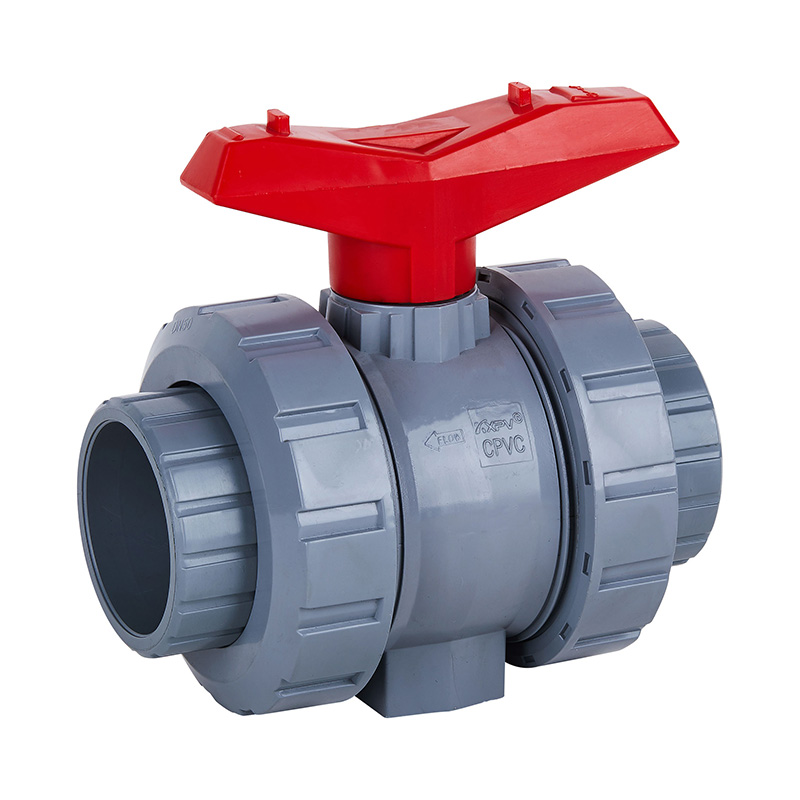
| PVC-U / UPVC | Water, dilute acids, hypochlorite, plating rinse | Lowest of the group | Lowest cost, solvent-welded joints, limited heat tolerance |
| CPVC | Hot corrosive liquids and oxidising chemicals | Higher than PVC-U | Similar installation habits to PVC-U with better heat resistance |
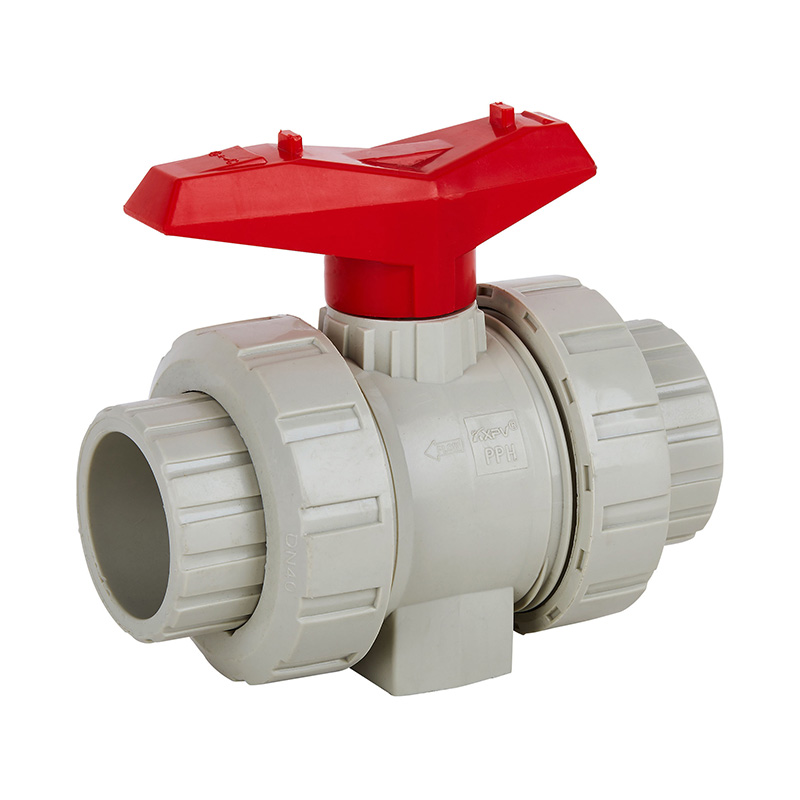
| PPH | Acids, alkalis, general chemical service | Mid-range | Butt-weld and socket options for larger diameters |
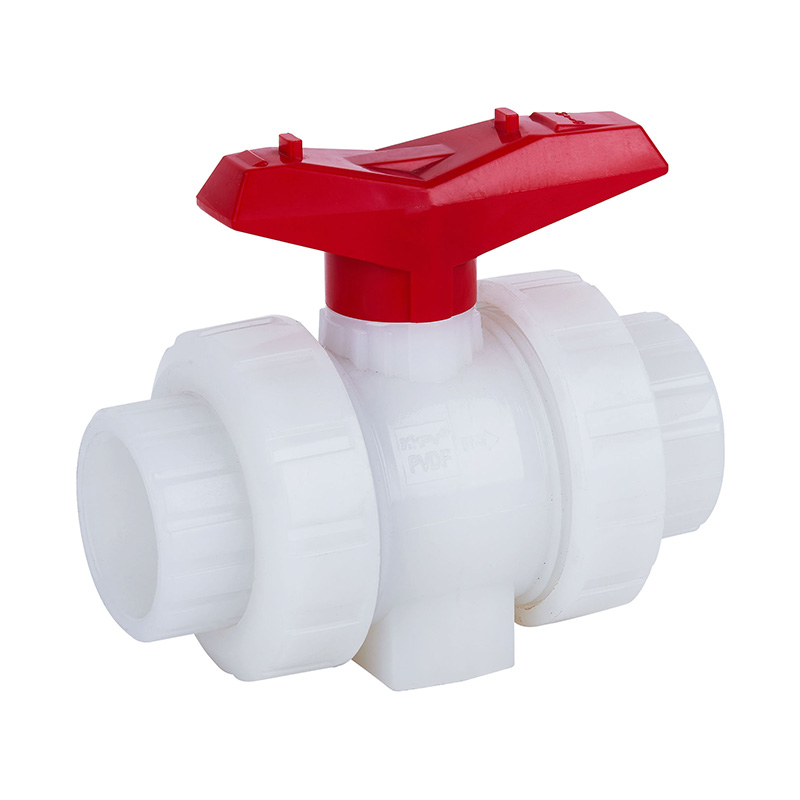
| PVDF | Strong acids, solvents, high-purity duties | Highest of the group | Highest cost, broadest chemical and thermal coverage |
| FRPP | Pickling lines, ventilation, effluent | Mid-range | Good cost-performance at large diameters |
Standards come next. A valve built to GB dimensions will not bolt onto a flange drilled to ANSI/ASTM or JIS. Confirm the flange drilling pattern, the face-to-face length, and the pressure class before ordering, because a dimensional mismatch cannot be solved on site.
Most specification disputes are not about quality. They are about the distance between two bolt holes.
Three Failures That Keep Coming Back
The same three complaints appear in almost every backflow investigation, and none of them are manufacturing defects in the usual sense.
- Installed backwards. The valve seals perfectly, in the wrong direction. Forward flow pushes the disc onto its seat and the line appears blocked.
- Debris on the seat. Weld flash, pipe shavings, or cured adhesive lodges between disc and seat and holds the valve open a few tenths of a millimetre. Flush the line before commissioning.
- Cracking pressure above available head. The valve is correct in every dimension except the one nobody checked.
Worth checking on site: a check valve that hums or chatters is not settling in. It is telling you the disc is cycling against its stop because opening pressure and available head are out of balance.
Quick verification: close the isolation valve downstream, watch the upstream gauge, and confirm the valve holds. That single check catches most installation errors before the system goes into production.
A Short Buying Checklist
- Medium, concentration, and maximum operating temperature, written down.
- Flow direction, and whether the run is horizontal or vertical.
- Available head at the valve, compared against the published cracking pressure.
- Body material, and the standard the mating flange is drilled to.
- End connection: socket solvent-weld, threaded, flanged, or butt-welded.
- Access for future disc and seal replacement.
A one way valve for PVC pipe is not a commodity you can order by diameter alone. Three numbers decide almost everything: cracking pressure, mounting orientation, and body material. A modest plastic check valve specified against those three will outlast a premium unit chosen on price and pipe size.
If the medium is aggressive, the line runs hot, or the suction arrangement is unusual, send the process data to the valve supplier before the pipe is cut. Revising a valve drawing takes an afternoon. Rebuilding a finished pipe rack does not.

 Headquarters: No. 539 Bohai Road, Beilun District, Ningbo City, Zhejiang Province, P.R. China
 +86-18067123177