

 EN
EN English
 Español
 عربى
عربى русский
 中文简体
中文简体
Kaixin, a high-tech enterprise specialized in the R&D, production and sales of polymer pipeline valves.
CPVC Ball Valves: The Quiet Workhorse of Corrosive-Fluid Piping
Material limits, connection configurations, pressure ratings, and installation discipline — what actually determines a long, leak-free service life.
The scene is familiar in every chemical plant: a metal ball valve comes out with a seized stem and a pitted ball, and the replacement is CPVC. What feels like a downgrade is often the right engineering call. Chlorinated polyvinyl chloride ball valves, specified within their operating envelope, deliver dependable isolation in environments that quickly destroy ferrous hardware and, in some cases, stainless steel as well.
Why CPVC Is the Default for Corrosive Fluids
CPVC is produced by further chlorination of PVC resin, raising the chlorine content from roughly 57 percent to about 63 to 69 percent. That structural change gives the polymer better heat resistance and broadens its chemical resilience. CPVC ball valves therefore handle mineral acids, caustic streams, saline solutions, and many industrial reagents that would soften PVC-U, corrode carbon steel, or initiate pitting in 316L stainless steel.
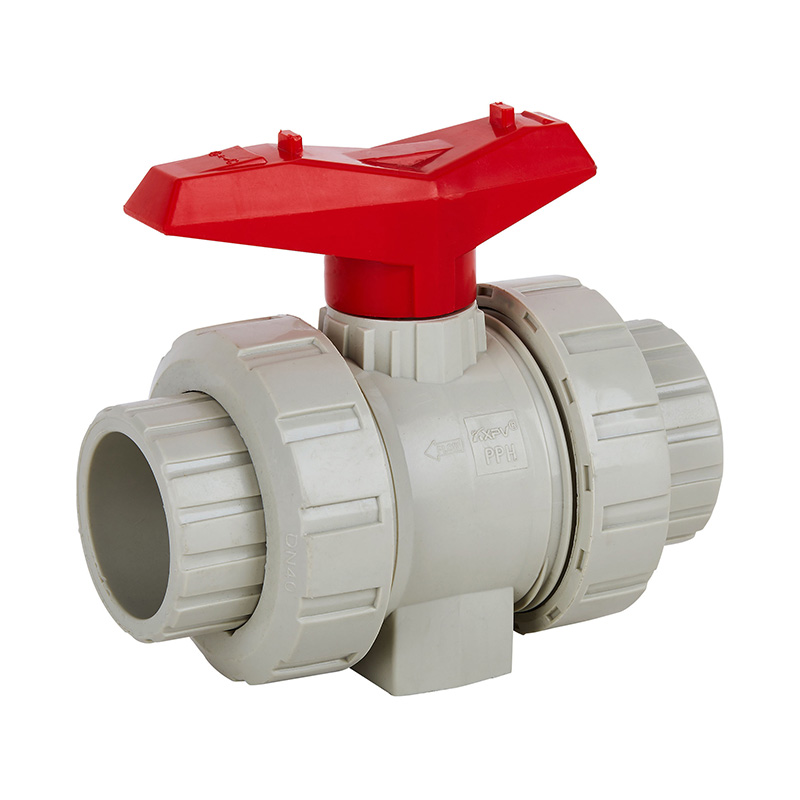
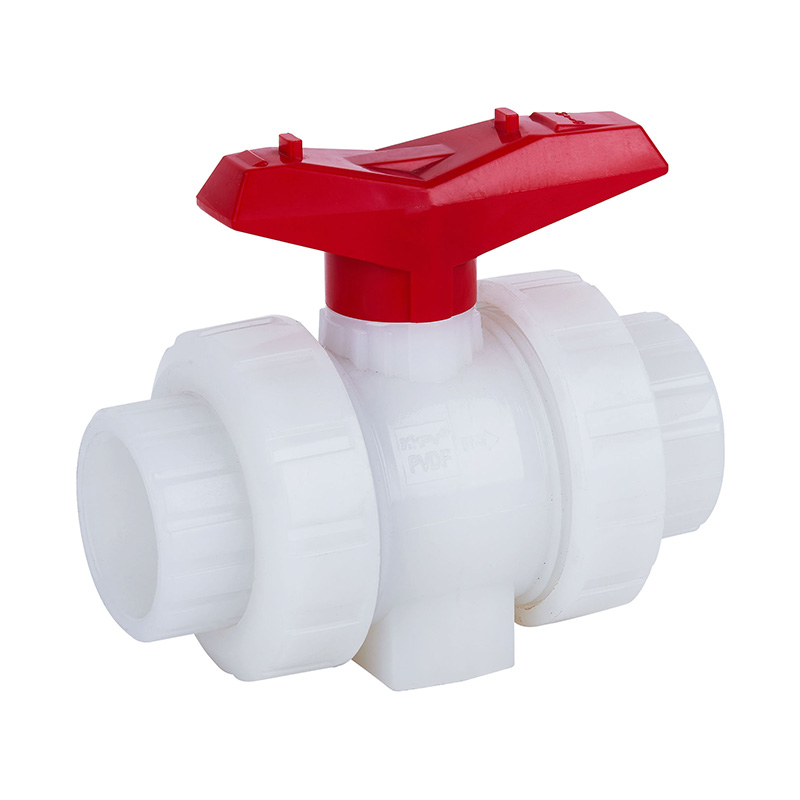
A practical rule of thumb: for continuous service up to about 90 to 93 °C, CPVC offers the best balance of cost and reliability among non-metallic valve materials. PPH tolerates similar temperatures but resists a narrower list of chemicals. PVDF runs hotter, but it costs more and demands more careful moulding. UPVC is cheaper but not suitable above roughly 60 °C. For a systematic comparison of valve and pipe materials against actual service conditions, this guide to selecting the right plastic valve and pipe for corrosive and abrasive applications is a useful starting point.
CPVC also performs well mechanically at room temperature, with higher tensile and impact strength than ordinary PVC. However, it has no natural UV resistance: because the polymer is not stabilised against sunlight, long-term outdoor exposure should be planned or the valve shielded.
Design note. CPVC ball valves are not intended for steam service or for strongly oxidising media such as wet chlorine gas. Verify chemical compatibility at the operating temperature, not only at ambient temperature, and confirm the pressure rating on the manufacturer's data sheet for that temperature.
Typical fluids handled by CPVC ball valves include:
- Mineral acids and acidic salt solutions
- Caustic alkalis and alkaline process streams
- Saline water and brine
- Water-treatment chemicals in municipal and industrial dosing systems
- A wide range of reagents in electroplating and metal-finishing lines
Ball Valve Body Styles and End Connections That Matter
Once the material decision is settled, valve construction and end connection become the important variables. Each configuration addresses a different installation and maintenance requirement.
One-piece body form
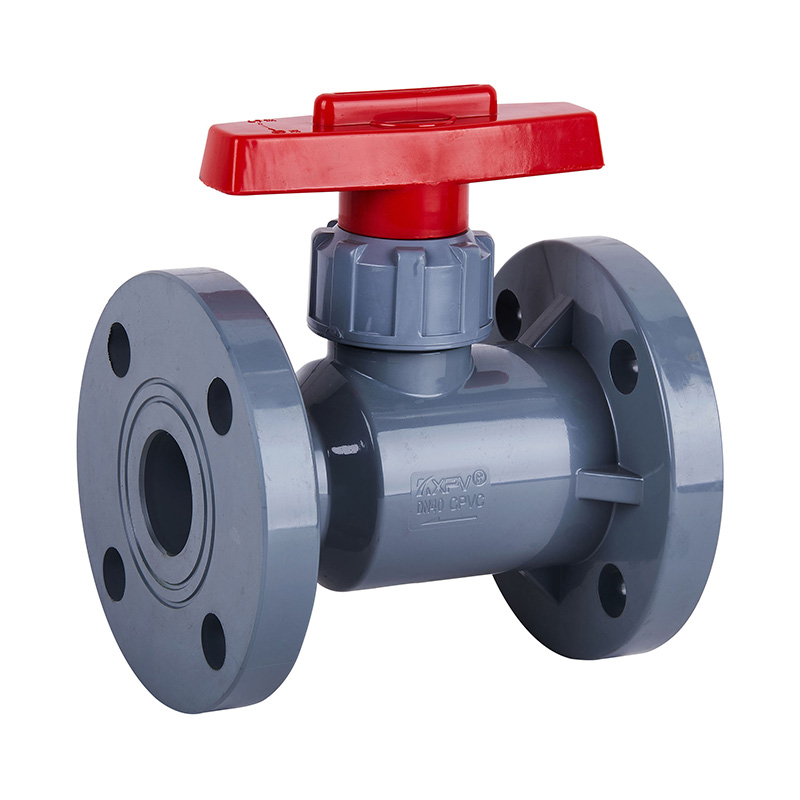
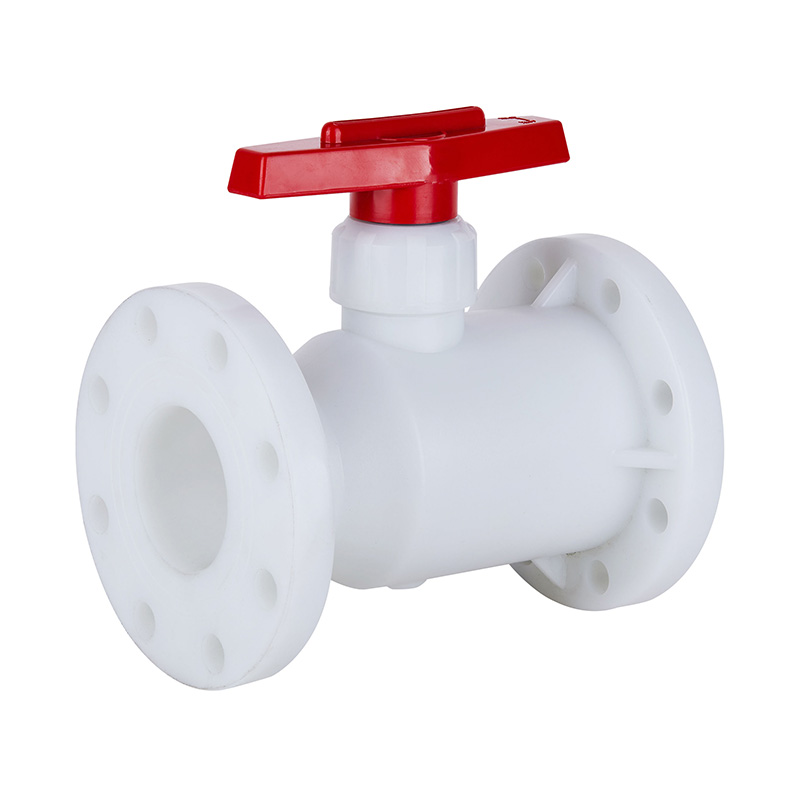
The one-piece body design keeps the valve body as a single moulded component. Leak paths are limited to the seal between ball and body, rather than the multiple threaded or bolted joints found on multi-piece valves. Where the line is designed for permanent joining and the valve will be removed only during a full shutdown, the one-piece body CPVC ball valve is compact, simple, and economical.
Socket connection for solvent cement
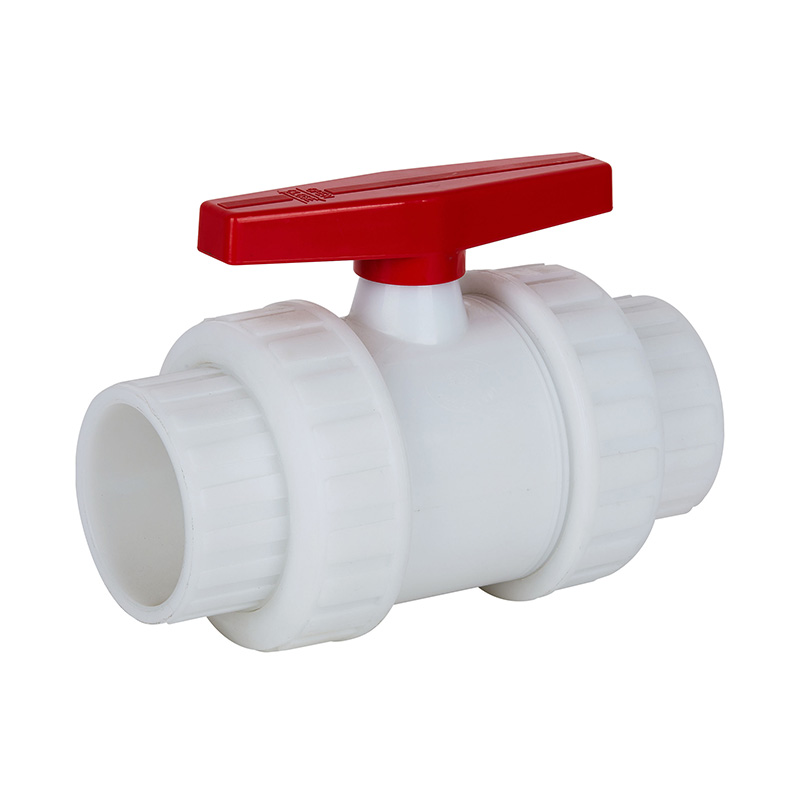
Socket-end ball valves are intended for solvent cement bonding, the standard joining method for CPVC pipe. A properly cleaned and cemented socket joint forms a permanent bond that does not rely on threads, gaskets, or mechanical compression. For branch shutoffs in chemical process piping, scrubber systems, and tank farm circuits, socket connections in the DN15–DN100 range are quick to install and trusted in daily service.
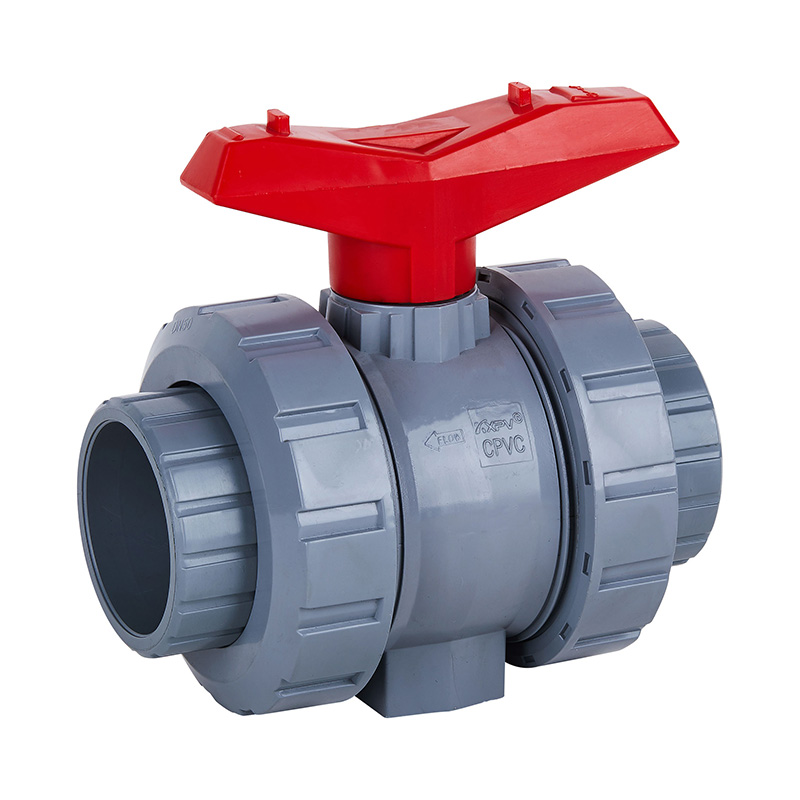
Flanged double-union configuration
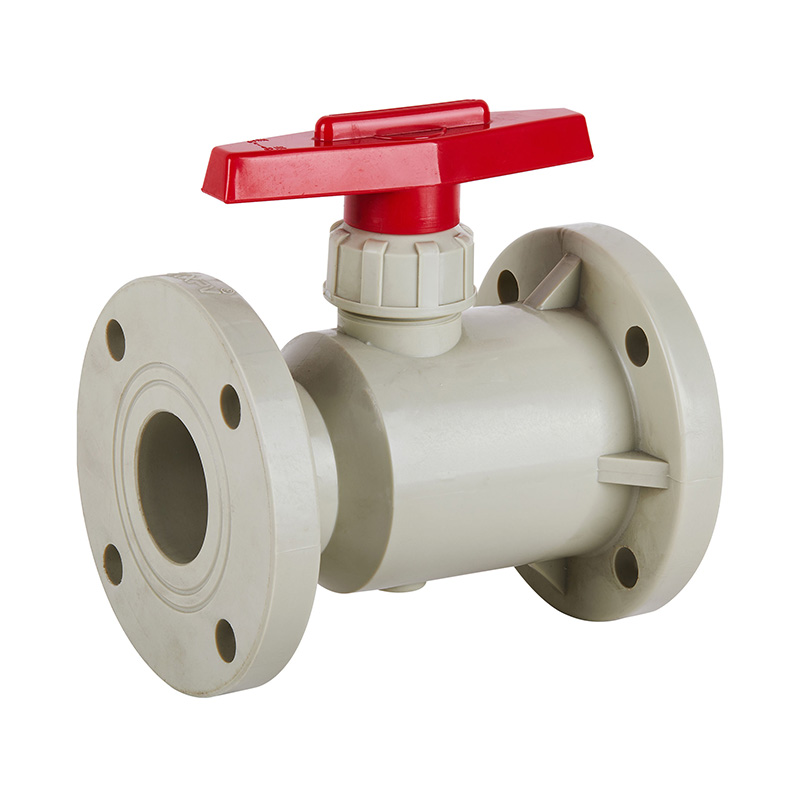
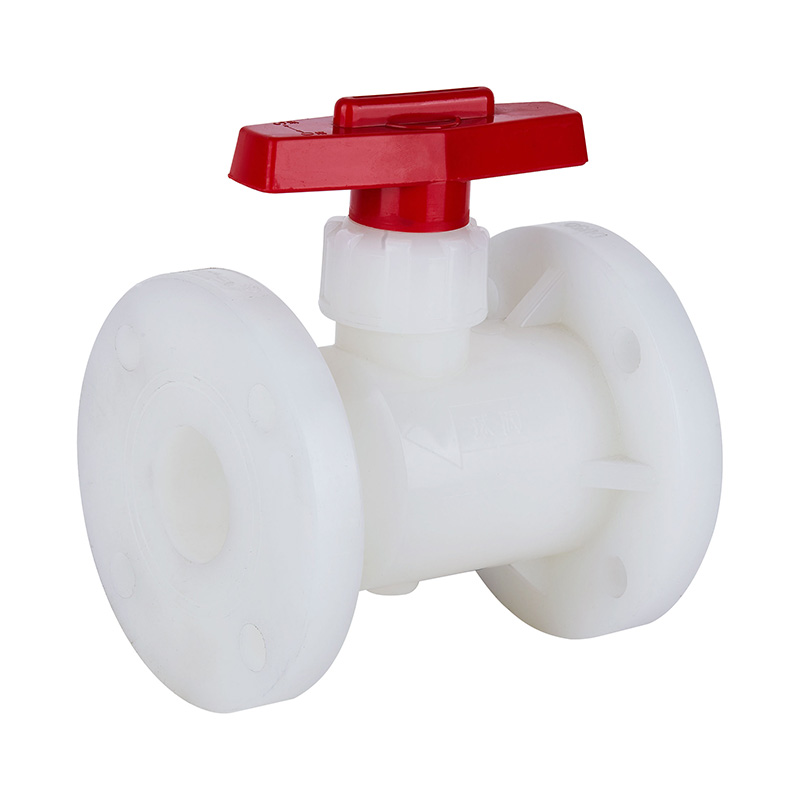
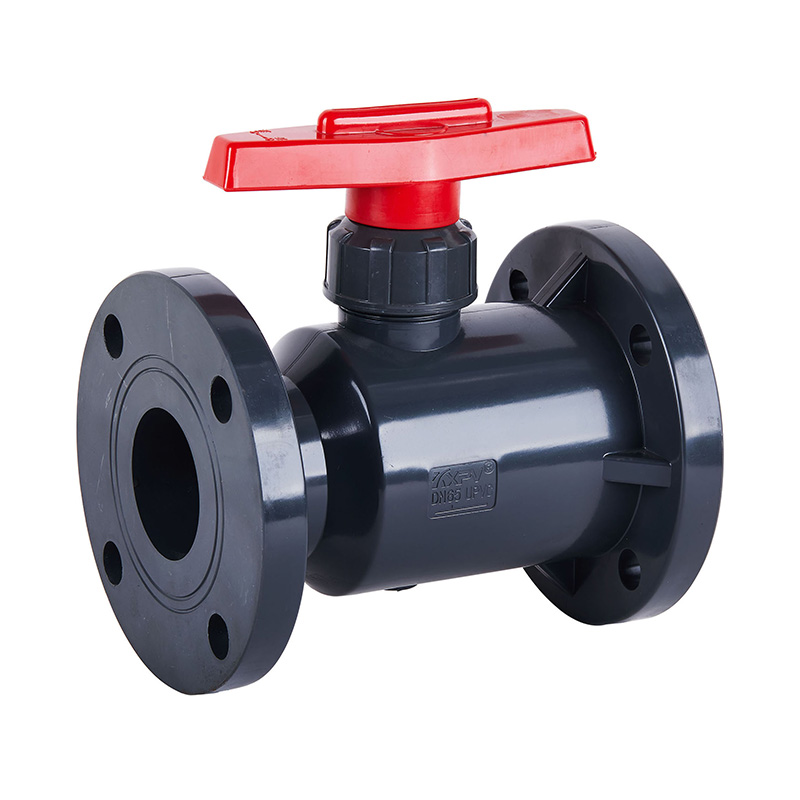
When process conditions demand frequent disassembly, a flanged double-union ball valve is the configuration that respects your time. The flanged ends bolt to mating pipe flanges or equipment, and the two union connections allow the valve centre section to be removed while the pipe remains in place. This is valuable on dosing skids, filter trains, heat exchanger circuits, and anywhere components need to be swapped quickly.
Whichever body style you choose, verify the dimensional standard before ordering. CPVC valves are manufactured in GB, ANSI/ASTM, and JIS dimensional series, and face-to-face distances as well as bolt patterns differ between them.
Temperature, Pressure, and Flow: The Operating Envelope
Temperature and pressure are inseparable when applying thermoplastics. Ratings published at 20 °C tell only part of the story in hot chemical service.
| Configuration | End connection | Typical size range | Continuous service temperature | Pressure rating at 20 °C | Service notes |
|---|---|---|---|---|---|
| One-piece body | Socket / spigot | DN15 – DN100 | Up to about 90 °C | 1.0 MPa (10 bar) | Compact, minimal leak paths |
| Socket ball valve | Solvent-cement socket | DN15 – DN100 | Up to about 90 °C | 1.0 MPa (10 bar) | Standard for chemical piping |
| Flanged double-union | Flanged ends | DN15 – DN100 | Up to about 90 °C | 1.0 MPa (10 bar) | Removable centre section |
Pressure values in the table are quoted at 20 °C. CPVC, like all thermoplastics, loses mechanical strength at elevated temperature; a valve rated at 1.0 MPa at 20 °C will carry a significantly lower safe pressure at 90 °C. Keep this in mind during design. On the flow side, a fully open ball valve produces a nearly unobstructed bore. Head loss is dramatically lower than with globe or diaphragm valves, which matters when pump head is constrained.
Danger note. Do not use CPVC ball valves as energy-isolation devices in compressed-air systems, or in flammable or oxidising gas service, without a code-approved design review. Thermoplastic valves are intended for liquid process lines and specifically evaluated gas applications.
Installation Practices That Prevent Premature Failures
CPVC is reliable, but installation errors account for the majority of early field failures. The first issue is thermal expansion. CPVC expands roughly three to four times more than carbon steel over the same temperature swing. If long pipe runs are anchored rigidly at both ends, the resulting stress reaches the valve body and can distort the sealing surfaces or crack the socket weld. Use sliding supports, allow expansion loops where necessary, and support the valve near the centre line of the pipe.
In field experience, most premature CPVC valve failures trace to pipe strain, not to the valve. The plastic body absorbs what the piping system imposes, but only up to a point.
Next, keep construction materials away from the finished valve. Plaster, cement, paint, and solvent-heavy coatings can soften the CPVC surface and leave hidden crazing that fails later. If the valve must be installed before adjacent construction is complete, wrap it temporarily and remove the protection before the line is pressurised.
Field caution. Protect CPVC ball valves from UV and from direct contact with plaster, cement, solvent paints, and aggressive cleaning agents used during site cleanup. Small amounts accelerate surface degradation and can produce stress-corrosion cracking.
The solvent-cement joint itself deserves careful work. Good practice follows the same sequence every time:
- Cut the pipe square and remove burrs.
- Clean both mating surfaces with the correct CPVC primer.
- Apply solvent cement evenly to the pipe end and socket.
- Insert fully with a quarter-turn, then hold for the recommended set time.
Maintenance, Actuation, and Total Lifecycle Cost
In clean chemical service, a CPVC ball valve is nearly maintenance-free. The task is periodic rather than frequent: check for external leaks at the stem, inspect for signs of UV or chemical surface damage, and confirm the handle operates smoothly without excessive force.
The floating ball design relies on a resilient seat seal that wears over time, especially with high cycle counts or particulate contamination. When a valve begins to weep past the stem or the ball starts to lose positive shutoff, replace the seal set. Do not simply tighten the packing nut. Extra torque can deflect the body, deform the seat pocket, and convert a minor weep into a permanent leak.
A one-piece body CPVC ball valve further reduces lifecycle complexity by removing the bolted joints and body gaskets found on traditional two-piece and three-piece valves. With fewer leak paths, inspection takes less time, and the chances of a seal failing mid-cycle are materially lower.
Long-service note. In routine chemical dosing and water treatment lines between 20 °C and 60 °C, operators commonly report CPVC ball valves still functioning without seal replacement after five to eight years of daily cycling. The valve body typically outlasts the elastomeric seats.
For automated systems, CPVC ball valves are available with electric and pneumatic actuators in dimensions up to DN300. Actuated valves add function-testing and support requirements. Carry the actuator weight with proper brackets, and cycle the valve periodically if it is in standby service.
Choosing a CPVC ball valve is a practical engineering decision, not a budget compromise. In corrosive fluid service up to approximately 90 °C, CPVC offers a balanced combination of thermal capability, chemical compatibility, and mechanical strength that carbon steel cannot match and that higher-end fluoroplastics provide only at a premium. Match the end connection to the joining method, verify the pressure de-rating at actual service temperature, shield the valve from sunlight and site chemicals, and handle the pipe supports with care. Done that way, a CPVC ball valve will quietly deliver reliable isolation for the life of the pipeline.

 Headquarters: No. 539 Bohai Road, Beilun District, Ningbo City, Zhejiang Province, P.R. China
 +86-18067123177