

 EN
EN English
 Español
 عربى
عربى русский
 中文简体
中文简体
Kaixin, a high-tech enterprise specialized in the R&D, production and sales of polymer pipeline valves.
The internal disc and seat design of a Globe Valve is the primary reason it outperforms gate valves and ball valves in throttling and flow regulation tasks. Unlike a gate valve — which is designed for fully open or fully closed positions — the Globe Valve's geometry allows the disc to be positioned at virtually any point between fully open and fully closed, providing granular, repeatable control over flow rate. This makes it the preferred choice in steam systems, chemical dosing lines, cooling water circuits, and any application where precise flow modulation is operationally critical.
In practical terms, a Globe Valve can achieve a flow rangeability of up to 50:1 — meaning it can accurately control flow across a wide spectrum from near-zero to full capacity — compared to approximately 5:1 for a typical gate valve. This article breaks down exactly how the disc and seat geometry makes this possible.
The Core Geometry: How the Disc and Seat Interact
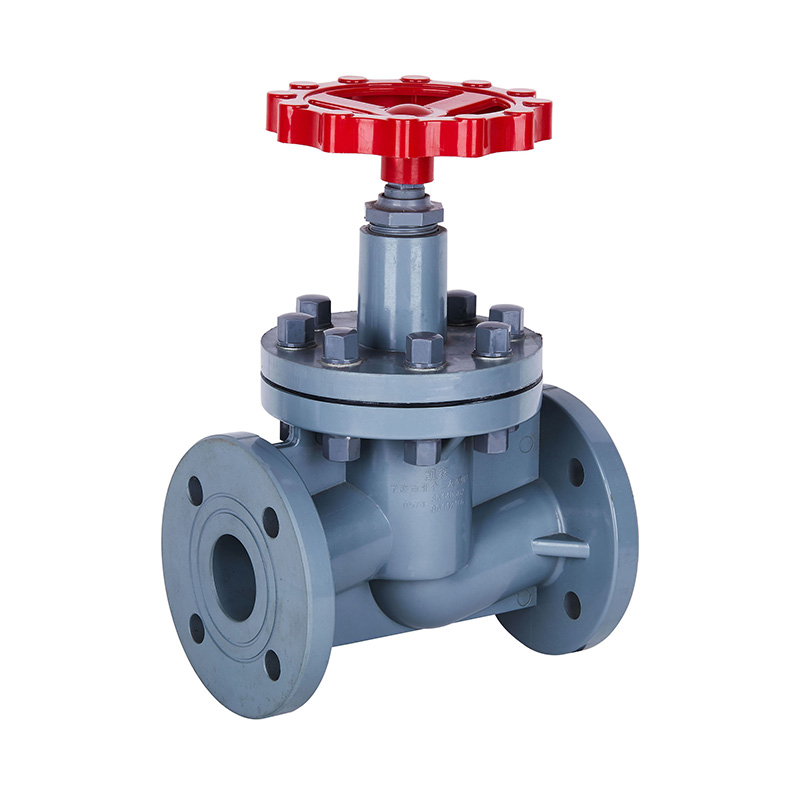
Inside a Globe Valve, the fluid path is redirected through an internal baffle with a circular opening — the seat ring. The disc (also called the plug) travels perpendicular to the direction of fluid flow, moving up and down along the stem axis to vary the annular gap between itself and the seat.
This perpendicular relationship between disc travel and flow direction is the geometric foundation of the Globe Valve's throttling capability. As the handwheel or actuator raises the disc away from the seat, the flow area increases proportionally, allowing the operator to dial in a precise flow rate. Conversely, lowering the disc reduces the gap and restricts flow. Because the disc never moves laterally across the flow stream (as a gate valve disc does), there is no risk of disc chatter at partial opening positions under high-velocity flow.
Types of Globe Valve Disc Designs and Their Throttling Characteristics
Not all Globe Valve discs are the same. The disc profile directly determines the flow characteristic curve — the relationship between stem travel and flow rate. The three most common disc types are:
- Flat (or plug) disc: Best suited for on/off service and low-pressure throttling. Provides a quick-opening characteristic — most flow increase occurs in the first 25–30% of stem travel. Commonly used in water lines and HVAC systems.
- Needle disc: Features a tapered, elongated tip that creates a very fine annular passage at low lifts. Ideal for precise low-flow metering — for example, in instrument air or chemical injection lines where flow rates are measured in liters per hour rather than cubic meters per hour.
- Composition (soft-seated) disc: Incorporates a resilient insert (PTFE, EPDM, or similar elastomer) on the disc face. This allows the disc to conform to minor surface irregularities on the seat, achieving ANSI Class VI zero-leakage shutoff. Used in pharmaceutical and food-grade applications where absolute isolation is required.
The following table summarizes the key characteristics of each disc type:
| Disc Type | Flow Characteristic | Typical Application | Leakage Class (ANSI/FCI 70-2) |
|---|---|---|---|
| Flat / Plug | Quick-opening | General on/off, water, HVAC | Class II – IV |
| Needle | Linear / Equal percentage | Metering, instrument air, chemical dosing | Class IV – V |
| Composition (soft-seated) | Quick-opening | Pharma, food grade, gas service | Class VI (bubble-tight) |
Seat Ring Design and Its Role in Sealing and Durability
The seat ring in a Globe Valve is a precision-machined component that forms the sealing surface against which the disc closes. Its design directly impacts both the tightness of shutoff and the valve's resistance to erosion under throttling conditions.
Seat Angle
Most standard Globe Valve seats use a 45° or 90° seat angle. A 45° angled seat provides a larger seating surface area and better sealing contact — it is preferred for high-pressure steam and process services. A 90° flat seat is simpler to machine and re-lap, making it easier to maintain in the field.
Seat Material Selection
The seat ring material must resist the erosive and corrosive effects of the flowing medium at throttling conditions, where fluid velocity through the narrowed gap can be significantly higher than in the main pipeline. Common seat materials include:
- Stainless steel (SS316): Standard for general chemical and water service up to 400°C.
- Stellite (Cobalt alloy) hard-facing: Applied where high-temperature steam, abrasive slurries, or cavitating fluids are present. Provides a surface hardness of HRC 40–55, dramatically extending seat life in erosive service.
- PTFE or PEEK inserts: Used in corrosive chemical service and low-pressure gas lines for bubble-tight shutoff.
Replacing or re-lapping the seat ring is a routine maintenance task for Globe Valves, particularly after long periods of throttling service. Unlike ball or gate valves, most Globe Valves allow in-situ seat maintenance by removing only the bonnet, without disturbing the pipeline connections.
Flow Direction: Flow-Over vs. Flow-Under the Disc
A practical and often misunderstood aspect of Globe Valve installation is the direction of flow relative to the disc. Both configurations are used in the field, and each has specific implications for throttling performance and seat life.
- Flow-under (flow enters beneath the disc): This is the standard configuration marked on most Globe Valve nameplates. The upstream pressure acts against the bottom of the disc, helping to hold it open once cracked. This reduces stem loading during opening and is preferred for high-differential-pressure throttling service. However, if the disc is partially open and the flow is suddenly shut off, the disc can slam onto the seat under pressure — a concern in surge-prone systems.
- Flow-over (flow enters above the disc): Here, line pressure assists in closing the valve, making it a fail-safe configuration for emergency shutoff applications. This arrangement produces higher stem loads during opening, requiring a larger actuator or more operator torque, but it significantly reduces the risk of seat erosion under throttling because the disc is more stably pressed against the flow stream.
In steam systems, flow-under configuration is standard practice per ASME B31.1 guidelines to reduce thermal stress on the stem packing during warm-up cycles.
How Body Pattern Amplifies Throttling Performance
The Globe Valve body pattern — T-pattern, Y-pattern, or angle pattern — affects how the disc and seat geometry interacts with flow resistance and turbulence during throttling:
- T-pattern (standard): The most common configuration. The disc travels vertically and the flow makes two 90° turns inside the body, resulting in a higher pressure drop (Cv typically 10–20% lower than equivalent bore ball valves). This is acceptable and even desirable in throttling applications where pressure drop across the valve is used as part of the flow control strategy.
- Y-pattern: The stem and seat are inclined at approximately 45° to the pipe axis. This reduces the number of flow direction changes, lowering pressure drop by up to 30–40% compared to a T-pattern Globe Valve of the same size. Y-pattern Globe Valves are preferred in high-pressure feedwater and steam lines where minimizing pressure loss while retaining throttling capability is critical.
- Angle pattern: The inlet and outlet ports are at 90° to each other. This eliminates one internal turn entirely, further reducing pressure drop and turbulence. Commonly used in slurry, high-viscosity fluid, or condensate drain services.
Practical Implications for Engineers and Maintenance Teams
Understanding how the disc and seat work together has direct consequences for Globe Valve specification, installation, and maintenance decisions:
- Size the valve for throttling, not full-bore flow. A Globe Valve is most accurate and stable when operating between 20% and 80% of its rated travel. A valve operating permanently below 10% open will experience accelerated seat erosion due to the high-velocity, turbulent jet at the narrow gap.
- Specify the correct disc profile for the flow characteristic required. If your control loop needs a linear response (equal increments of stem travel = equal increments of flow change), specify a needle or parabolic disc, not a flat plug disc.
- Inspect the seat and disc face during every major overhaul. Wire-drawing — a narrow groove eroded across the seat face by high-velocity fluid at a partially open disc gap — is the most common failure mode in throttling Globe Valves. Early detection allows re-lapping rather than full seat replacement.
- Confirm flow direction arrows before installation. Reversing the flow direction on a Globe Valve changes its throttling stability, seat loading, and packing life — all without any external sign of error.
The Globe Valve's internal disc and seat architecture is not simply a mechanical closure mechanism — it is a precision flow control system engineered to deliver stable, repeatable, and fine-grained regulation across a wide range of pressures, temperatures, and fluid types. When correctly specified and maintained, it remains the most reliable throttling solution available in industrial fluid systems.

 Headquarters: No. 539 Bohai Road, Beilun District, Ningbo City, Zhejiang Province, P.R. China
 +86-18067123177