

 EN
EN English
 Español
 عربى
عربى русский
 中文简体
中文简体
Kaixin, a high-tech enterprise specialized in the R&D, production and sales of polymer pipeline valves.
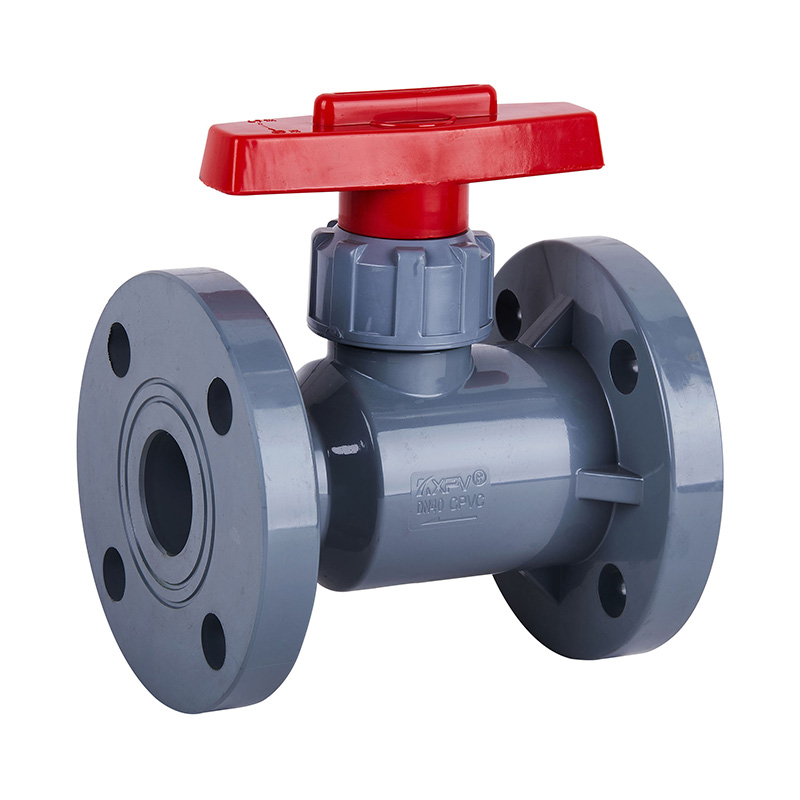
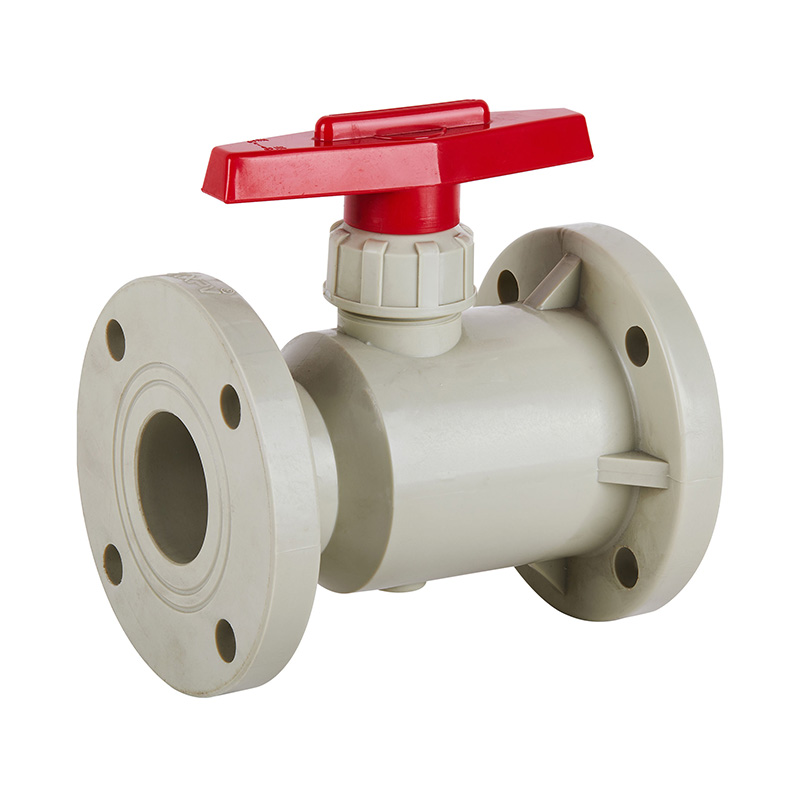
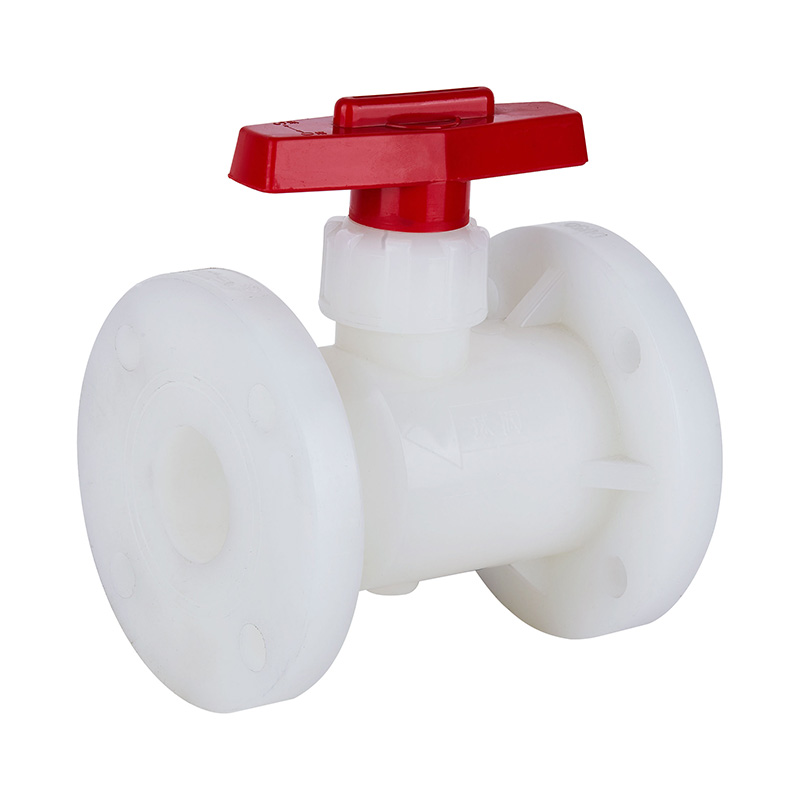
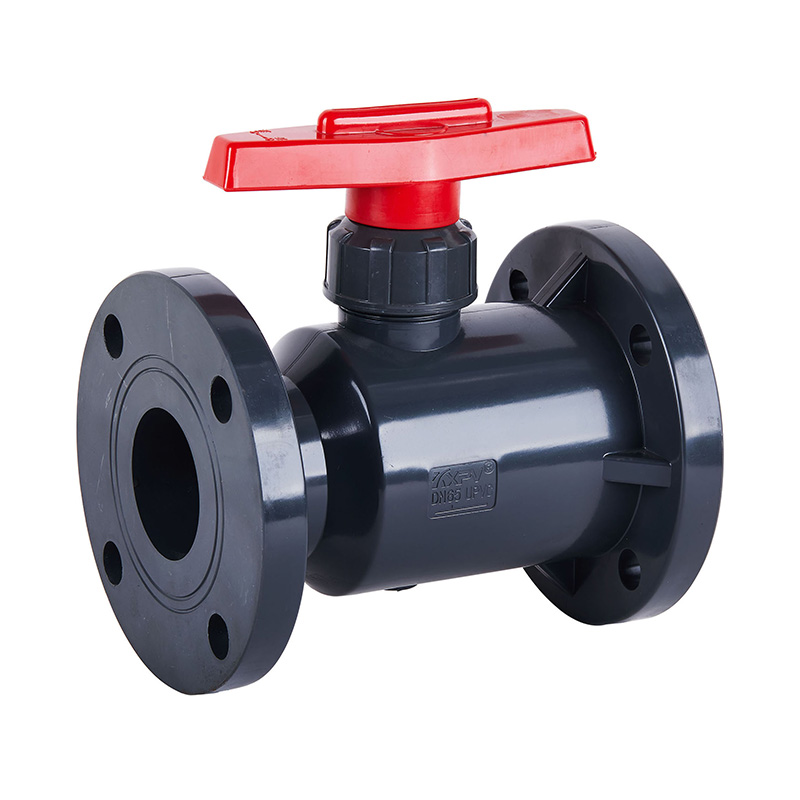
The Flanged Ball Valve is significantly easier to service, repair, and replace than a Socket Weld Ball Valve. Because flanged connections use bolted joints rather than permanent welded joints, a Flanged Ball Valve can be removed from a pipeline in minutes using standard tools, without cutting pipe or requiring hot work permits. A Socket Weld Ball Valve, by contrast, is permanently fused to the pipe, so any repair, inspection, or replacement requires cutting out the valve, grinding welds, and re-welding a new unit into place. For facilities that prioritize maintenance speed, downtime reduction, and long-term flexibility, the flanged design is the more practical choice.
Understanding the Core Difference in Connection Design
The fundamental distinction between these two valve types lies in how they attach to the piping system. A Flanged Ball Valve connects via bolted flange faces with gaskets sandwiched between mating surfaces. This creates a mechanical joint that can be disassembled and reassembled repeatedly without damaging the pipe or the valve body.
A Socket Weld Ball Valve, on the other hand, is inserted into the pipe end and fillet-welded around the joint. This produces a metallurgically fused connection that is extremely strong and leak-resistant but cannot be separated without destructive cutting. Once welded, the valve becomes a permanent part of the pipe run.
This structural difference is the root cause of every serviceability gap discussed in this article, from routine maintenance time to total lifecycle cost, and it also affects how each valve type interfaces with different pipe materials downstream.
Maintenance Time and Labor Comparison
Routine maintenance tasks such as seat replacement, seal inspection, or actuator swap-outs highlight the practical gap between these two valve types. With a Flanged Ball Valve, a technician typically needs only to unbolt the flange, slide the valve free, and either service it on a bench or install a replacement unit. This process commonly takes between 30 minutes and two hours depending on valve size, without any need for welding equipment or fire watch personnel.
A Socket Weld Ball Valve maintenance event is far more involved. Technicians must first drain and purge the line, then cut the pipe on both sides of the valve, grind away the old weld material, install the new valve, and perform full-penetration or fillet welds on both connections. This process often requires certified welders, post-weld inspection such as radiographic or dye penetrant testing, and a curing or cooling period before the line can be pressurized again.
| Maintenance Task | Flanged Ball Valve | Socket Weld Ball Valve |
|---|---|---|
| Removal from line | 15–30 minutes | 1–3 hours (cutting required) |
| Seal or seat replacement | 30–60 minutes | Not applicable without full removal |
| Reinstallation | 15–30 minutes | 2–4 hours (welding and inspection) |
| Special certification needed | No | Yes, certified welder |
Downtime and Production Impact
In continuous process industries such as chemical processing, oil and gas, and water treatment, unplanned downtime is often the single largest cost driver in a maintenance event. A Flanged Ball Valve minimizes this exposure because the bolted connection allows for rapid isolation, removal, and replacement, often completed within a single shift.
Socket Weld Ball Valve replacement typically requires a longer planned outage window. Because welding introduces heat-affected zones and requires cooling time before pressure testing, facilities must often schedule socket weld valve work during extended maintenance shutdowns rather than routine service windows. This inflexibility can be costly when a valve failure occurs unexpectedly.
Interfacing with Plastic Piping Sections
Many industrial and municipal systems combine metal valves with plastic pipe runs, and this is another area where connection type matters. A Flanged Ball Valve is far better suited to transitioning into a PVC pipe section, since the bolted flange can mate directly with a PVC flange adapter without any welding or thermal stress on the plastic material. Because a Socket Weld Ball Valve depends entirely on a welded metal-to-metal joint, it cannot connect directly to plastic pipe at all, making it unsuitable wherever a system needs to transition between metal and PVC segments.
When specifying a valve for a mixed-material system, engineers must also account for the pvc pressure rating of the downstream pipe. Standard Schedule 40 PVC pipe is commonly rated up to 150 psi at 73°F, with the rating dropping as operating temperature rises. If the flanged valve is set to a pressure class that exceeds what the PVC pipe rating supports, the plastic section becomes the weak point in the system rather than the valve itself. Matching valve pressure class to the pvc pressure rating of the connected pipe is a basic but often overlooked step in system design.
Temperature is an equally important consideration. The pvc pipe temp rating is typically limited to around 140°F for standard PVC formulations, well below what many metal valves can handle. Because a Flanged Ball Valve can be removed and inspected easily, operators can more readily monitor whether operating conditions are approaching the pvc pipe temp rating limit and adjust process parameters before the plastic piping is damaged. This kind of proactive monitoring is far more difficult with a Socket Weld Ball Valve system, where the permanent metal joint discourages frequent inspection and adjustment.
Inspection and Quality Control Considerations
Serviceability also extends to how easily a valve can be inspected without full removal. With a Flanged Ball Valve, technicians can loosen bolts to check gasket condition or perform a visual inspection of the flange face without fully removing the valve from the line in some configurations. This partial-access capability supports predictive maintenance programs and shortens inspection intervals.
Socket Weld Ball Valve joints, being permanently fused, offer no such partial inspection option. Any internal inspection of the valve body or seat requires full removal, meaning the pipeline serviceability advantage clearly favors the flanged design for facilities running frequent quality control checks.
Cost Implications Over the Valve Lifecycle
While a Socket Weld Ball Valve may have a lower upfront material cost in smaller sizes due to the absence of flange forgings, the total lifecycle cost often favors the Flanged Ball Valve once labor, downtime, and welding consumables are factored in.
- Flanged Ball Valve: lower labor hours per maintenance cycle, no welding certification required, faster return to service.
- Socket Weld Ball Valve: higher labor hours due to cutting and welding, additional cost for weld inspection, longer outage duration.
- Flanged Ball Valve: reusable gaskets and bolts reduce recurring material costs.
- Socket Weld Ball Valve: pipe material is often sacrificed during cutting, adding to replacement costs.
Over a ten-year service period with multiple maintenance cycles, facilities frequently report that flanged connections reduce total maintenance labor cost by a substantial margin compared to welded alternatives, primarily due to the elimination of repeated welding and inspection cycles.
When Socket Weld Ball Valves Still Make Sense
Despite the serviceability disadvantages, Socket Weld Ball Valves are not without merit. Their fully welded joints eliminate gasket failure points entirely, which makes them attractive for high-pressure, small-diameter lines where leak-free integrity is the top priority and maintenance frequency is expected to be low. They are also more compact than flanged alternatives, which can be an advantage in space-constrained skid packages.
However, for systems where valves are expected to be serviced, replaced, or inspected on a recurring basis, or where any part of the system connects to plastic piping, the trade-off in serviceability and material compatibility often outweighs the compactness benefit.
Choosing the Right Valve for Your Piping System
The decision between these two valve types should be based on how frequently the valve will need to be accessed over its service life, as well as what materials and operating limits exist elsewhere in the system. The following guidelines can help align valve selection with system requirements.
Choose a Flanged Ball Valve when:
- The system requires frequent maintenance, inspection, or valve replacement.
- Minimizing downtime during service events is a priority.
- Hot work permits or welding restrictions apply to the facility.
- The line transitions into or out of PVC pipe sections.
- Larger pipe diameters are involved, where welding becomes more time-consuming.
Choose a Socket Weld Ball Valve when:
- The line is small diameter and high pressure, where a fully fused joint improves integrity.
- Valve access after installation is expected to be rare.
- Space constraints make a compact, low-profile connection necessary.
- The entire system is all-metal with no plastic pipe transitions.
Final Takeaway
For piping systems where ease of maintenance, inspection access, and downtime reduction matter most, the Flanged Ball Valve is the clear choice. Its bolted connection allows for fast removal, reinstallation, and servicing without welding, certification, or extended outage windows, and it integrates far more easily with systems that include PVC pipe sections where pressure and temperature limits must be respected. Socket Weld Ball Valves remain useful in specific high-pressure, low-maintenance, all-metal applications, but for the majority of industrial piping systems where valves are serviced over time or interface with plastic piping, flanged designs offer a meaningfully easier and more cost-effective path to long-term reliability.

 Headquarters: No. 539 Bohai Road, Beilun District, Ningbo City, Zhejiang Province, P.R. China
 +86-18067123177