Deep Exploration of the Core Definition and Operating Mechanism of Plastic Diaphragm Valve
In modern industrial fluid handling systems, the Plastic Diaphragm Valve is recognized as one of the most effective solutions for managing corrosive media and ultra-pure fluids. As a leader in the fluid control field, Kaixin Pipeline Technologies Co., Ltd. has been dedicated since its founding in 1999 to the research and development of high-performance Plastic Diaphragm Valve products to meet the increasingly stringent requirements of the global chemical, semiconductor, and water treatment industries.
What is a Plastic Diaphragm Valve?
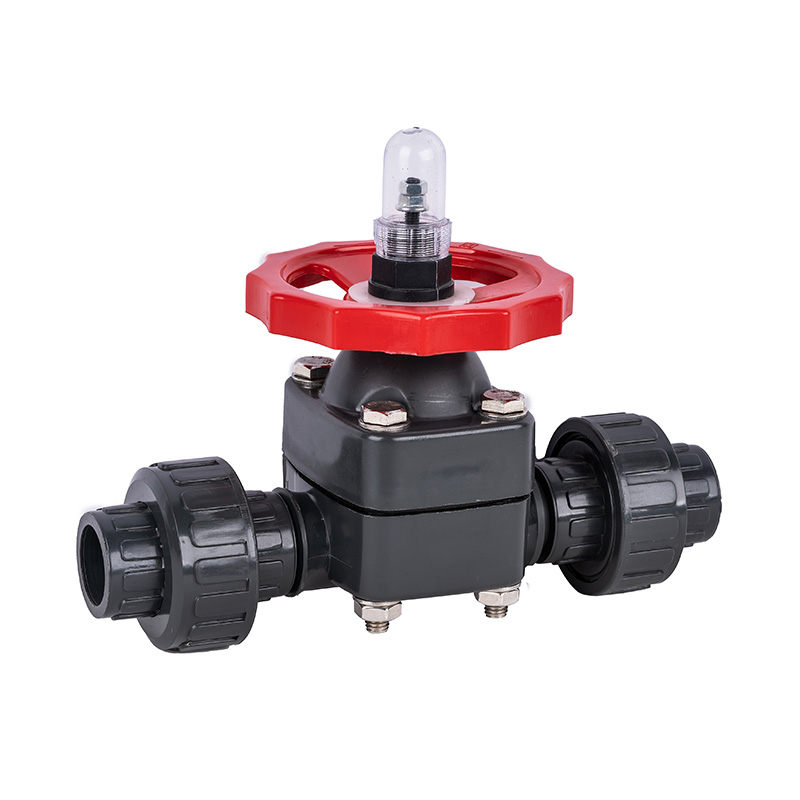
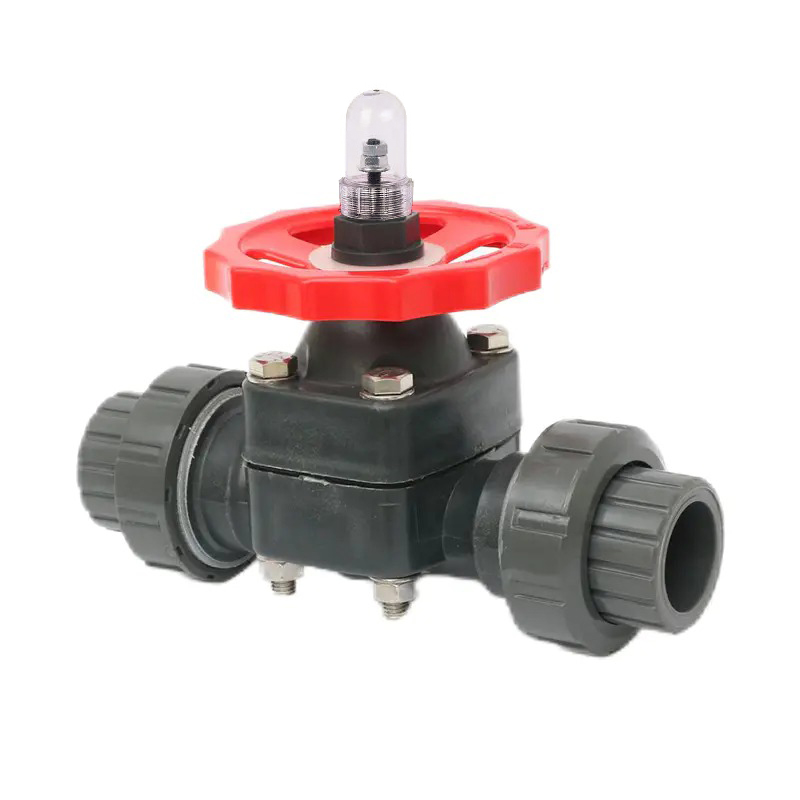
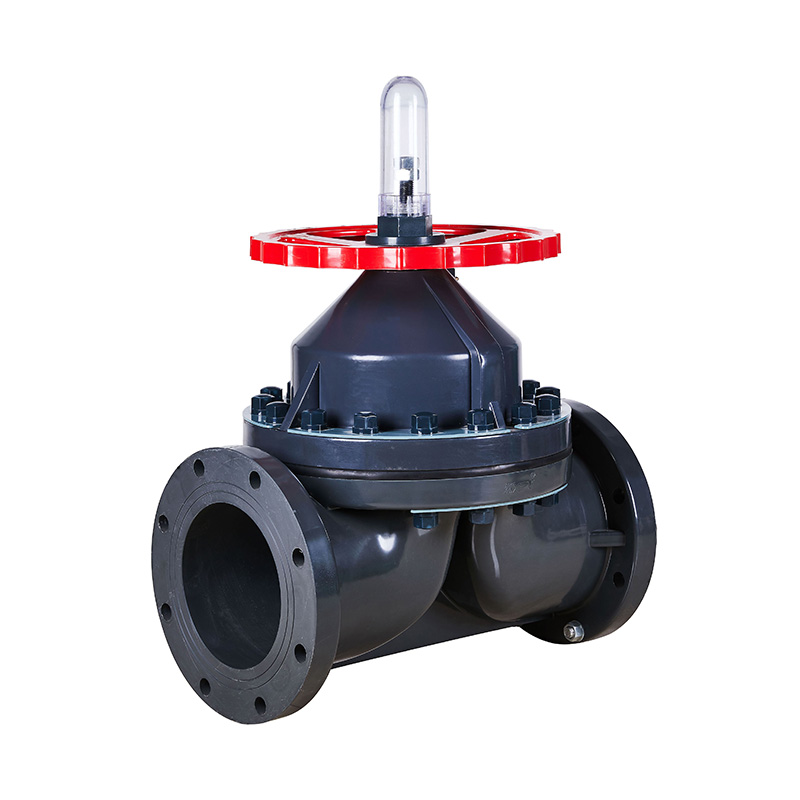
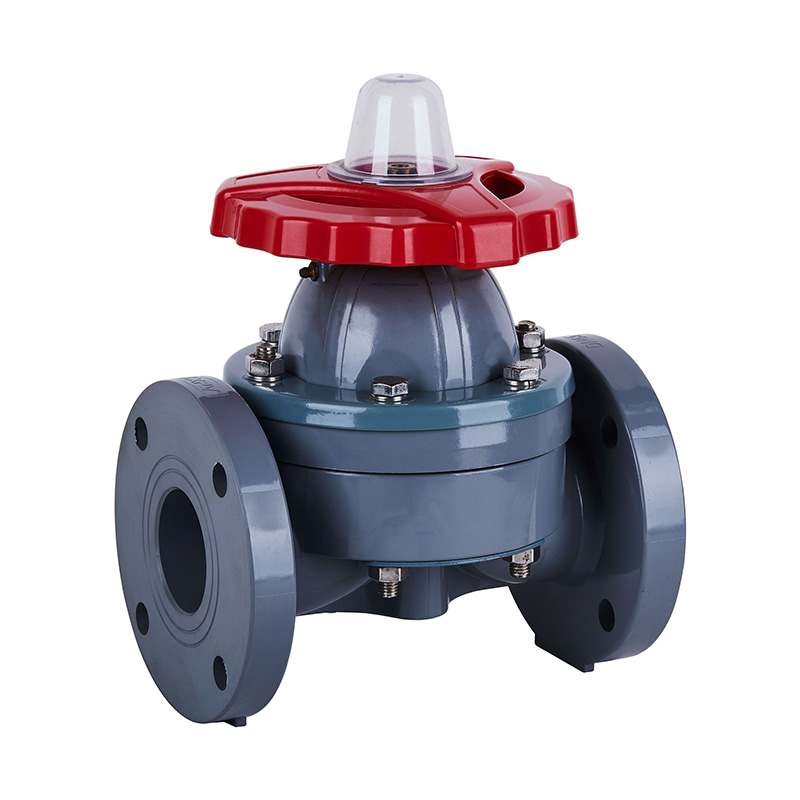
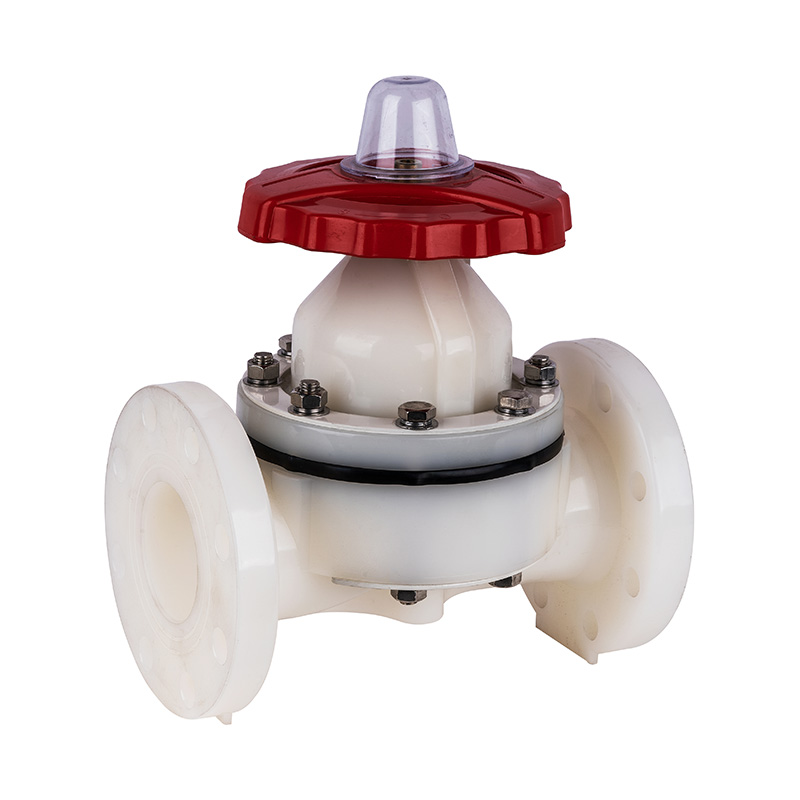
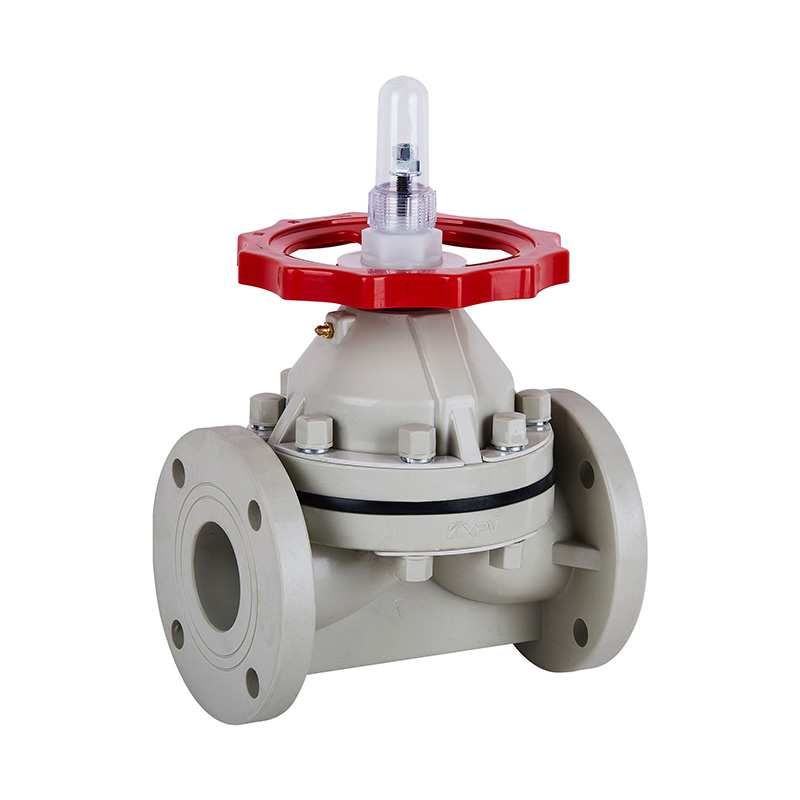
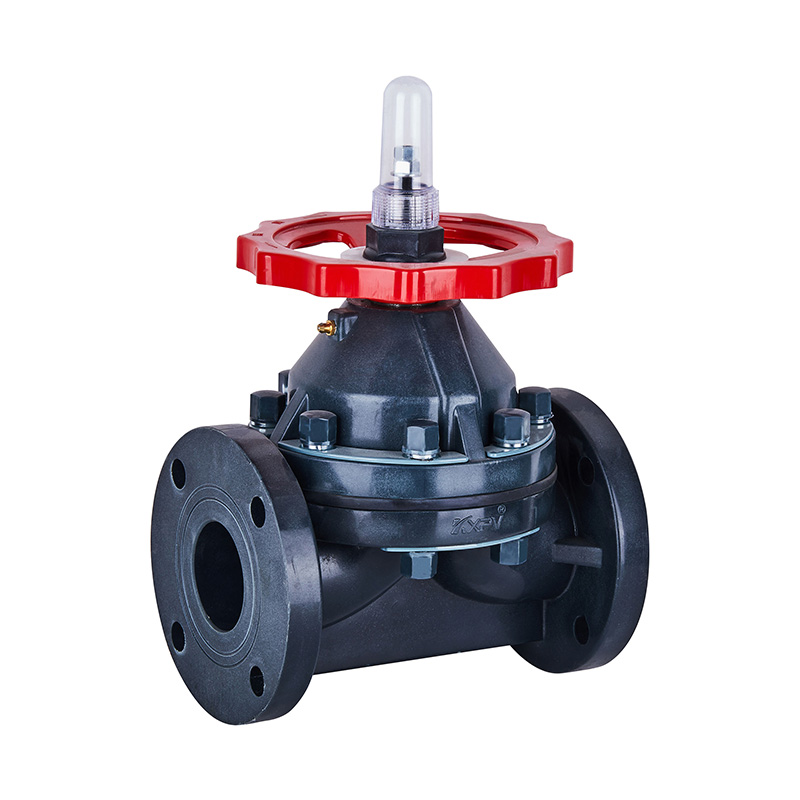
A Plastic Diaphragm Valve is a specialized type of shut-off valve. Its closing member is a diaphragm made of flexible material that separates the valve body cavity from the valve bonnet cavity and the driving components. This structure allows the Plastic Diaphragm Valve to effectively protect the operating mechanism from fluid corrosion when transporting strong acids, strong alkalis, or media containing suspended particles. The Plastic Diaphragm Valve produced by Kaixin Pipeline Technologies Co., Ltd. ensures zero-leakage performance in various complex working conditions through exquisite manufacturing processes.
Core Component Analysis
A high-quality Plastic Diaphragm Valve consists of four key parts:
Valve Body: The part in direct contact with the fluid. Kaixin Pipeline Technologies Co., Ltd. uses imported raw materials and high-precision injection molding processes to ensure the valve body has extremely high structural strength.
Diaphragm: This is the core sealing element of the Plastic Diaphragm Valve. It is usually composed of EPDM or an elastomer with a PTFE coating, maintaining excellent fatigue resistance during reciprocating motion.
Stem and Compressor: Connected to the handwheel or actuator, these components are responsible for transmitting the operating force to the diaphragm.
Actuator: Includes manual handwheels, pneumatic actuators, or electric actuators used to control the opening and closing of the Plastic Diaphragm Valve.
Physical Working Principle
The operation of the Plastic Diaphragm Valve is based on a simple compression principle. During the closing process, the driving mechanism pushes the compressor downward, pressing the flexible diaphragm against the weir at the bottom of the valve body. Because the diaphragm is elastic, it can tightly fit the contour of the valve body, achieving a complete seal.
Compared with traditional ball valves or gate valves, the advantage of the Plastic Diaphragm Valve lies in its smooth flow path and the absence of dead zones where fluid might stagnate. Kaixin Pipeline Technologies Co., Ltd., as a "Little Giant" enterprise and a provincial technology-based SME, continuously optimizes the flow path design of the Plastic Diaphragm Valve through its Ningbo Polymer Pipe and Valve Technology R&D Center, significantly reducing the fluid resistance coefficient.
Technical Parameters Reference
| Feature Parameter |
Standard Configuration |
High-Performance Configuration |
| Size Range |
DN15 - DN100 |
DN125 - DN250 (and custom sizes) |
| Pressure Rating |
PN10 (1.0 MPa) |
PN16 (1.6 MPa) |
| Body Material |
U-PVC, PPH |
PVDF, PVC-C |
| Diaphragm Material |
EPDM |
PTFE / EPDM Composite |
| Connection Type |
Union, Flange |
Socket Fusion, Welding |
Through continuous R&D investment, Kaixin Pipeline Technologies Co., Ltd. allocates nearly RMB 10 million annually to technical innovation, ensuring every Plastic Diaphragm Valve leaving the factory meets international high-quality standards. Whether serving global customers through digital channels or manufacturing at the Ningbo Fenghua R&D and production base, the company remains technology-driven to ensure the competitive edge of its Plastic Diaphragm Valve in the industry.
Main Materials and Chemical Suitability of Plastic Diaphragm Valve
In complex industrial piping networks, the performance of a Plastic Diaphragm Valve largely depends on the chemical compatibility and thermodynamic stability of its materials. Kaixin Pipeline Technologies Co., Ltd. understands that a single material cannot meet all harsh challenges, so we have established a comprehensive materials science laboratory dedicated to developing a full range of Plastic Diaphragm Valve products from basic U-PVC to high-end PVDF.
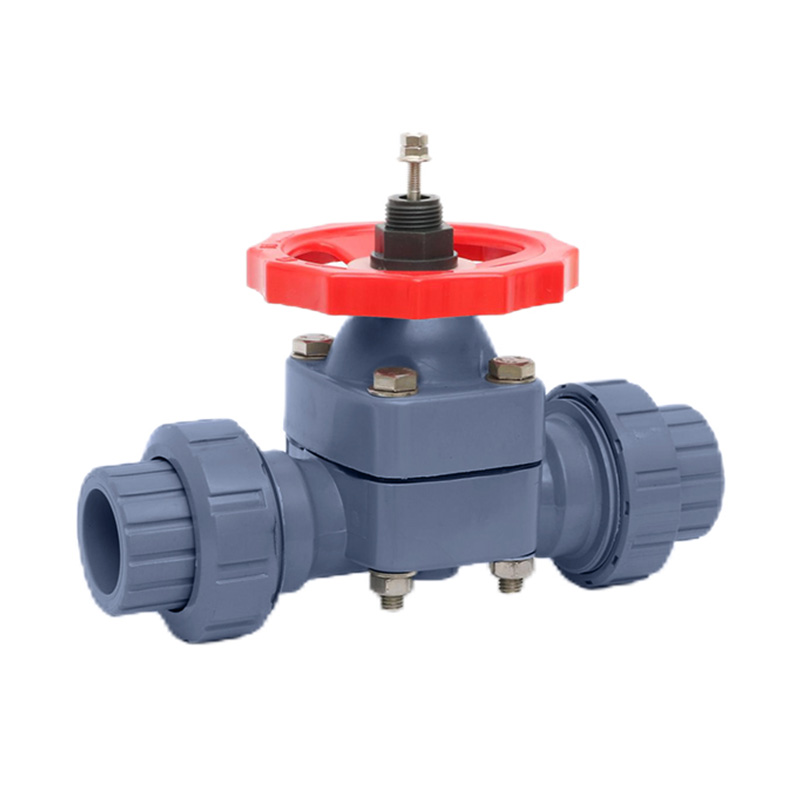
U-PVC (Unplasticized Polyvinyl Chloride): The most cost-effective Plastic Diaphragm Valve material, widely used in general water treatment, drainage, and mild acid-base transport. Its smooth surface prevents scaling.
PVC-C (Chlorinated Polyvinyl Chloride): As an enhanced version of PVC, it provides higher heat resistance (up to 95 degrees C) and stronger chemical resistance in the Plastic Diaphragm Valve, making it suitable for hot water systems and industrial acid liquids.
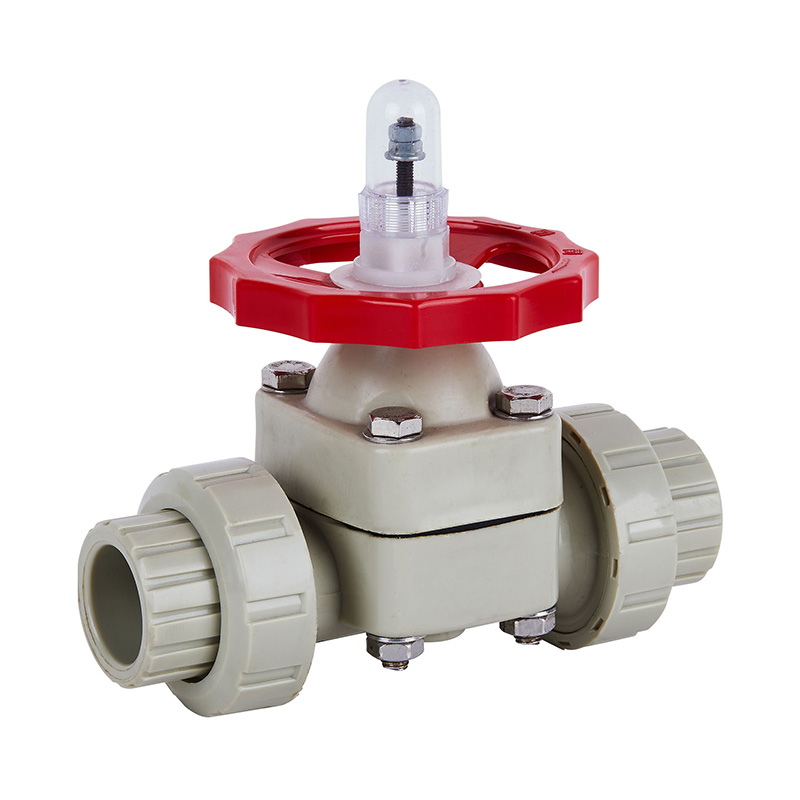
PPH (Homopolymer Polypropylene): The PPH Plastic Diaphragm Valve produced by Kaixin Pipeline Technologies Co., Ltd. is known for its excellent impact resistance and acid-base resistance, making it a robust choice for chemical production lines.
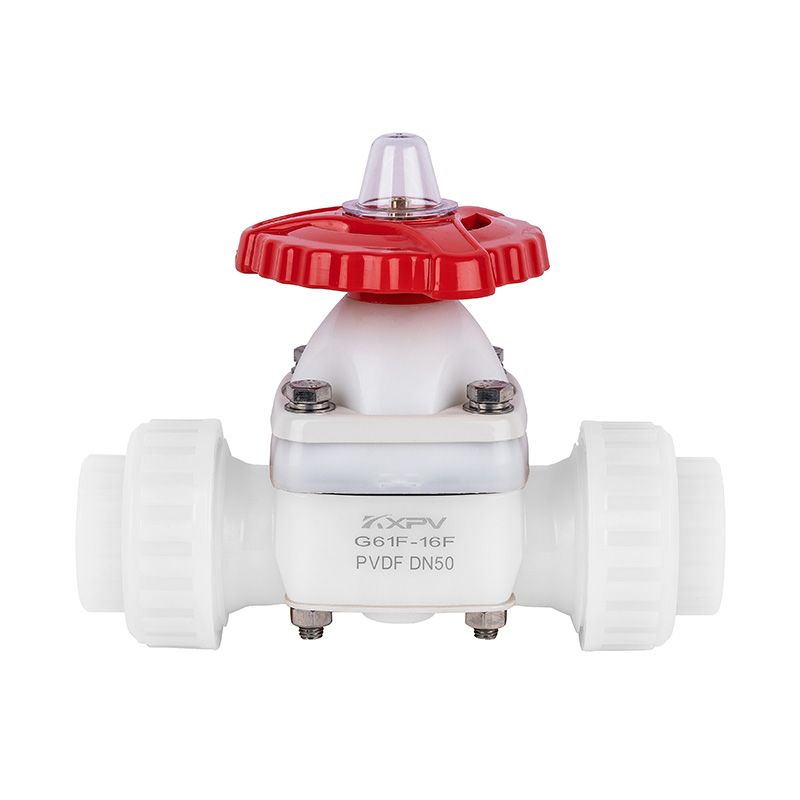
PVDF (Polyvinylidene Fluoride): Represents the pinnacle of plastic valve technology. The PVDF Plastic Diaphragm Valve has extremely high thermal stability and chemical inertness, making it ideal for semiconductor ultra-pure water systems, strong oxidant transport, and the pharmaceutical industry.
Material Performance Comparison Table
| Material Type |
Common Abbreviation |
Temp Range (Celsius) |
Typical Pressure (PN) |
Main Chemical Resistance Advantage |
| Polyvinyl Chloride |
U-PVC |
0 to 60 |
PN10 |
Inorganic salts, dilute acids, alkalis |
| Chlorinated PVC |
PVC-C |
5 to 95 |
PN10 |
High-temp strong acids, sodium hypochlorite |
| Polypropylene |
PPH |
-20 to 95 |
PN10 |
Solvents, non-oxidizing acids, strong alkalis |
| Polyvinylidene Fluoride |
PVDF |
-40 to 120 |
PN16 |
Strong oxidants, halogens, high-temp solvents |
Structural Designs of Different Types of Plastic Diaphragm Valve
Weir Type Plastic Diaphragm Valve: The weir design is the most widely used type of Plastic Diaphragm Valve. The internal cavity of the valve body has a raised ridge in the middle, called the weir. Because of the weir, the diaphragm only needs a short stroke to fully open or close. This design greatly reduces mechanical stress on the diaphragm, extending the life of the Plastic Diaphragm Valve.
Straight-Through Type Plastic Diaphragm Valve: When the fluid contains high concentrations of solid particles, fibers, or is highly viscous, the straight-through Plastic Diaphragm Valve is a better choice. The internal flow path is straight, similar to a smooth pipe section, resulting in minimal fluid resistance.
Application Scenarios of Plastic Diaphragm Valve in Industrial Fields
The Plastic Diaphragm Valve is now a core control element in precision industrial processes. Kaixin Pipeline Technologies Co., Ltd. has developed a full range of solutions covering everything from micro-flow to large-diameter transport.
Chemical Processing and Surface Treatment: When handling strong acids, alkalis, and oxidizing media, traditional metal valves face structural failure once coatings are damaged. The Plastic Diaphragm Valve produced by Kaixin Pipeline Technologies Co., Ltd. uses full plastic bodies, eliminating corrosion risks from the root.
Semiconductor Manufacturing and Ultra-Pure Water (UPW): The semiconductor industry has demanding cleanliness requirements. Plastic Diaphragm Valve products from Kaixin meet clean grade requirements. PVDF valves made from imported materials have extremely high surface smoothness to inhibit biofilm formation.
Installation and Maintenance of Plastic Diaphragm Valve
Tightening: Follow the diagonal cross principle. Over-tightening can deform the plastic body of the Plastic Diaphragm Valve. Always ensure piping is aligned before installation. For union or flange Plastic Diaphragm Valve products from Kaixin, ensure piping is aligned. Do not force bolts to correct pipe deviations.
FAQ
Q: How to choose material for high-temp/high-pressure Plastic Diaphragm Valve?
Kaixin Pipeline Technologies Co., Ltd. recommends PVDF bodies with PTFE/EPDM composite diaphragms. PVDF works up to 120 degrees Celsius and maintains good mechanical strength at high temperatures.
Q: Why did my Plastic Diaphragm Valve diaphragm fail in less than three months?
Check for sharp particles in media (install a filter), excessive closing torque, or chemical concentration changes exceeding material limits of the Plastic Diaphragm Valve.
Q: What air pressure is needed for a pneumatic Plastic Diaphragm Valve?
Usually 0.4 - 0.6 MPa. Too low prevents full opening; too high accelerates actuator wear of the Plastic Diaphragm Valve.
Q: What connection standards do your Plastic Diaphragm Valve products support?
Considering the global strategy of Kaixin Pipeline Technologies Co., Ltd., our products support DIN, ANSI (ASTM), JIS, and GB standards to facilitate global installation of the Plastic Diaphragm Valve.
Q: Core advantages of Plastic Diaphragm Valve over metal valves?
The core advantage is comprehensive corrosion resistance without liners and high cleanliness. The fluid only contacts plastic and rubber within the Plastic Diaphragm Valve, preventing metal ion contamination and reducing piping weight.


 EN
EN English
 Español
 عربى
عربى русский
 中文简体
中文简体
 Headquarters: No. 539 Bohai Road, Beilun District, Ningbo City, Zhejiang Province, P.R. China
 +86-18067123177